Ancient Maya's Use of Red Paint Linked to Mercury Poisoning
A new study reveals that the ancient Maya civilization's extensive use of cinnabar in their red paint led to mercury poisoning in lakes and waterways.
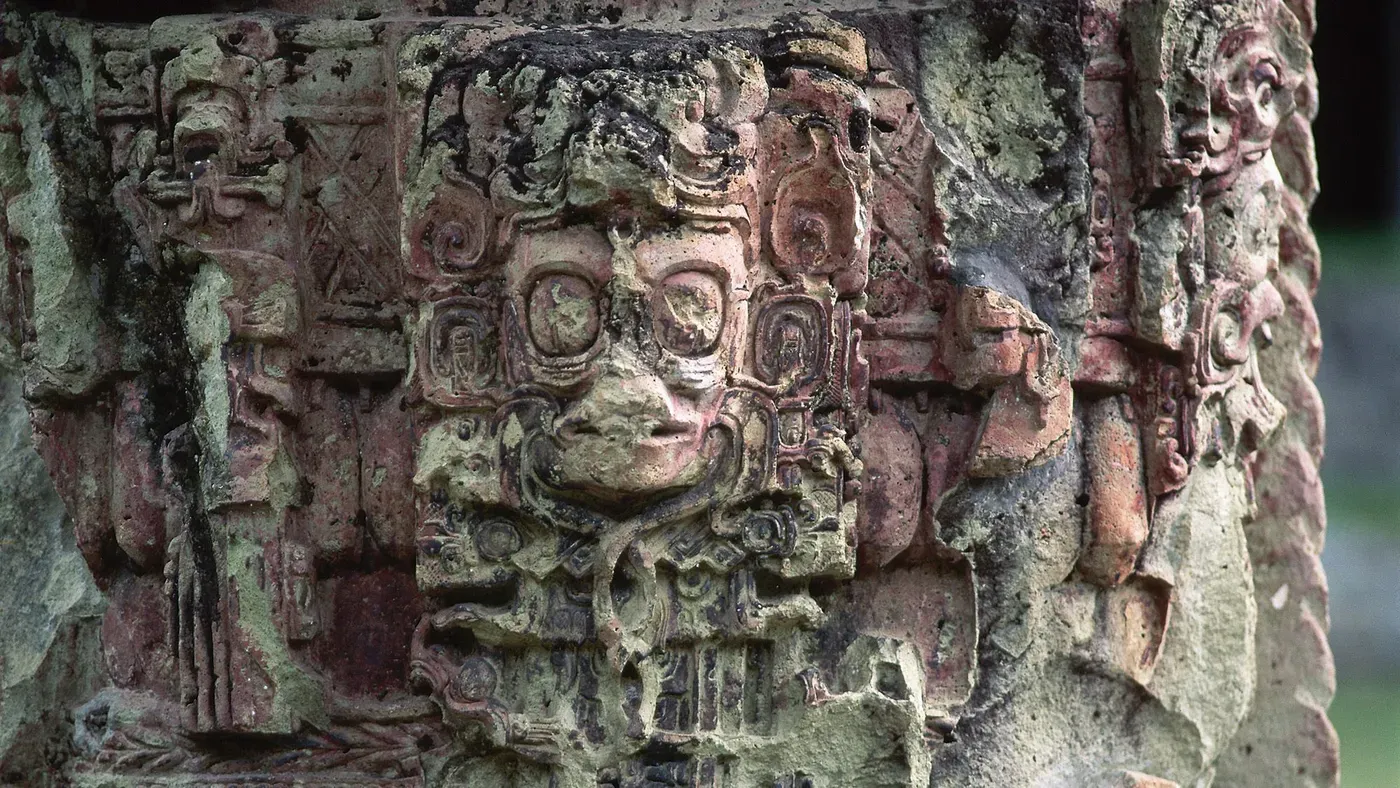
The use of red paint by the ancient Maya civilization has been linked to environmental disaster. A new study reveals that the Maya's extensive use of cinnabar, a vibrant red pigment made from mercury-sulfide mineral, led to the poisoning of their lakes and waterways with mercury.
Cinnabar was a common ingredient in the paint used by the Maya, who were known for their love of the color red. They applied it to almost everything, including sculptures, monuments, walls, plazas, pottery, and even the dead as part of ceremonial funerals. This widespread use of cinnabar led to the contamination of nearby waterways.
When the paint ran off into lakes and rivers, anaerobic bacteria in the sediments transformed the cinnabar into highly toxic methylmercury. Over time, this substance accumulated in the food chain, posing a significant threat to the environment.
The Maya's use of red paint is an example of how human activities can have unintended consequences on the environment. Their passion for the color red, which represented the sun, blood, and life, ultimately led to environmental disaster.
The Maya's reliance on freshwater resources was a crucial aspect of their daily lives, and they heavily depended on fisheries for protein, including freshwater shellfish.
Previous research had already indicated high levels of mercury in certain regions of the Maya's territory, but its presence in Mexico's Yucatán Peninsula remained unexamined until now. Researchers decided to investigate this area, specifically looking at mud sediments from the region for signs of mercury poisoning.
The study focused on two sites: Cobá Lake and Cenote Xcach, a flooded sinkhole beside a ruined city. At these locations, sediment cores were analyzed for mercury levels, revealing extreme concentrations that hinted at widespread use of cinnabar paint, a likely source of the toxic mineral.
The amounts of mercury detected in the sediment cores were staggering, with some samples containing as much as 820 parts per billion. For context, authorities consider water with mercury levels above 2 parts per billion to be unsafe for consumption, while any fish exceeding 1 part per million can be seized.
These findings suggest that the Maya's use of cinnabar paint was far more extensive than previously thought, and it is likely that this excessive use contributed to environmental disasters in their region.
The presence of mercury in the waterways around the ancient Maya civilization's cities has been confirmed through an analysis of sediment cores.
Researchers have found that these sediment cores contain high levels of mercury, a toxic substance that can cause severe poisoning when ingested or absorbed through the skin.
In humans, mercury poisoning can lead to permanent damage to internal organs and brain function, as well as death.
The team discovered mercury levels in excess of 3 parts per million in some areas, which is far higher than the threshold at which poisoning becomes a significant health risk.
This excessive exposure to mercury would have had devastating consequences for the people living in these regions.
The presence of mercury in the water at Cenote Xcach suggests a long-standing problem that may have contributed to the collapse of the Maya civilization. The sediment cores revealed that mercury levels were high during the Preclassic and Classic periods, but by the time of the collapse, these levels had begun to decrease in many areas.
The cinnabar used to create the vibrant red paint must have been imported from outside the Yucatán region, likely from what is now Honduras. This importation continued until the collapse, as evidenced by the mercury poisoning that persisted at Cenote Xcach during this time.
Facts based on reporting originally published by Live Science.
You may republish this story, in full or in part, if you credit News Central Site and link to it (licence CC BY 4.0). Photos are not included.