Tectonic Forces near Japan Contributed to Grand Canyon Formation
A new study suggests that tectonic forces near Japan played a crucial role in the formation of the Grand Canyon by transferring energy across the Pacific plate.
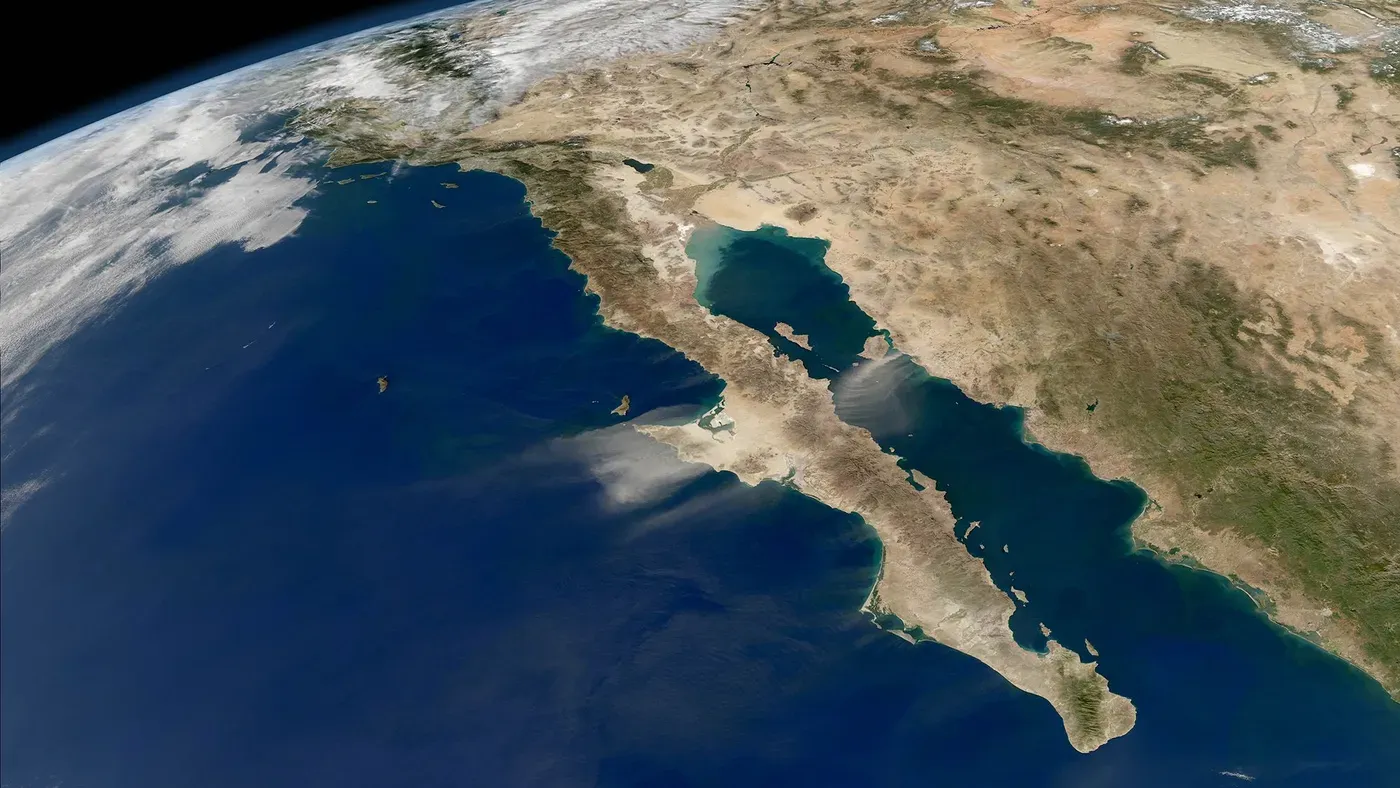
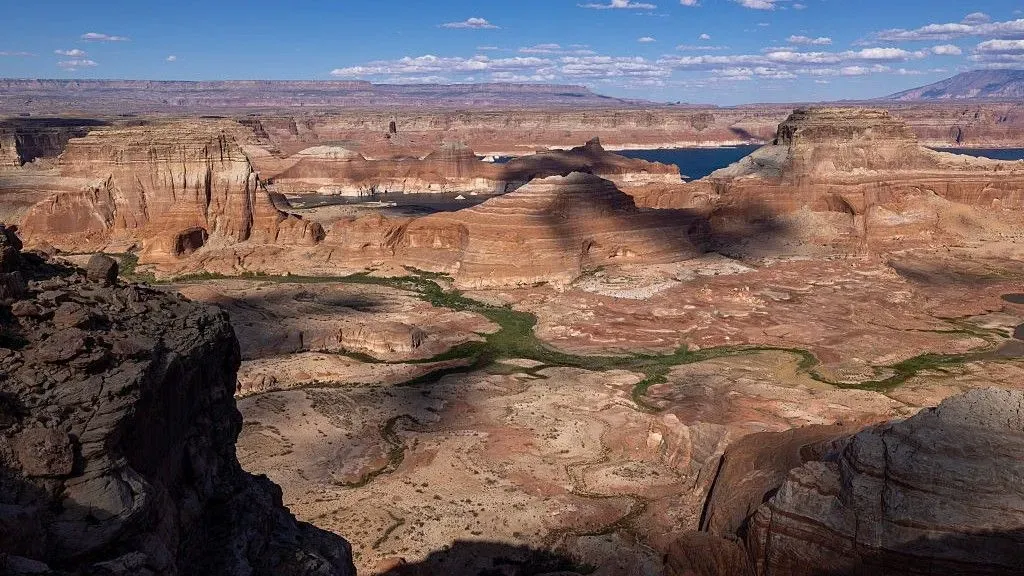
A significant discovery in geology has revealed that tectonic forces near Japan played a crucial role in the formation of the Grand Canyon, one of North America's most iconic natural wonders.
The study suggests that the birth of the Gulf of California, which separated from Mexico and formed the Baja Peninsula around 6 to 8 million years ago, was accelerated by a double subduction zone forming near Japan over 9,600 kilometers away. This reorganization in tectonic forces transferred energy across the Pacific plate, ultimately contributing to the opening of the Gulf of California.
As a result, researchers believe that the transfer of tectonic force also led to the formation of the Grand Canyon. The study's findings are set to be published in a journal and will provide valuable insights into plate boundaries, which are responsible for some of the strongest earthquakes on Earth.
The research highlights the complex interactions between distant tectonic forces and the geological processes that shape our planet. According to one of the researchers, this phenomenon is more than just a local occurrence; it's an example of how global tectonic forces can influence regional geology.
The Gulf of California's rapid rifting is an intriguing phenomenon that has puzzled geologists for some time. Unlike other areas where rifting either slows down or speeds up, in this region it accelerated instead of slowing down.
Rifting in the Gulf of California took a remarkably short period of 6 million to 13 million years, which is significantly faster than the typical rate of 30 million to 80 million years. This rapid movement was not just a one-time occurrence but continued for millions of years, leaving its mark on the North American continent.
The reason behind this accelerated rifting remains unclear, and researchers have been seeking an explanation through various studies. A team of scientists used advanced computer models to investigate whether distant geological forces could be contributing to this phenomenon.
Around the same time that the Gulf of California was experiencing rapid rifting, Japan was undergoing its own set of geological changes. The Pacific Plate is being pushed under the Eurasian Plate off the coast of Japan, a process known as subduction.
This subduction zone near Japan changed significantly about 10 million to 12 million years ago when it split into two separate zones.
The researchers found that a significant change in tectonic forces occurred near Japan about 10 million to 12 million years ago. This transformation had an unexpected effect on the other side of the Pacific Plate, influencing the tectonic forces that shaped the region.
According to lead researcher Becker, this transition led to changes in stress patterns across the plate, affecting areas outside of Japan. Specifically, Baja California was one of the few regions beyond Japan's vicinity that experienced these altered stress patterns.
The researchers tested their model using different assumptions about stresses and mantle properties to verify the results. Their findings confirmed that the change in tectonic forces had a profound impact on the region.
This new information suggests that the geological history of Baja California was influenced by events occurring thousands of miles away, near Japan. The study highlights the complex interplay between distant tectonic zones and their effects on regional geology.
The Gulf of California's rifting was already underway when these changes in tectonic forces occurred. However, the altered stress patterns may have contributed to the region's geological evolution, shaping its unique landscape over time.
The altered stress patterns caused by Japan's influence may have played a role in shaping the Grand Canyon's unique landscape over time. This influence was likely brought about by the subduction of the Farallon Plate under the North American continent.
As the Farallon Plate moved beneath the North American plate, it stretched and thinned the continental crust, creating an initial rift that would eventually become the Grand Canyon. The rifting process might have been relatively minor without Japan's influence, but with its added force, it gained momentum and depth.
The findings of this research could have significant implications for understanding earthquake-generating faults in other parts of the world, such as the San Andreas Fault in California and the Cascadia subduction zone in the Pacific Northwest.
Facts based on reporting originally published by Live Science.
You may republish this story, in full or in part, if you credit News Central Site and link to it (licence CC BY 4.0). Photos are not included.