Amazon Rainforest Found to Have Increased Biomass at Ancient Human Settlement Sites
Researchers have discovered that areas where ancient human settlements once thrived now support more biomass than regions that were never modified.
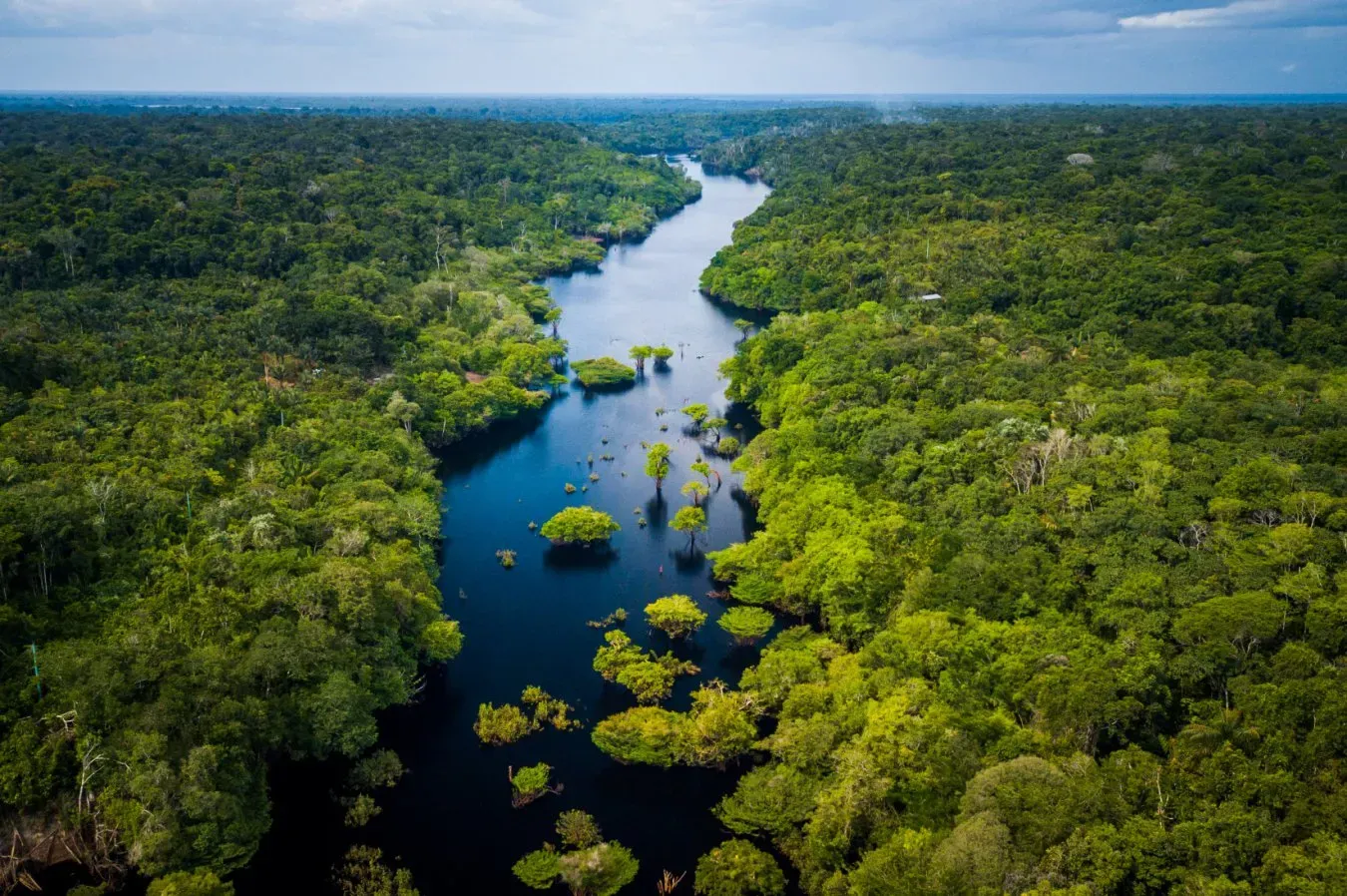
The Amazon rainforest has been found to have a significant boost in biomass where ancient human settlements once thrived. This unexpected discovery suggests that the impact of these early civilisations on their environment may have been more beneficial than previously thought.
Studies have shown that pre-Columbian societies in the Amazon altered their landscapes by cultivating certain plants and creating fertile soils through biodegradable waste, known as dark earth or terra preta. The presence of these human-made soils has been linked to increased crop productivity.
Researchers led by Chris Doughty at Northern Arizona University are working to understand how historical human occupation of the Amazon affected the forests. To gain a better understanding, they have begun studying an archaeological site in Guatemala that was occupied from around 400 BC to AD 800.
The site, Xmakabatun, offers valuable information about past occupation due to its extensive mapping with high-resolution airborne laser imaging. The researchers are analysing the present-day forest along 29 transects through the ancient city, aiming to shed light on how human activities have shaped the ecosystem over time.
The team's analysis revealed a striking pattern: areas where ancient human settlements once stood now support more biomass than regions that were never modified or were used for agriculture.
Doughty's observations on the contrast between lidar images and actual terrain underscore the challenge of studying these sites.
To estimate biomass, researchers measured tree trunk diameters, heights, and leaf mass in each transect, as well as identifying domesticated species such as the breadnut and copal trees.
The presence of human-built structures was linked to greater biomass levels compared to undisturbed areas or former agricultural terraces.
Domesticated tree species were more abundant at both settlement sites and terraced agricultural areas than elsewhere.
The researchers used remote sensing data from lidar studies and Sentinel-2 satellite observations to analyze the region around Xmakabatun, looking for signs of changes in biomass and leaf traits associated with human settlements.
Their analysis revealed a striking pattern: at more densely settled archaeological sites, there was a reduction in leaf mass and an increase in overall biomass compared to control sites with no evidence of past human modification.
This finding led the team to extend their study to the Amazon region, where they encountered different challenges due to the lack of stone structures used by ancient communities. Instead, these communities built using earth, making it harder to detect past habitation through traditional archaeological methods.
The researchers applied similar remote sensing techniques to 500 sites identified as featuring dark earth and almost a thousand areas with geoglyphs, both indicative of past human presence. They compared these sites with 3000 randomly chosen control locations, revealing distinct differences in forest characteristics between the two groups.
The Amazon rainforest's carbon storage may be overestimated due to biased survey methods. Current assessments rely on easily accessible areas, which often coincide with former human settlements and potentially have higher-than-average biomass levels. This could skew our understanding of the forest's overall carbon dynamics.
Experts believe that this research can provide valuable insights into previously inaccessible regions of the rainforest. Vinicius Peripato, a researcher at Brazil's National Institute for Space Research, notes that the study's findings could be used to better understand these areas. By combining archaeological data with biomass assessments, scientists may uncover new information about human settlements in the past.
The study suggests that archaeology and biomass levels are closely linked, enabling researchers to potentially identify previously unknown ancient human sites based on their biomass levels. This approach could revolutionize our understanding of historical human activity in the Amazon rainforest. The findings have significant implications for how we assess and manage this vital ecosystem.
Facts based on reporting originally published by New Scientist.
You may republish this story, in full or in part, if you credit News Central Site and link to it (licence CC BY 4.0). Photos are not included.