Bram Stoker's Working Notes Reveal Early Title and Character Names
Research has shown that Bram Stoker's novel was tentatively titled "The Un-Dead" before being published as "Dracula".
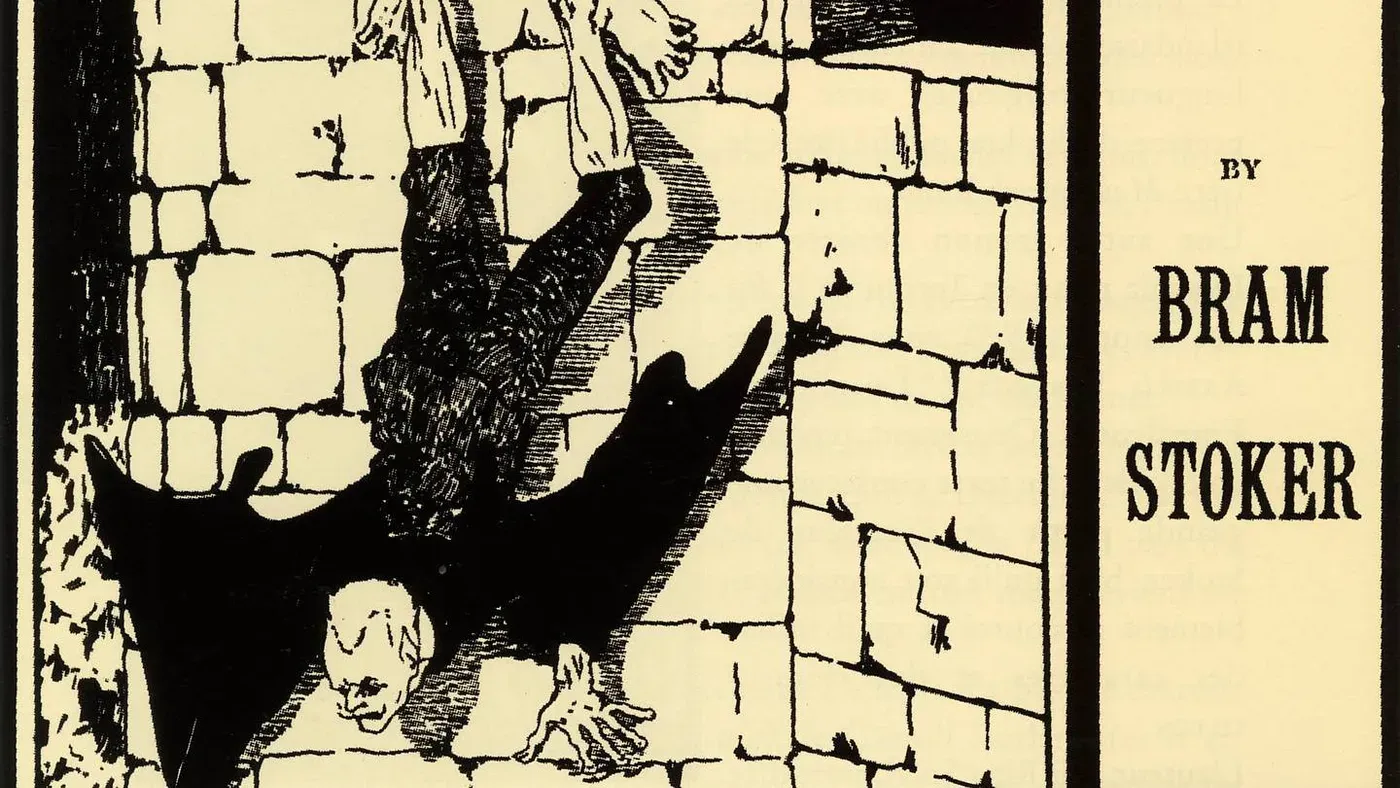
London bookstores received their first copies of a yellow-covered novel by Bram Stoker in May 1897, but the book's title was not always "Dracula. In fact, for most of the seven years it took to write, the book had been known by a different name.
The alternative title that nearly made it into print is well-documented. Research has shown that at one point during its development, the novel was tentatively titled The Un-Dead, and this label came perilously close to being the one on the front cover.
But even before the book's title was settled, the vampire protagonist had a name of his own. Bram Stoker's working notes, now housed in Philadelphia at the Rosenbach collection, originally referred to the villain as Count Wampyr.
Stoker's research into Eastern European history and geography also played a role in shaping the novel's characters and setting. In 1890, he borrowed William Wilkinson's survey of Wallachia and Moldavia from his local library in Whitby, where he copied out a footnote about the word Dracula.
Stoker's working notes reveal that the vampire character was initially referred to as Count Wampyr. This name was crossed out in favor of a new one at some point during his writing process, which is believed to have been inspired by a footnote about the word Dracula from William Wilkinson's survey of Wallachia and Moldavia.
The transformation of Stoker's notes highlights how he was researching various names for the vampire before settling on one. The change in name suggests that Stoker was actively exploring different options, reflecting his meticulous approach to crafting the character.
A significant portion of Stoker's handwritten working copy has survived, providing valuable insights into his writing process. This typescript, which spans 529 pages, is marked up with various revisions and corrections, offering a glimpse into the author's creative evolution.
The typescript, which surfaced in the United States around 1980, was later sold to a collector who put it up for auction at Christie's in New York in April 2002. The item failed to meet its reserve price of £1 million, but its presence underscores the enduring value and fascination with Stoker's original manuscript.
The typescript remains an important artifact for scholars studying Stoker's writing process, offering a tangible connection to the author's creative journey. Its existence serves as a testament to the meticulous research and revisions that went into crafting one of literature's most iconic characters.
A publishing contract between Bram Stoker and Archibald Constable and Company reveals an interesting inconsistency regarding the title of his novel. The document, drafted by Stoker himself, bears a date of May 20, 1897, with some pages even bearing his initials as late as May 25. Despite this, the contract still refers to the work in progress as The Un-Dead.
Meanwhile, Constable's advertising efforts were already underway under the title Dracula. Research by scholar John Edgar Browning uncovered newspaper ads that appeared in The Athenaeum on May 8 and the Booksellers' Review on May 13. These ads predated Stoker's contract by at least 12 days.
The discrepancy between the two titles is striking, especially considering that the publishing contract didn't mention Dracula at all. Instead, it was for a first edition of 3,000 copies, priced at six shillings apiece. This suggests that the title change had already been made by the time Stoker signed the agreement.
It's worth noting that the title The Un-Dead is not entirely unfamiliar to readers of Stoker's work. The term has since become synonymous with vampire lore, and it's possible that the author was experimenting with different titles before settling on one.
Despite the confusion surrounding the title, Stoker's publishing contract remains an important piece of literary history. It provides a glimpse into the behind-the-scenes negotiations between authors and publishers during this period.
As researchers continue to uncover more details about the creation of Dracula, it becomes increasingly clear that Stoker's novel was the result of a collaborative effort involving multiple individuals and organizations.
The reading at the Lyceum Theatre on May 18 was a hastily organized event, staged just eight days before Bram Stoker's novel was set to be released. The purpose of this performance was to protect the dramatic rights to the story, and it was billed as Dracula: or The Un-Dead. However, the audience for this reading was remarkably small.
The reasons behind the sparse attendance at this event are unclear, but it is likely that the novelty of Stoker's work had yet to gain traction with the public. Despite its potential, the novel's dramatic adaptation failed to draw in crowds, leaving some to wonder if the effort was worthwhile.
A 2012 study delved into the mystery surrounding the title Dracula: or The Un-Dead, attempting to piece together the sequence of events that led to its adoption. By examining contracts, typescripts, and advertisements from the time, researchers sought to determine when and by whom the title changed.
Unfortunately, the study's findings were inconclusive, leaving unanswered questions about who was responsible for modifying the title. Some accounts suggest an editor may have been involved in the change, but there is no concrete evidence to support this claim.
The uncertainty surrounding the title's evolution adds another layer of complexity to the story behind Bram Stoker's novel. As researchers continue their investigation into the creation and development of Dracula, they are uncovering a rich tapestry of influences and collaborations that shaped the final product.
The original title for Bram Stoker's iconic novel Dracula" was actually "Un-Dead, but this name did not stick. In fact, the word Un-Dead appears more than 30 times in the final version of the book.
This abandoned title has been revisited by some, including Dacre Stoker and Dracula historian Ian Holt, who published a sequel called Dracula: The Un-Dead" in 2009.
Facts based on reporting originally published by Mental Floss.
You may republish this story, in full or in part, if you credit News Central Site and link to it (licence CC BY 4.0). Photos are not included.