Wildlife Researchers Document Rare Snow-Adapted Wild Cat in New Mexico
A team led by Ph.D. student William Grooms has documented a rare snow-adapted wild cat known as a Canada lynx in Carson National Forest.
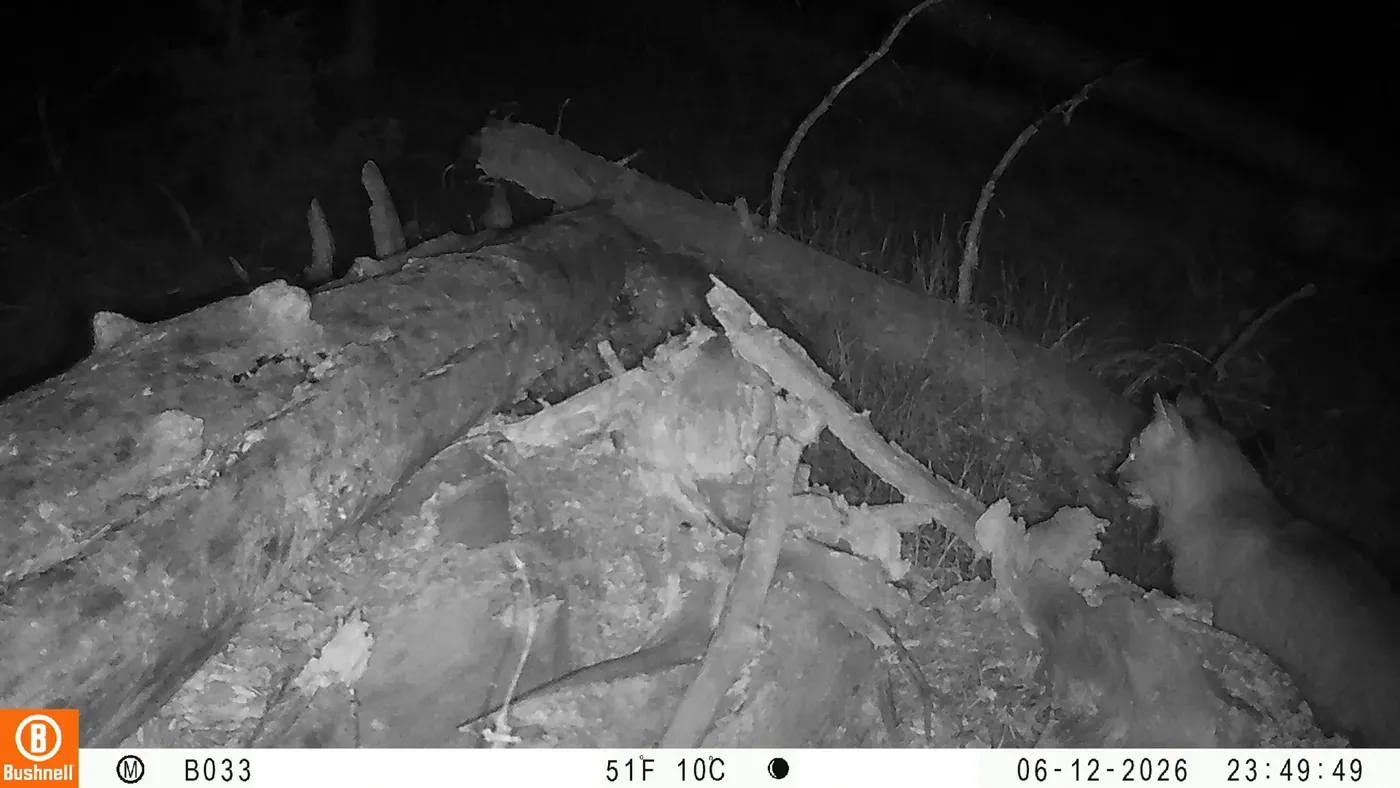
Wildlife researchers in northern New Mexico have made an exciting discovery after months of camera trap monitoring. A team led by Ph.D. student William Grooms has been documenting wildlife across Carson National Forest using motion-sensing cameras as part of a two-year study on forest structure and biodiversity.
Grooms spent the summer deploying dozens of these cameras to capture images of the region's diverse wildlife, including animals like squirrels, rabbits, bears, and foxes that are known to inhabit the San Juan Mountains. The cameras have been collecting valuable data for months now, but it was only recently that Grooms began reviewing his initial batch of photos.
While scanning through the images, Grooms stumbled upon something remarkable, a rare snow-adapted wild cat known as a Canada lynx. This sighting is significant because the species had not been documented in New Mexico for over a quarter-century.
The identification of the Canada lynx was confirmed by experts after Grooms sent them the photos. He expressed his excitement about this discovery, stating that it's just one of the many interesting findings emerging from their research so far. The team is eager to continue analyzing the camera trap data and uncover more secrets about the region's wildlife.
As part of a larger study on forest structure and biodiversity in the Southern Rocky Mountains, Grooms' team aims to provide valuable insights into how forests support a wide range of plant and animal species.
The discovery of a rare wild cat in northern New Mexico has significant implications for conservation efforts in the region. Canada lynx are known to inhabit dense boreal and subalpine forests and woodlands across most of Canada and Alaska, where they can be distinguished from bobcats by their grayish or yellowish-brown coat and wide fur-lined paws.
Despite reintroduction efforts in the San Juan Mountains between 1999 and 2006, Canada lynx populations have remained low throughout the contiguous United States. This species is still considered threatened under the Endangered Species Act, highlighting the need for effective conservation strategies.
The presence of a Canada lynx in northern New Mexico has sparked excitement among wildlife enthusiasts and experts alike. According to Dr. Jennifer Frey, a professor of mammalogy at NMSU, this discovery may lead to additional considerations for managing this species and its habitat by state and federal governments.
The specific environment required by both the Canada lynx and snowshoe hares is crucial for their survival. These animals rely on deep snow and spruce-fir forest environments, where they can hunt for their primary prey under downed trees, logs, and dense vegetation known as the forest understory.
The unique habitats of the Canada lynx and snowshoe hare present a challenge for forest managers in northern New Mexico. These forests are often targeted for hazardous fuel removals due to their propensity to contribute to large fires when they catch on fire.
However, these same conditions are crucial for the survival of these rare wild cats and hares. As warmer climates lead to drier conditions that fuel devastating wildfires, finding solutions becomes increasingly important.
Grooms' research project aims to build resilience in the Southern Rocky Mountains by maintaining wildlife diversity. Leveraging previous work from 2022, he is studying the preferred forest structure of 10 species in the region, including trees and vegetation arrangement.
Using motion-activated cameras, Grooms photographed wildlife at 120 sites across Carson National Forest this summer, with a second round of documentation planned for next summer to complete his project.
The conservation project aims to ensure the long-term survival of Canada lynx and other species in New Mexico and the Southern Rocky Mountains by developing effective forest management strategies.
Motion-activated cameras have been used to monitor wildlife at 120 sites across Carson National Forest this summer, with a second round of documentation planned for next summer to complete the project.
Facts based on reporting originally published by Phys.org.
You may republish this story, in full or in part, if you credit News Central Site and link to it (licence CC BY 4.0). Photos are not included.