White South Africans Return Home Amid Ongoing Violence
The US has taken in thousands of refugees from South Africa, despite its strict ban on refugee admissions.
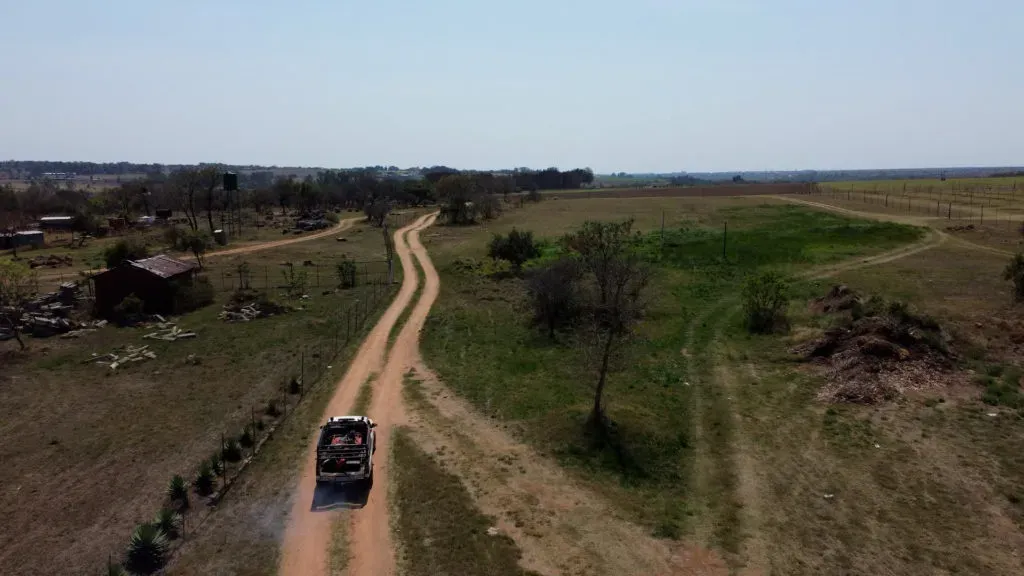
Violence in South Africa has led to an influx of refugees seeking asylum abroad, but it appears that some white South Africans who left their homeland are now returning.
According to recent data, all but five of over 16,000 refugees admitted through September were from South Africa, indicating a significant migration trend.
However, this phenomenon is not one-way traffic; many white South Africans who fled the country due to violence and intimidation are now migrating back home.
The US has taken in thousands of these refugees, despite having a strict ban on all refugee admissions. The Trump administration has carved out an exception for white South Africans, allowing them to enter the country as asylum seekers.
A grim reminder of the violence that drove many to flee was seen over the weekend when at least 17 people were killed in two separate shootings in South Africa.
The Afrikaner community has a distinct language and culture, shaped by their Dutch heritage. Descendants of 17th-century settlers, they formed part of South Africa's white minority that held power under apartheid until democratic elections in 1994.
Right-wing media outlets have highlighted the issue of farm attacks on white South Africans, with some even labeling it as genocide. This narrative has gained traction, particularly after President Trump mentioned it during a meeting at the White House earlier this year. He pointed out that these farmers were being targeted and killed.
The president's comments sparked controversy, but he also made an exception for Afrikaners in his refugee admissions policy. South Africa's government denies any systemic targeting of white farmers, and some experts agree that the issue is more complex than a simple narrative of persecution.
Nico Struwig, a black farmer, pointed out that farm attacks are not unique to white farmers. He believes that many attackers are motivated by greed for wealth and resources rather than racial hatred. His perspective challenges the idea of a genocide targeting white South Africans.
AfriForum, a right-leaning Afrikaner civic group, has been instrumental in bringing attention to the issue of farm attacks. They acknowledge that these crimes are unique and often driven by motives beyond mere robbery. Ernst Van Zyl, a spokesperson for AfriForum, emphasized this point during an interview with a journalist.
The debate surrounding farm attacks highlights the complexities of South Africa's post-apartheid era. While some see it as a case of racial persecution, others view it as a symptom of broader social and economic issues plaguing the country. The discussion is far from over, with different perspectives vying for attention and understanding.
The debate surrounding AfriForum's claims of racial violence in South Africa continues to intensify, with some arguing that the organization is exaggerating the extent of the problem.
Critics point out that despite making up just 7 percent of the population, whites own nearly three-quarters of farmland owned by individuals, according to the government's last land audit.
This stark disparity has led some to suggest that poverty and inequality are major drivers of South Africa's high crime rate, which affects everyone regardless of their racial background.
Nicky Falkof, a professor of media studies at the University of the Witwatersrand in Johannesburg, believes that framing violence as an exceptional problem for white people is both inaccurate and self-serving.
Falkof notes that while AfriForum reports 29 murders specifically targeting whites in 2025, this number pales in comparison to the overall murder rate in South Africa, which saw a staggering 23,642 recorded between January and December of that year.
The story of South African migration continues to unfold in unexpected ways. While some white South Africans are leaving the country, citing concerns about safety and uncertainty, others who departed after apartheid are now returning home.
Natasha Robson-Lovato, a Seattle resident who left South Africa with her family at age 12, is one such returnee. Her parents, Howard and Cecile, made the decision to leave in 1994, amidst growing unrest and protests that made life uncertain for many.
According to Natasha's father, the situation in South Africa was "fairly tumultuous before they left, with concerns about safety even on a daily basis. He believed it was best to give their children opportunities he didn't have when growing up in South Africa.
Decades later, after building a life and business in Seattle, Natasha Robson-Lovato helped bring her family back home. Her American husband, Jason, also joined them in making the move back to South Africa.
The decision to leave South Africa was often motivated by economic factors, but the reverse migration is driven by a different set of considerations. Housing costs are significantly lower here, making it easier for families to afford comfortable living arrangements.
Petra Mason, an arts writer who returned after two decades in New York and Miami, cites cultural affinity as one of the main reasons she chose to come back. For her, South Africa is a country that embodies complexity and intrigue.
The pull of being part of this rich tapestry is undeniable, with its unique blend of cultures and landscapes. This allure was on full display at a recent Jazz Sunday event at a nearby sculpture park, where contemporary artworks by local artists dominated the scene.
Petra Mason was enthusiastic about introducing her guests to the local art scene, surrounded by vibrant works that reflect the country's diverse heritage. As they strolled through the exhibition, it was clear that this is an aspect of South African culture that many returnees find particularly appealing.
Rory O'Hagan, a luxury real estate agent in Johannesburg, has seen a sharp increase in business from returning South Africans since 2023. He attributes this trend to the growing number of people who are seeking more affordable and spacious living arrangements.
The prices of upscale properties here are a fraction of what they would be in Western countries, making it an attractive option for those looking to downsize or upgrade their lifestyle.
The prices of upscale properties in South Africa are a fraction of what they would be in Western countries, making it an attractive option for those looking to downsize or upgrade their lifestyle.
Rory O'Hagan observes that many of those returning to the country are younger families, and there's a diverse cross-section of people coming back. This phenomenon is often referred to as brain regain." The returnees come from various backgrounds, but they share a common desire to reconnect with their roots and contribute to South Africa's growth.
A Facebook group for white South African returnees has grown significantly in the past three years. From under 2,000 members initially, it now boasts over 27,000 members. This surge in membership suggests that more people are considering returning to their homeland. The group serves as a proxy indicator of the number of individuals who have left and are now making their way back.
The concerns about safety that once drove many white South Africans to flee are no longer a primary concern for those thinking of returning. Instead, they see South Africa as a safe haven in an uncertain world. Jason Lovato's comment on his daughter's safety illustrates this shift in perspective, he worries more about her walking alone in Seattle than in Johannesburg.
As the global situation becomes increasingly unstable, many people are reevaluating their priorities and considering a move to South Africa. Petra Mason notes that she hears more and more people talking about the country as a safe place to be. This sentiment is reflected in the growing number of returnees who see South Africa as a destination worth rediscovering.
Facts based on reporting originally published by PBS NewsHour World.
You may republish this story, in full or in part, if you credit News Central Site and link to it (licence CC BY 4.0). Photos are not included.