Ukraine's Military Struggles with Severe Troop Shortage at Front Lines
Ukraine's military is struggling with a severe shortage of combat-ready troops due to draft dodging, desertion, and mobilization problems.
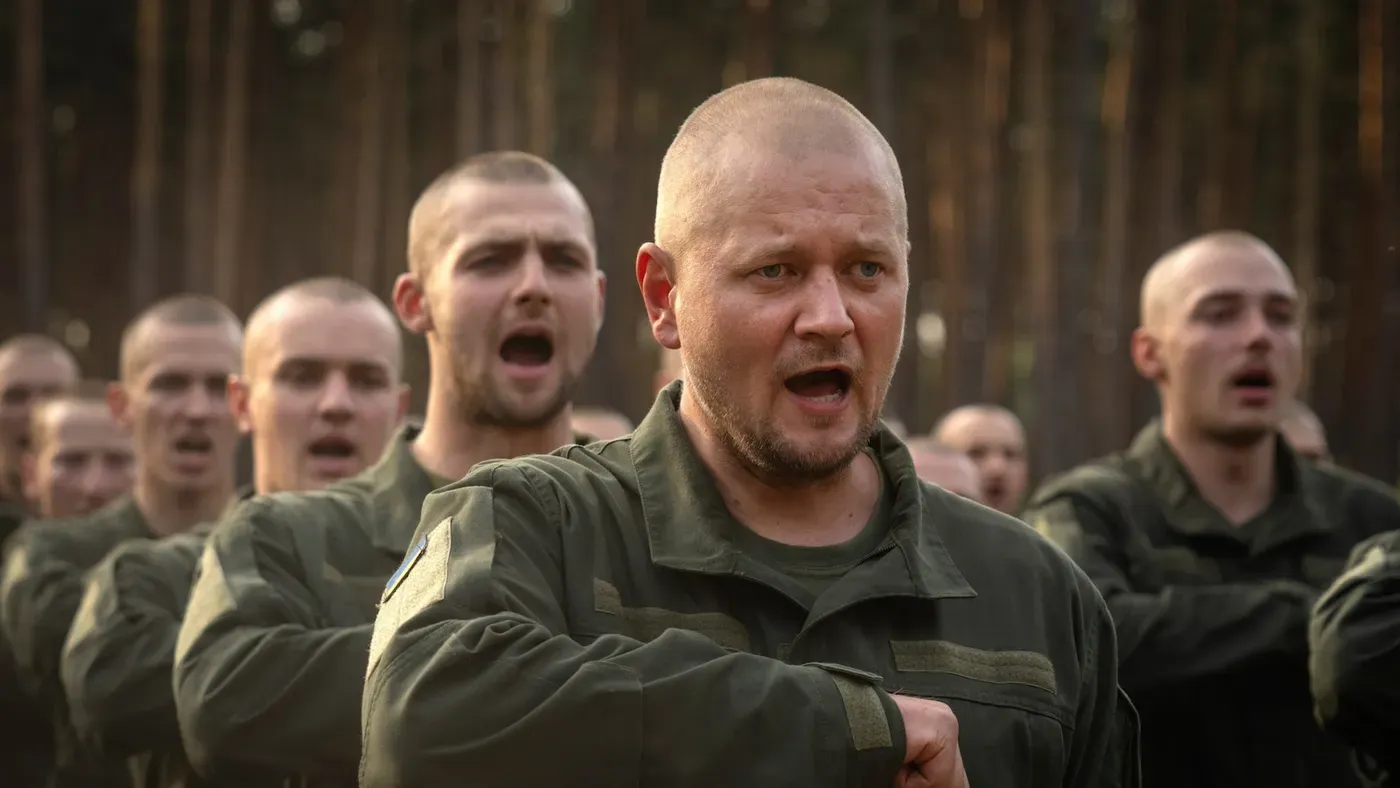
Ukraine's military is struggling with a severe shortage of combat-ready troops at the front lines, a problem that has persisted since Russia's full-scale invasion in 2022. Despite making significant strides in drone technology and tactics, Ukraine's forces are outnumbered by their Russian counterparts.
The situation on the ground is dire, with some units operating at only half strength due to the lack of personnel. Military commanders and analysts warn that this shortage is becoming increasingly acute as the war enters its fifth year, hindering Ukraine's ability to fully exploit battlefield advantages gained through innovative drone operations.
A deputy commander of the Da Vinci Wolves battalion in eastern Ukraine's Pokrovsk area, where Russian forces are actively pushing forward, acknowledged the severe personnel shortage. "Based on the equipment and the number of people we have today, we barely have enough to hold the sector we currently have," he said.
The deputy commander's candid assessment highlights the difficulties facing Ukrainian forces as they struggle to build their reserves due to long-standing mobilization problems. Draft dodging and desertion are among the issues exacerbating the shortage, resulting in only incremental changes along the 1,250-kilometer front line.
The strain on Ukraine's military is evident in its inability to rotate units frequently, a situation made more pressing by the ongoing war.
This lack of rotation leads to exhausted troops, which in turn contributes to increased casualties, according to Nick Reynolds of the Royal United Services Institute.
To address this issue, reforms are underway at the Defense Ministry, with the aim of improving mobilization, training, and the overall organization of the army.
However, these efforts face challenges, as some front-line units continue to underperform, resulting in higher losses for weaker formations, which then need constant replenishment.
The ministry's officials acknowledge that one of the main problems is a shortage of personnel, with efforts underway to develop new mobilization policies and encourage deserters to return to duty.
The Ukrainian government is moving forward with plans to implement reforms aimed at making infantry service more appealing to potential recruits, but progress is slow.
Reforms introduced by Defense Minister Fedorov in June included changes to military contracts that offer higher salaries and fixed terms of service for soldiers serving on the front lines. However, lawmakers have yet to see concrete mobilization initiatives put into action.
A major obstacle facing Ukraine's recruitment efforts is convincing young men to enlist when they perceive little incentive to fight after more than four years of war. This challenge is compounded by a demographic decline resulting from displacement and migration, which has left a relatively small pool of eligible recruits.
According to U.N. figures provided by the Ukrainian National Health System, approximately 6.8 million men aged 25-59 are available for military service, but this number includes wounded veterans and those otherwise unable to serve.
The Ukrainian military is facing a significant challenge as it struggles to maintain its troop numbers due to widespread evasion and desertion. According to estimates, around 2 million men are avoiding military service, while approximately 200,000 soldiers have deserted or left their units without authorization. Those who attempt to evade service often do so by fleeing the country illegally or hiding at home, with recruiters sometimes intercepting them on streets and trains. Men without valid exemptions are then forcibly conscripted into the army.
The government has acknowledged the scale of the problem, revealing in January 2025 that around 950,000 men had been granted deferments at the request of businesses. This figure highlights the difficulties faced by Ukraine's military recruitment efforts, which have become increasingly strained due to the ongoing conflict with Russia. The situation is further complicated by the fact that many eligible recruits are either unwilling or unable to serve.
Russia too is struggling to fill its military ranks, despite launching a partial mobilization of 300,000 reservists months after invading Ukraine. However, this move was widely unpopular and led to hundreds of thousands of men fleeing abroad in search of safety. Since then, the Kremlin has relied on volunteers lured by relatively high pay and benefits to sustain its force of approximately 700,000 men fighting in Ukraine.
Military analysts argue that Ukraine's problem lies not in a shortage of personnel but rather in how they are managed and deployed. Taras Chmut, who heads Come Back Alive, a charity providing assistance to the army, suggests that increasing troop numbers does not necessarily translate to improved effectiveness.
The war in Ukraine is taking a toll on its military's ability to maintain a steady presence at the front lines due to a shortage of troops. This issue is attributed to various factors including exhaustion, poor organization, inadequate training, and the lack of a clear end-of-service date, which can drive recruits to desert.
As a result, units at the front are often understaffed, making it difficult for them to replace battered forces or respond to emergencies. However, drones have been used in some cases to alleviate the shortages by providing air support and reconnaissance capabilities.
The deputy commander of the Da Vinci Wolves battalion, Afer, highlighted the severe impact of this shortage on his unit's operations. With only about half its strength due to the lack of replacements, his unit is struggling to defend a significantly larger area of responsibility than it was initially tasked with.
Afer emphasized that simply maintaining current positions requires at least double the number of troops, and that does not take into account the need for a constant reserve to replace casualties.
Maintaining a stable defensive line in Ukraine requires a significant number of troops, but analysts suggest that holding ground is not necessarily the most pressing concern.
Ukrainian military analyst Pavlo Narozhnyi argues that while manpower is a challenge, it's not an insurmountable one for limited offensives. Recent operations in Dnipropetrovsk and Lyman areas demonstrate this capability, albeit on a relatively small scale.
The conflict has resulted in significant territorial changes, with Russian forces occupying around 990 square kilometers of Ukrainian land since the start of 2026, while Ukraine has reclaimed approximately 820 square kilometers.
Facts based on reporting originally published by ABC News International.
You may republish this story, in full or in part, if you credit News Central Site and link to it (licence CC BY 4.0). Photos are not included.