Syria's Education Ministry Implements New University Course Restrictions
The policy change restricts specific university courses to male students only, affecting women's educational aspirations in Syria.
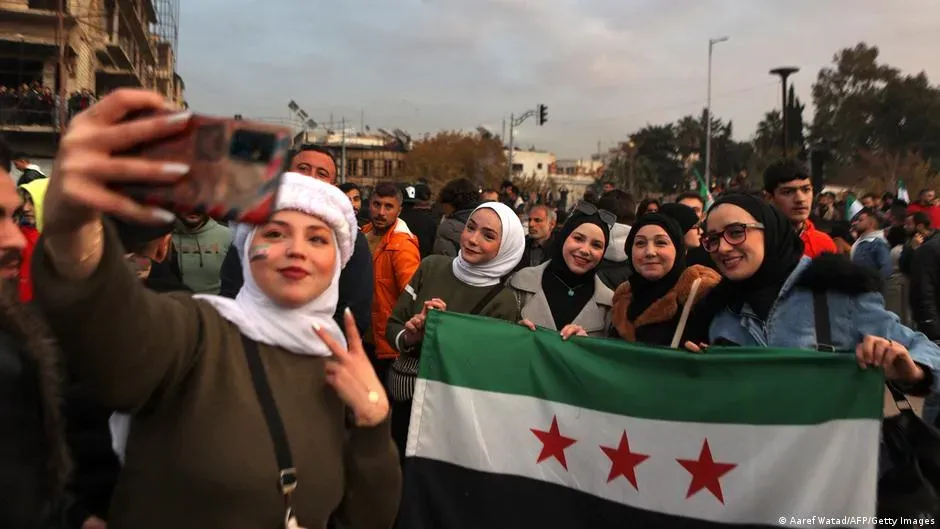
A new policy restricting certain university courses exclusively to male students has been implemented by Syria's education ministry, affecting women's educational aspirations in the country. The decision, announced earlier this month, targets the National University of Defense Sciences and the Syrian University for Security Sciences.
According to the new rules, these institutions will only offer specific courses to men, leaving women with limited options if they wish to pursue higher education in these fields. For those who still want to study at these universities, they can do so by taking generalist courses rather than specializing in their chosen subjects.
This policy change has caused concern for Syrian women like Lin Najab, a 23-year-old mechatronics engineering student from Damascus. Her plans to pursue a master's degree have been put on hold due to the new regulations, and she is now considering alternative options, including relocating to another province to study.
Najab pointed out that moving away from her family would pose additional challenges, particularly in terms of finding suitable accommodation and dealing with conservative societal attitudes towards women living alone.
The decision to restrict university courses for women has sparked heated debate among Syrians.
Many argue that academic merit should be the sole criterion for admission, rather than gender. Education officials are under pressure to improve the quality of graduates and meet international standards.
However, some are opposed to this idea, citing concerns about societal attitudes towards women living alone in certain areas. They also worry about finding suitable accommodation and navigating conservative norms.
Some believe that certain subjects require a physical presence and stamina, making them more suited to men.
The new admission rules in Syria have sparked concerns that the country's government is moving towards a more restrictive approach when it comes to women's rights. A closer examination of the regulations reveals that certain courses are being restricted for female students, not necessarily because they are deemed unsuitable for women, but rather because they require military service.
For instance, attending the National University of Defense Sciences would necessitate serving in the Syrian military, while graduates of the University for Security Sciences must commit to up to 20 years with the internal security forces. This has led some to speculate that the real intention behind these restrictions is not about limiting women's access to education, but rather keeping them out of key positions within the military and security services.
Human Rights Watch has expressed its concerns over this development, releasing a statement that criticizes the discriminatory rules as a clear violation of Syria's international legal obligations. The organization views this move as part of a concerning pattern of actions by the transitional authorities aimed at restricting women's role in state institutions and perpetuating gender stereotypes.
The restrictions on female students are not limited to military colleges alone, with several other educational institutions also imposing similar rules. For example, females were barred from certain courses at railways institutes, oil and gas training organizations, and a radio and television course in Idlib. Conversely, men were prohibited from attending kindergarten and nursing school training programs, as well as midwifery courses that would otherwise be women-only.
These developments have raised questions about the government's commitment to promoting gender equality and protecting women's rights within Syria's education system. As the situation continues to unfold, it remains to be seen whether these restrictions will be rolled back or become a permanent fixture in the country's educational landscape.
The Syrian government's alteration of school textbooks has raised eyebrows, particularly when it comes to images and symbols associated with the previous authoritarian regime headed by dictator Bashar Assad. Education ministry officials had announced plans to remove these images earlier this year, but recent changes have sparked further concern.
Journalists have noticed that pictures of women in the textbooks who were previously depicted without headscarves are now altered or removed altogether. In some cases, even statues and artwork featuring bare-chested individuals have been modified to cover up their chests. Additionally, a picture of men dancing has also been excised from one textbook.
These changes have led to speculation about the impact on women's education in Syria. The government had previously announced plans to establish new security institutes that would offer military training to civilians. However, officials claim that some of these gender-exclusionary rules were carried over from the Assad-era colleges that were merged earlier this year.
The Middle East Institute reported in 2024 that many Arab countries allow women to attend military colleges and serve, but often restrict them to non-combat or symbolic roles. This attitude towards female soldiers and military leaders is not uncommon in conservative circles across the region.
Syria's ban on women attending university courses has sparked concerns about the country's future attitude towards gender equality.
Historically, women have been allowed to participate in Syria's security services but their roles were largely limited and symbolic, according to a policy paper by the Syrian Center for Defense and Security Studies this year. This lack of meaningful participation is being criticized by human rights advocates who argue that it perpetuates a narrow view of women's capabilities.
The ban on university courses sends a stark message to young Syrian women about their potential roles in society, according to activist Rana al-Ash from the Paris-based organization, the Syrian Women's Political Movement. Al-Ash argues that institutions like universities play a significant role in shaping societal expectations and confronting these expectations becomes even more difficult when they are endorsed by educational institutions.
The impact of this ban on Syria's future is still unclear, but analysts like Nadra Bunni from the Middle East Institute Switzerland are warning that gender-based restrictions could become a feature of the new Syria.
The ban on women attending university courses has sparked outrage among Syrians, but it also raises questions about the country's new government and its relationship with citizens.
The move is seen as a worrying sign that Syria's new authorities may prioritize maintaining control over empowering citizens to question and challenge decisions. This could lead to a culture where dissenting voices are silenced, rather than encouraged.
Facts based on reporting originally published by DW English.
You may republish this story, in full or in part, if you credit News Central Site and link to it (licence CC BY 4.0). Photos are not included.