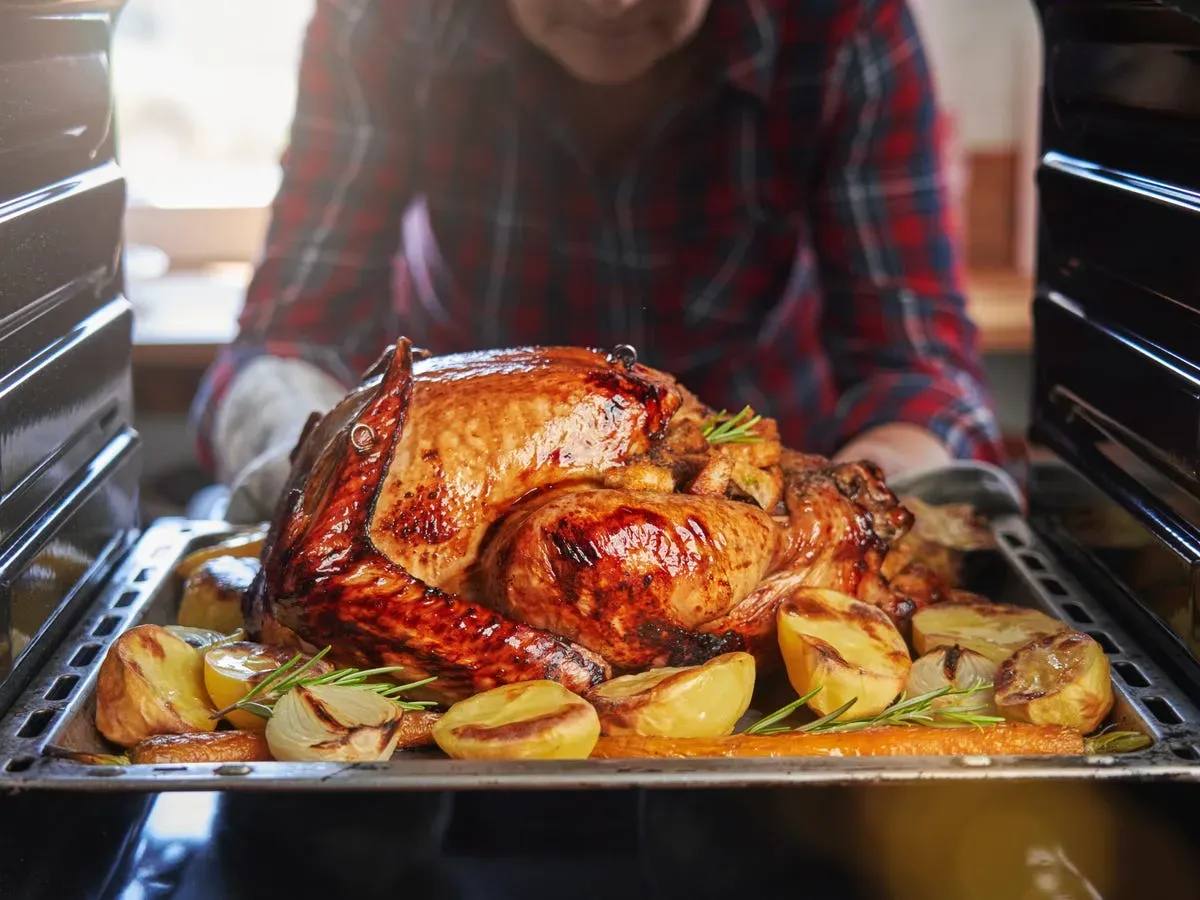
Swanson Faces Excess Turkey Problem in 1953
A leading food company, Swanson, had a surplus of 260 tons of turkey after Thanksgiving in 1953 and needed a solution to minimize waste.
Roughly 160 million Americans were set to celebrate Thanksgiving in 1953, but a significant problem lay ahead for Swanson, a leading food company at the time. A staggering 260 tons of turkey remained unsold after the holiday, and it was imperative that something be done with this surplus before it spoiled.
The sheer scale of the issue necessitated an innovative solution, and Gerry Thomas, a salesman at Swanson, rose to the challenge. According to reports, the company had a pressing equation to solve: how to utilize 260 tons of excess turkey in a way that would minimize waste.
Thomas was tasked with finding a practical answer to this problem, and his creative thinking led him down an unexpected path. Little did he know that his solution would have far-reaching implications for the American food industry.
The solution Thomas proposed involved packaging pre-cooked turkey, along with other essential side dishes like peas and gravy, in aluminum trays. This convenient meal-in-one concept was designed to be easy to heat up at home, making it an attractive option for busy households.
Swanson's predicament had finally been addressed, but the full extent of Thomas' contribution would only become apparent over time. The seeds of a revolutionary new product had been sown, and before long, pre-made meals would become a staple in American cuisine.
Gerry Thomas's ingenuity was about to change the face of American cuisine forever. With a stash of 5,000 aluminum trays and an idea to match, he set up an assembly line in what would become a pivotal moment for Swanson.
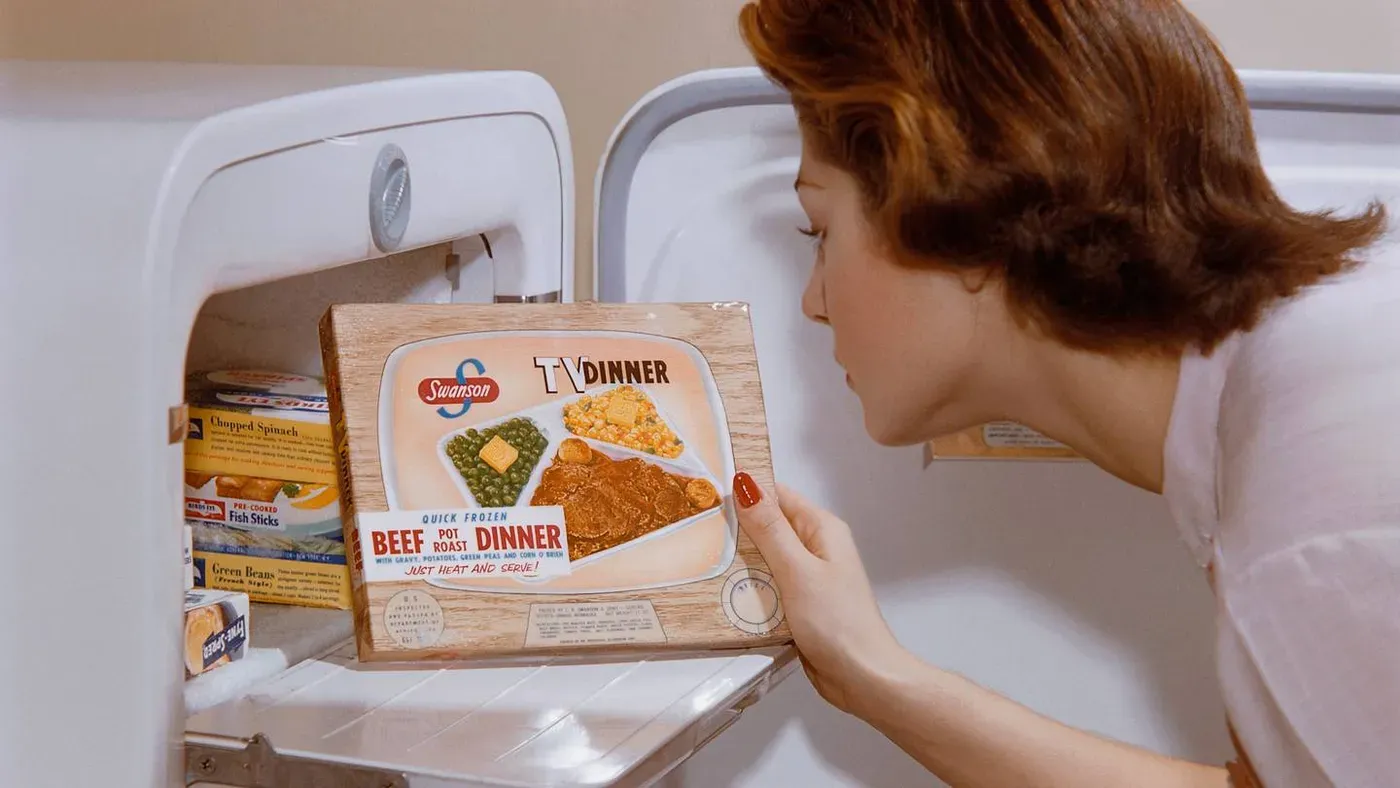
The production line churned out pre-packaged meals consisting of turkey, sweet potatoes, peas, cornbread, and dressing with gravy - a complete meal that could be heated at home. This innovative approach not only reduced food waste but also provided a convenient solution for families during the holidays.
By 1954, Thomas's creation had gained massive popularity, selling ten million units at an astonishingly low price of just 98 cents per meal. The convenience and affordability of these pre-made meals resonated deeply with Americans who were eager to indulge in their favorite holiday feast without the hassle of cooking from scratch.
The impact of Thomas's invention was far-reaching, transforming the way people consumed food during special occasions. As millions of Americans devoured TV dinners in front of their screens, a new era of culinary convenience dawned on the nation.
The traditional dinner table underwent a significant transformation as households began embracing the convenience of TV dinners.
Meals that once brought families together around the dining-room table were now being devoured in front of the screen, marking a shift away from communal eating.
In 1953, the landscape of home cooking and social interaction started to change dramatically with the introduction of TV dinners.
While some households continued to insist on formal dining, others eagerly adopted the new convenience food, initially marketed as a luxury item for grocery stores.
The rise of TV dinners meant that women no longer had to spend hours preparing meals from scratch, only to face the daunting task of washing and drying an array of dishes afterwards.
Instead, families could simply heat up their pre-packaged trays in the oven, enjoy their meal while watching television, and then dispose of the trash when they were finished.
The convenience of TV dinners revolutionized the way Americans spent their evenings at home. Gone were the days of tedious meal preparation and cleanup. Families could now quickly heat up pre-packaged trays in the oven and enjoy their meals while watching television.
As TV dinner popularity soared, manufacturers responded by introducing special tray tables that made it easy to eat from these convenient packages. The widespread adoption of microwaves also played a significant role in solidifying TV dinners as a staple in American households. Campbell's developed microwavable trays that further enhanced the convenience of TV dinners.
The variety of TV dinner options expanded over time, catering to diverse tastes and preferences. Banquet's Salisbury steak and Stouffer's pasta were popular choices, while Blue Zones Kitchen introduced healthier alternatives in 2024. This shift towards more health-conscious options reflected a growing awareness of the importance of nutrition among consumers.
In addition to these adult-oriented options, manufacturers also created TV dinners specifically designed for children. Kid Cuisine was one such product that featured chicken tenders, macaroni and cheese, and brownies - a meal that '90s kids eagerly requested from the frozen-food aisle.
The introduction of microwaves and microwavable trays transformed the way Americans consumed TV dinners. These innovations enabled faster heating times, making it even more convenient for families to enjoy their meals without the hassle of traditional cooking methods.
As the popularity of TV dinners continued to grow, manufacturers responded by introducing new products and flavors that catered to changing consumer preferences. This trend demonstrated how consumer needs and tastes can drive innovation in the food industry.
The iconic TV dinner has become an integral part of American culture, but its origins are more complex than one might think. In 1954, Swanson & Company was left with a massive surplus of turkey after underestimating consumer demand for Thanksgiving. This miscalculation led to the creation of the first TV dinners.
The initial batch consisted of turkey, cornbread dressing, gravy, peas, and sweet potatoes in separate compartments, all encased in aluminum trays. Swanson's innovation was met with moderate success, but it wasn't until they partnered with a food packaging company that the product really took off. Today, TV dinners remain a staple in many households, often served on special occasions or as a convenient meal solution.
Facts based on reporting originally published by Mental Floss.
You may republish this story, in full or in part, if you credit News Central Site and link to it (licence CC BY 4.0). Photos are not included.