Study Suggests Ghost Particle Played Key Role in Universe's Evolution
A new study proposes that a hypothetical "ghost particle" could have dominated the universe immediately after the Big Bang, influencing its expansion and matter-antimatter balance.
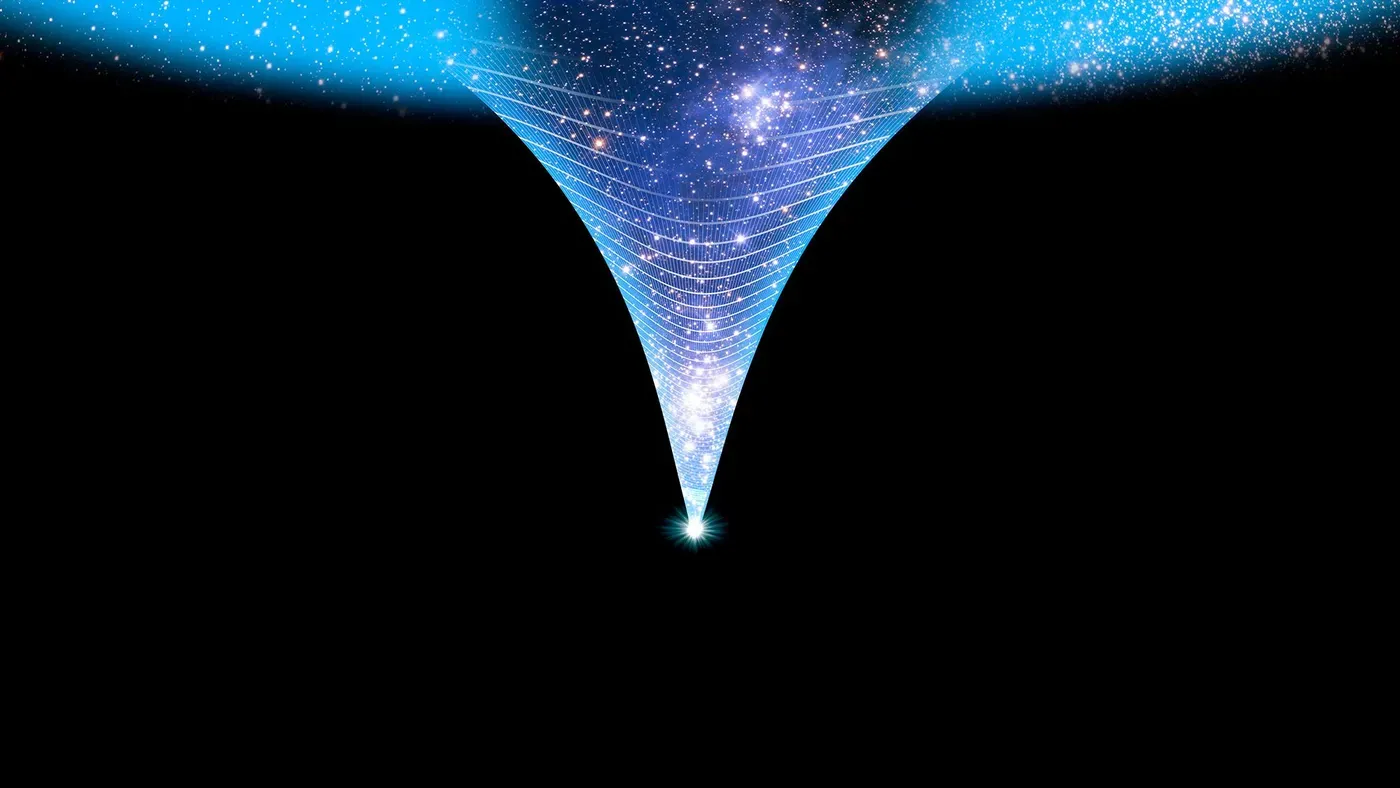
A groundbreaking study has shed new light on the earliest moments of the universe's existence, suggesting a long-overlooked "ghost particle may have played a pivotal role in shaping its evolution. According to researchers, this hypothetical particle could have dominated the universe immediately after the Big Bang, influencing the rate at which the cosmos expanded and determining the balance between matter and antimatter.
The study proposes that this right-handed neutrino held an enormous amount of energy, possibly even exceeding that of all other particles in the infant universe combined. This would have accelerated cosmic expansion and delayed certain particle interactions, fundamentally altering the conditions under which matter emerged victorious over its antimatter counterpart. The implications of such a scenario are far-reaching, potentially explaining why anything exists at all.
Neutrinos, as scientists know them, are notoriously elusive particles that rarely interact with their surroundings. A single neutrino from our sun could pass through a massive slab of lead, equivalent to approximately 5.9 trillion miles in thickness, before colliding with even a single atom. This peculiarity arises from the fact that neutrinos come in three distinct flavors," which they switch between as they travel due to a subtle quantum effect.
The Standard Model of particle physics predicts that neutrinos should be massless, but evidence suggests otherwise. The discrepancy highlights the ongoing efforts to refine our understanding of these enigmatic particles and their role within the universe's grand tapestry.
The concept of right-handed neutrinos has gained attention as a potential solution to the mystery surrounding the universe's fundamental particles.
These hypothetical particles are distinct from their left-handed counterparts, which are part of the Standard Model and interact through the weak nuclear force. Right-handed neutrinos, on the other hand, do not feel this force and possess no electric charge. They are also significantly heavier than their left-handed equivalents.
Theoretical physicist Rishav Roshan notes that right-handed neutrinos may mix with left-handed neutrinos, potentially explaining why the latter have mass and change flavors. This mixing allows for a unique characteristic of quantum physics, where particles can exist as a blend of two identities at once.
In this context, the seesaw mechanism plays a crucial role. It proposes that each ordinary neutrino is accompanied by a heavy right-handed partner, which leaves behind a faint trace giving the neutrino its mass. The heavier the partner, the lighter the ordinary neutrino and the fainter the trace.
This interplay between the heavy and light neutrinos has led to the development of new models and simulations aimed at refining our understanding of these fundamental particles.
The discovery of right-handed neutrinos has sparked new ideas for understanding the universe's fundamental particles. Researchers are exploring how these particles could explain several long-standing puzzles in physics, including the origin of neutrino masses and the matter-antimatter imbalance.
Right-handed neutrinos play a crucial role in models that attempt to resolve the universe's matter-antimatter asymmetry issue. According to this theory, the Big Bang should have created equal amounts of matter and antimatter, but instead, our universe is dominated by matter. The presence of right-handed neutrinos could provide an explanation for how this imbalance arose.
In one model, decaying heavy neutrinos left behind a surplus of leptons, which later became today's excess of matter. This process would have occurred in the early universe when the particles were still interacting with each other. Researchers are examining the role of these heavy neutrinos and their interactions with matter.
The seesaw framework is often used to describe the behavior of right-handed neutrinos, but it typically includes three such particles. However, researchers have found that two right-handed neutrinos may be enough to explain observed phenomena, making the third particle redundant in many cases.
As the universe expanded and cooled, the energy of this hypothetical particle would have undergone a significant transformation. Initially moving at nearly the speed of light, its energy would have dissipated over vast distances, spreading out and weakening as it went.
However, as space continued to expand and cool, the particle's velocity would have slowed significantly, allowing most of its energy to be locked into its mass rather than being dispersed. This shift in energy distribution would have enabled the particle's influence to grow, ultimately dominating the universe until it eventually decayed into other particles.
The study suggests that this neglected right-handed neutrino plays a crucial role in shaping the early universe's expansion dynamics, driving a period of matter domination and impacting various Standard Model interactions. These interactions could potentially explain the observed imbalance between matter and antimatter in the universe.
As space expanded faster due to the heavy neutrino's influence, these interactions would have been delayed until the particle had cooled sufficiently. This delay allowed for distinct lepton flavors to emerge, affecting how the excess of matter formed in the early universe.
The heavy neutrino is an elusive particle that has proven difficult to study due to its massive size, making it impossible to create in a laboratory setting.
Scientists are exploring alternative methods to detect this enigmatic particle, and one promising approach involves analyzing the background of early-universe gravitational waves for signs of its presence. These ripples in space-time could hold the key to understanding the heavy neutrino's role in shaping the universe as we know it today.
Researchers have proposed that an era dominated by the heavy neutrino would leave a distinct imprint on the gravitational wave spectrum, similar to the signature left behind by cosmic strings - hypothetical thread-like defects in space. By studying these patterns, scientists may be able to infer the presence of the heavy neutrino and its impact on the universe's evolution.
Future facilities such as the Laser Interferometer Space Antenna (LISA) and the Square Kilometer Array Observatory (SKAO) are poised to provide valuable insights into this phenomenon. LISA, a space-based mission scheduled for launch in 2035, will use gravitational waves to probe the early universe, while SKAO's giant radio telescope project will allow scientists to study distant pulsars and potentially detect the faint hum of the hot primordial plasma.
The data collected by these facilities could provide conclusive evidence of the heavy neutrino's existence, allowing researchers to better understand its role in shaping the universe.
The discovery of a heavy neutrino could potentially explain why matter dominates the universe over antimatter. Researchers believe that this particle was created during the early stages of the Big Bang and has been present ever since. The existence of such a particle would also help to clarify why we see more matter than antimatter in today's universe.
The data collected by these facilities could provide conclusive evidence of the heavy neutrino's existence, allowing researchers to better understand its role in shaping the universe. This knowledge could potentially shed light on some of the biggest mysteries in physics and cosmology. The findings would be a significant breakthrough in our understanding of the fundamental nature of the universe.
Facts based on reporting originally published by Live Science.
You may republish this story, in full or in part, if you credit News Central Site and link to it (licence CC BY 4.0). Photos are not included.