Humans and Monkeys Show Similar Visual Perception Abilities in Study
Researchers have developed an innovative way to compare how humans and monkeys perceive their surroundings using a simple "oddball test" that measures visual perception abilities.
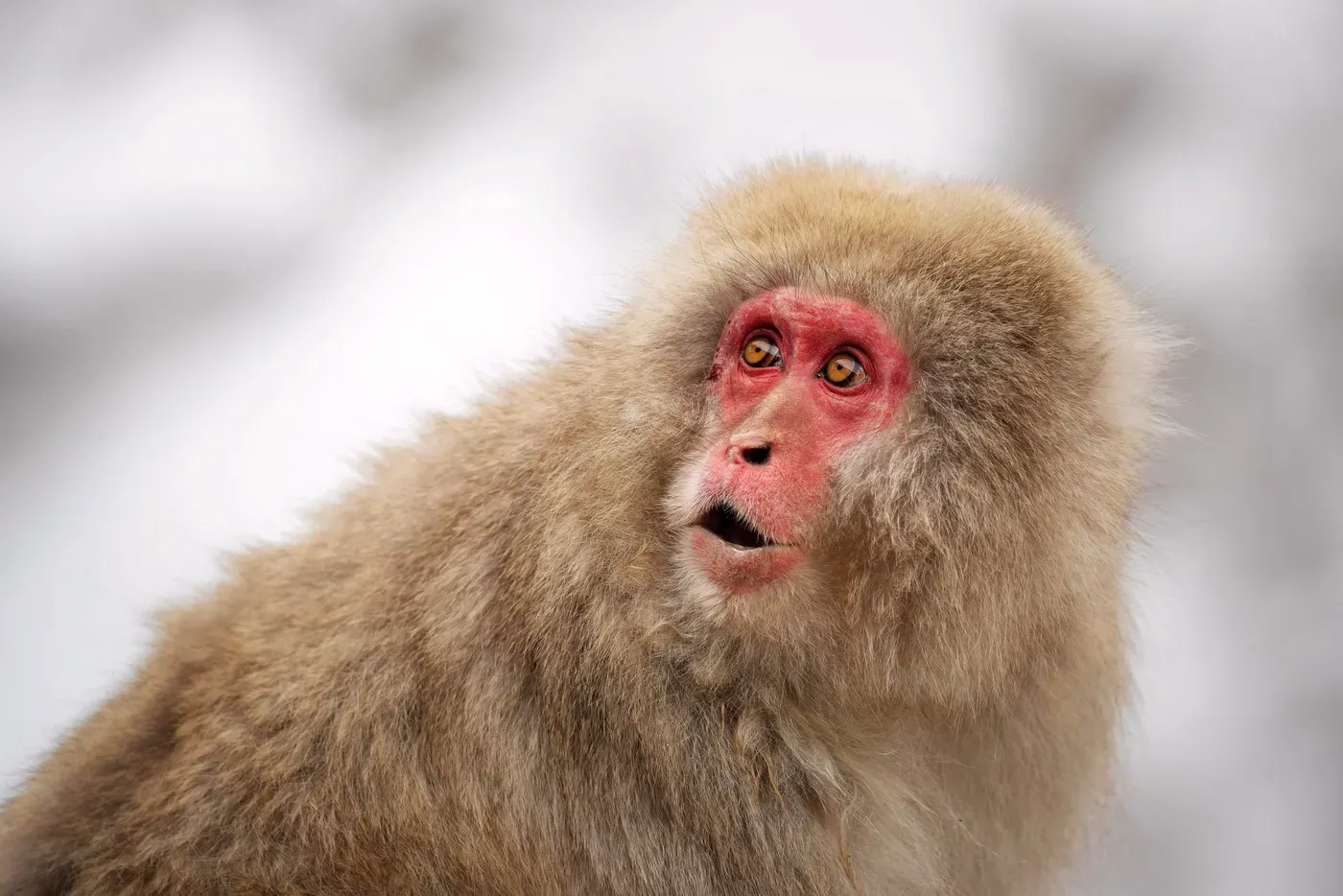
Researchers in India have developed an innovative way to compare how humans and monkeys perceive their surroundings, challenging the idea that our visual experiences are unique to our species.
To do this, they used a simple yet effective "oddball test, which measures a subject's ability to identify unusual patterns or objects within a set of images. In this case, participants were shown a series of pictures on a screen, all identical except for one that was subtly different.
The results showed that while humans and monkeys scored similarly in many areas of visual perception, there were two notable differences between the species. Monkeys proved to be less affected by images being flipped upside down, indicating a possible difference in their spatial awareness or cognitive processing.
Monkeys also demonstrated a heightened focus on fine details within the images, suggesting that they might be more attuned to nuanced visual cues than humans. This could have significant implications for our understanding of the evolution of human vision and perception.
The test's ability to measure perception has been put to the test itself, and it appears to be working as intended. When the oddball image is similar in appearance to the others, it takes longer for participants to identify it, providing a clear indication of their perceptual abilities.
To assess how well the test performs across different species, researchers taught it to three monkeys using juice rewards, alongside 24 people. The results showed that both humans and primates were able to categorize objects in similar ways. For instance, they consistently grouped inanimate items together as more similar than animate ones.
The similarity between human and monkey performance extended to their perception of changes in stimuli. Both species obeyed Weber's law, which states that the smallest noticeable difference in a stimulus depends on its initial magnitude. This was demonstrated by experiments showing that participants required larger changes in brightness to notice when spots were very bright compared to when they were faint.
However, the test also revealed some differences between human and monkey perception. Researchers observed that both species struggled with distinguishing mirror images flipped across a vertical axis from those flipped horizontally. This phenomenon, known as mirror confusion, is thought to arise from our frequent exposure to objects viewed from various angles around a vertical axis.
The finding that monkeys exhibit similar mirror confusion" to humans has implications for our understanding of visual perception and its evolution in primates. The fact that both species are prone to this error suggests that it may be an inherent aspect of their visual processing systems, rather than something learned through experience.
In the oddball test, images flipped across a horizontal axis tend to stand out more than those flipped vertically, making them easier to distinguish from normal images. This phenomenon was observed in human participants who took longer to identify outlier images when they were reflected around a vertical axis rather than a horizontal one. However, this effect did not occur among the monkeys tested in the study, which suggests that their visual processing systems may be wired differently.
The researchers found that the monkeys consistently performed similarly whether images were flipped vertically or horizontally, indicating that they do not experience mirror confusion like humans do. This might be due to the fact that agile primates are accustomed to seeing familiar objects from various angles, making them less sensitive to spatial orientation. As a result, the monkeys' visual processing systems may prioritize recognizing specific features over maintaining a sense of overall shape.
When tested with large shapes composed of smaller units, the humans in the study were more efficient at identifying changes in the overall pattern rather than individual components. In contrast, the monkeys focused on the details and showed no improvement in performance when the larger shape changed as well. This disparity highlights a fundamental difference between human and monkey visual perception, with the primates exhibiting a stronger emphasis on recognizing specific features over contextual information.
The study's findings suggest that the monkeys' brains are highly attuned to small features but less concerned with overall shapes or patterns. While it is unclear why this might be the case, the results provide valuable insights into how different species perceive and process visual information.
The study's findings have sparked a new understanding of how monkeys process visual information, revealing striking differences between species.
Researchers are excited about the potential implications of this study for human vision research, as monkeys are often used as models to understand human visual processing. However, it appears that these similarities may be more superficial than previously thought. The study suggests that it's not safe to assume that monkeys see the world in exactly the same way as humans.
The simplicity and versatility of the oddball test have opened up new avenues for research, with potential applications extending beyond primate vision. By adapting this approach, scientists can now explore how different species, including children and individuals with certain conditions, perceive their surroundings.
Facts based on reporting originally published by New Scientist.
You may republish this story, in full or in part, if you credit News Central Site and link to it (licence CC BY 4.0). Photos are not included.