New Paradigm for Fiber Growth in Neurodegenerative Diseases Uncovered
Researchers at Leiden University have discovered how amyloid fibers grow from protein droplets in neurodegenerative diseases.
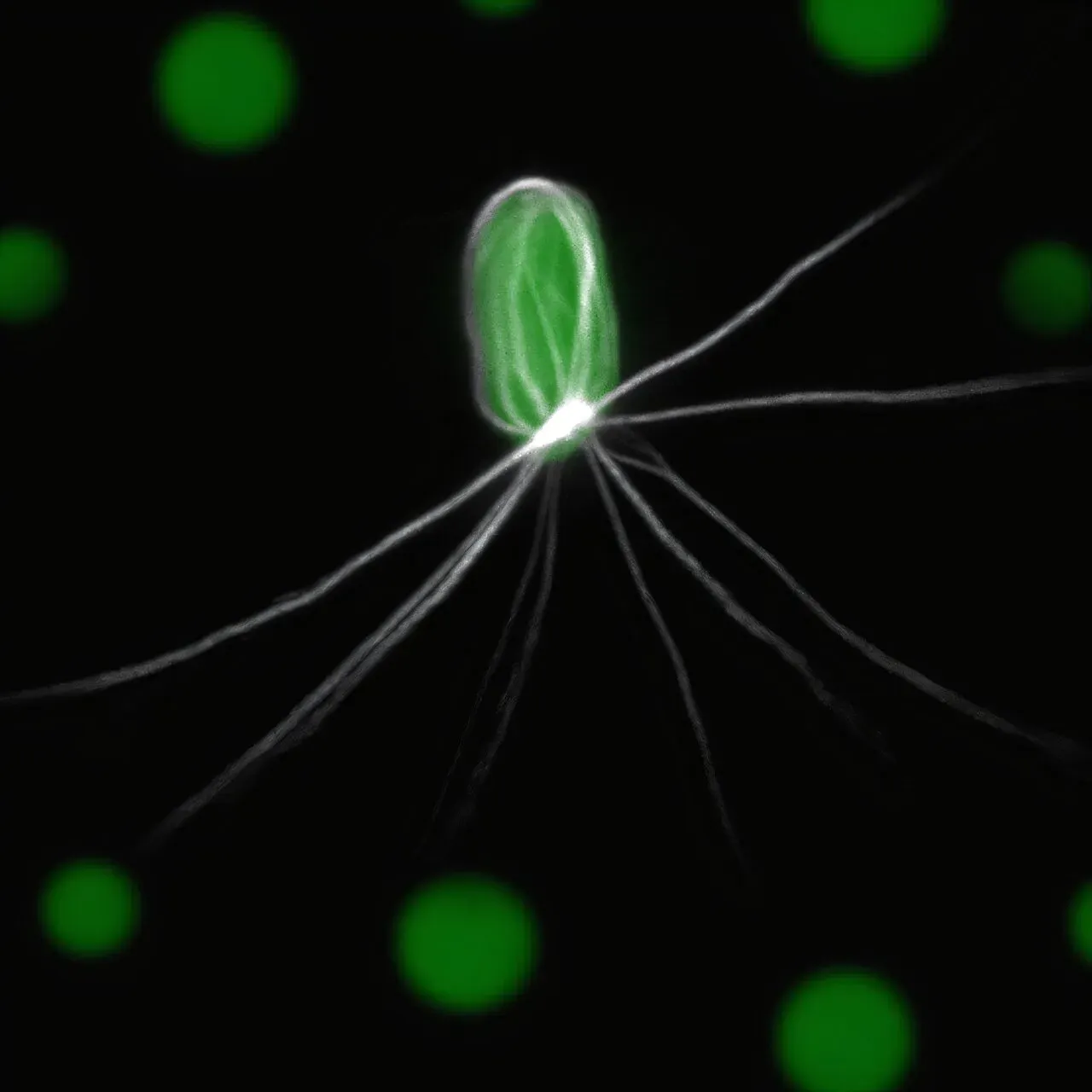
Physicists have uncovered a new paradigm for fiber growth in neurodegenerative diseases after years of research into the connection between protein droplets and amyloid fibers.
Researchers at Leiden University have been studying proteins that are linked to conditions such as Alzheimer's disease and ALS, which can form both liquid droplets and solid amyloid fibers. However, a crucial question remained unanswered: how do these two states interlink, and where exactly do the fibers grow?
Assistant professor Louise Jawerth explained that her team aimed to address this open question by investigating what happens to protein droplets as they age. These droplets are essentially liquid-like condensates of proteins inside cells, which scientists have only recently begun to understand.
The study's findings provide a crucial piece in the puzzle surrounding the aging process of these protein droplets, with important implications for our understanding of neurodegenerative diseases. The researchers successfully visualized, quantified and modeled the aging process of these droplets.
Protein droplets are highly complex materials that can transition from liquid-like states to solid glassy or fibrous forms. Jawerth noted that a link between fiber growth and neurodegenerative disorders has been observed for over a decade, with conditions such as Alzheimer's disease and ALS being key examples of this connection.
The researchers employed a confocal microscope to monitor their samples in 3D over a period of 12 hours. This allowed them to observe and quantify the development of protein droplets into both glassy and fibrous solid states.
The team's findings were unexpected, with Jawerth stating that they had initially thought fibers would grow within the droplets where protein concentrations are highest. However, their research revealed a different pattern: fibers actually emerge from the surface of the droplets and extend towards the outside.
As the fibers grew, the researchers observed the droplets shrinking and becoming glasslike in appearance. This suggests a complex interplay between the two solid forms of the protein, with glassy and fibrous states existing independently rather than one transitioning into the other.
Feng's experiments demonstrated that by first aging the proteins for two days before initiating fiber growth, the aged droplets showed minimal fiber development. This implies that the aging process has a significant impact on the subsequent growth of fibers, potentially influencing the overall progression of the disease.
The researchers' data analysis revealed that glassy and fibrous states represent competing ways in which the protein system can age, existing side by side but not directly transitioning into one another.
The team behind the new findings on fiber growth in neurodegenerative diseases has been working closely with theoretical physicists at the Max Planck Institute to develop novel theoretical frameworks.
These collaborative efforts have been crucial in helping researchers understand and predict the complex processes involved in protein aging. The availability of two confocal microscopes in their lab has also played a significant role, allowing for detailed imaging of cells and tissues using laser light.
The unique expertise of team member Feng has been instrumental in making visible observations that were previously unseen under the microscope. Interpreting these findings required building a new conceptual framework to understand the underlying physics driving protein aging.
With this newfound clarity on protein function, researchers are now better equipped to tackle more complex questions and explore the intricacies of cell biology. The team's work has already sparked interest among biologists and medical professionals who can now view their data through a fresh lens.
The next steps in this research will undoubtedly involve applying these new insights to real-world problems, with potential applications in the diagnosis and treatment of neurodegenerative diseases.
The findings of this research have significant implications for our understanding of neurodegenerative diseases, particularly Alzheimer's and Parkinson's. The study suggests that the glassy state of aging proteins may not be solely responsible for cell degeneration. Instead, it is possible that the formation of fibers could be a distinct and potentially unhealthy process.
The researchers emphasize that their work has only scratched the surface of this complex issue. Further investigation is needed to determine the role of fiber formation in neurodegenerative diseases. By gaining a deeper understanding of these processes, scientists may be able to develop more effective treatments for these conditions.
One potential application of this research is the development of new diagnostic tools. By identifying the characteristics of healthy versus unhealthy protein droplets, doctors may be better equipped to diagnose and treat patients with neurodegenerative diseases.
Ultimately, this study represents a crucial step forward in our understanding of the fundamental processes underlying neurodegenerative diseases.
Facts based on reporting originally published by Phys.org.
You may republish this story, in full or in part, if you credit News Central Site and link to it (licence CC BY 4.0). Photos are not included.