Spiders Experience Distinct Stages of Sleep
A study on Australian jumping spider Portia fimbriata sleep patterns has revealed distinct stages of sleep similar to those in humans and other animals.
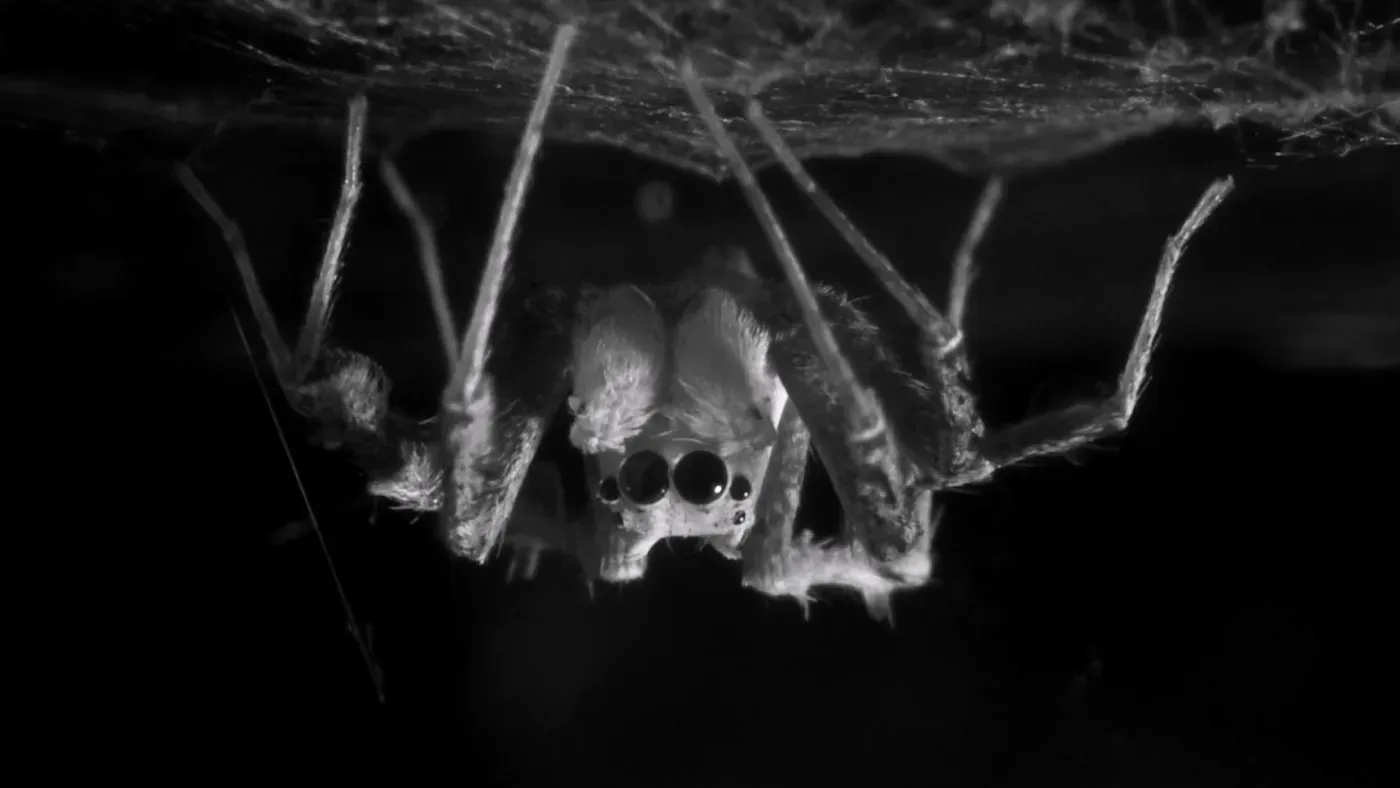
A study on the sleep patterns of spiders has revealed that they, like humans and other animals, experience distinct stages of sleep. Researchers from the Institute of Organismic Biology at the University of Bonn investigated this phenomenon in the Australian jumping spider Portia fimbriata.
The scientists observed the behavior of these spiders over several days and nights using high-resolution recording equipment, allowing them to identify patterns that may indicate different stages of sleep. This research is significant because it provides experimental evidence for true sleep behavior in spiders, a subject area that has been largely unexplored until now.
Portia fimbriata is a species of spider known for its intelligence and complex hunting strategies. These spiders are able to mimic the vibrations of insects caught in webs to lure web-building spiders into their trap, demonstrating a high level of learning ability. This sophistication makes Portia fimbriata an interesting subject for study.
The researchers' findings suggest that these spiders experience two distinct stages of sleep, including one that bears some resemblance to REM sleep in humans and other animals. The characteristics of this stage, such as rapid eye movements and muscle twitches, are similar to those observed in vertebrates during REM sleep.
Further research is needed to fully understand the implications of these findings for our understanding of spider behavior and cognition. The study's results also highlight the importance of exploring sleep patterns across different species to gain a more comprehensive understanding of this fundamental aspect of animal biology.
The research team observed Portia fimbriata spiders in small plastic dishes to record their day-night rhythms and sleep patterns. The dishes were 12 centimeters in diameter and placed under varying lighting conditions for several days. Infrared cameras captured the spiders' sleep positions, resting phases, and REM-like phases in detail during nighttime recordings.
To verify whether the spiders were truly asleep, researchers used an acoustic stimulus to measure their reaction times. This test helped determine if the animals were in a genuine sleep state or just resting. The study aimed to understand how these arachnids respond to external stimuli while asleep.
The biggest challenge in studying spider sleep behavior was finding a reliable stimulus for arousal experiments. Spiders perceive the world differently from humans, making it difficult to design an effective test. Researchers had to be cautious not to overinterpret the REM-like movements and instead test their significance step by step.
To conduct these experiments, researchers relied solely on behavioral observations without being able to measure brain activity directly. This required extensive video documentation, resulting in large amounts of data to analyze. The team faced a significant challenge in managing this vast amount of information effectively.
The absence of direct brain activity measurements meant that researchers had to focus on the spiders' behavior and reactions to stimuli. By doing so, they aimed to gain insight into the sleep patterns of these fascinating creatures without relying on indirect or speculative methods.
The study's findings have significant implications for our understanding of sleep patterns across different species. Researchers believe that studying the sleep habits of jumping spiders can provide valuable insights into how sleep has evolved over time and whether REM-like states are a common feature in the animal kingdom.
Comparative studies of sleep behavior could reveal universal principles and shed light on the fundamental function of sleep, which remains poorly understood despite extensive research. By examining sleep patterns in diverse organisms, scientists hope to identify key similarities and differences that can inform our understanding of this complex biological process.
The researchers plan to expand their investigation to encompass a broader range of spider species and explore how sleep behavior varies across different environments and habitats. This will involve comparing the sleep patterns of spiders in the wild with those in laboratory settings, as well as examining the impact of climate change and artificial light at night on their sleep cycles.
Researchers are now planning to compare the sleep patterns of wild jumping spiders with those in laboratory settings. This will help scientists understand how environmental factors affect a spider's sleep cycle.
The study also aims to examine the impact of climate change and artificial light at night on the sleep cycles of jumping spiders. These factors could potentially disrupt their natural behavior, leading to further research into their effects on spider populations.
Facts based on reporting originally published by Phys.org.
You may republish this story, in full or in part, if you credit News Central Site and link to it (licence CC BY 4.0). Photos are not included.