NASA Concludes Max Power Event at Kennedy Space Center
The event showcased cutting-edge technologies, including NASA's update on the Ignition initiative, which aims to establish a human base on the moon by 2032.
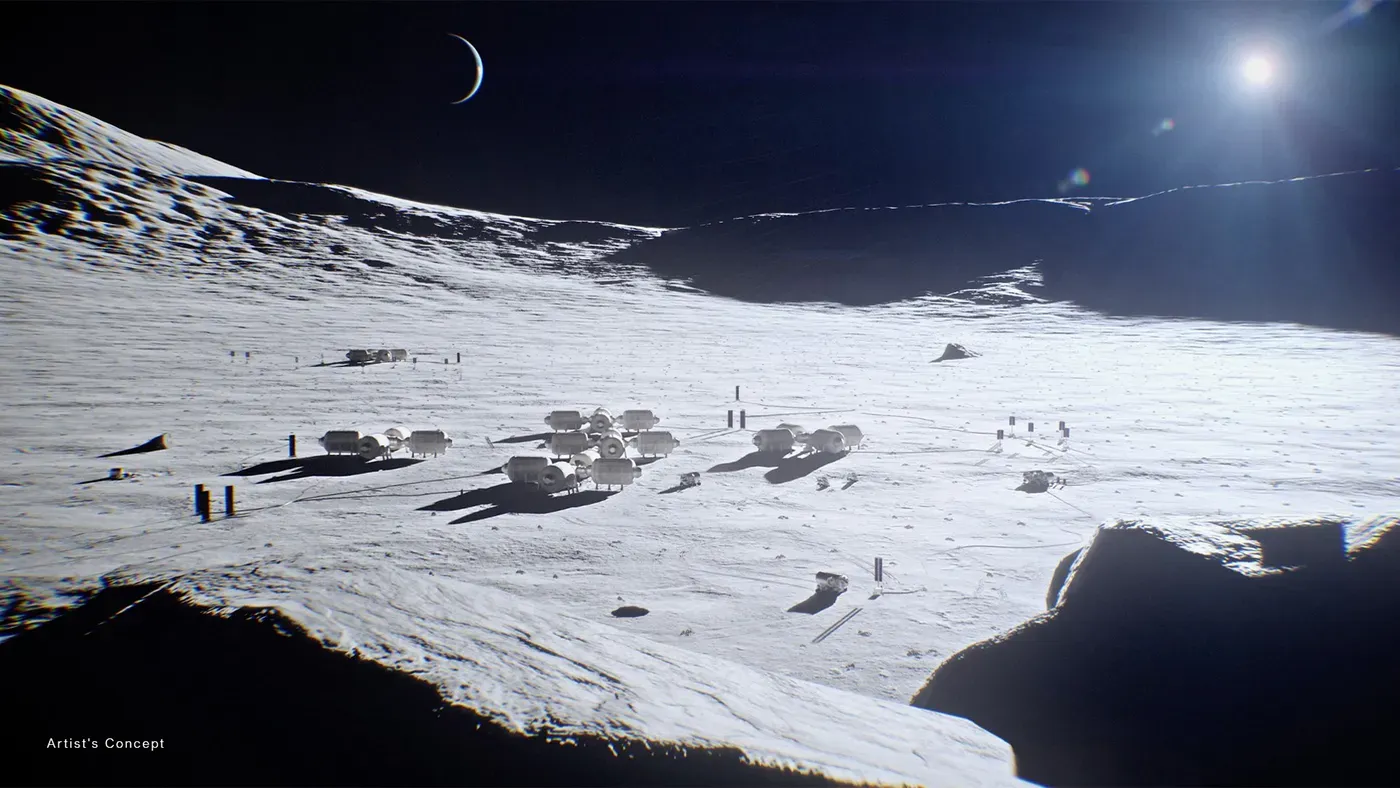
NASA has concluded its Max Power event at the Kennedy Space Center in Florida, an aerospace technology expo that ran from Wednesday to Sunday. The event featured discussions, panels, and demonstrations of cutting-edge technologies, but the main focus was on NASA's update on the Ignition initiative.
The Ignition initiative aims to establish a human base on the moon by 2032, but it is a costly endeavor that requires collaboration with various space companies. As part of this effort, Max Power showcased several key projects, including the CLPS 2 contract and a nuclear-powered moon rover designed for lunar architecture.
To achieve its goal, NASA plans to rely heavily on commercial aerospace companies to supply essential components. These partners include Blue Origin, Firefly Aerospace, Intuitive Machines, Lockheed Martin, Northrop Grumman, SpaceX, Voyager Technologies, and ispace-US. Many of these companies have already been providing technology for the Artemis program.
The Artemis missions are crucial in their own right, as they aim to return humans to the moon by 2028. However, they also serve as a stepping stone for the Moon Base initiative. The success of these missions will be essential in establishing a sustainable human presence on the lunar surface.
A significant setback occurred when Blue Origin's New Glenn rocket exploded in May, casting uncertainty over the project timeline. Despite this development, NASA remains committed to its ambitious goal and is pushing forward with the Ignition initiative, relying on its partnerships with commercial aerospace companies to drive progress.
NASA's plans for a lunar base are taking shape as the agency continues to develop its infrastructure on the Moon. As part of this effort, NASA has awarded contracts to several companies to transport cargo and equipment to the lunar surface.
The CLPS 2 contract is a key component in establishing a permanent human presence on the Moon. By sending materials and equipment ahead of time, astronauts will be able to immediately start building the base when they arrive. This approach allows for a more efficient use of resources and enables the construction process to move forward at a faster pace.
The development of cargo landers is also crucial in establishing a reliable supply chain between Earth and the Moon. These vehicles are responsible for transporting cargo from space to the lunar surface, but they must first be transported themselves. To address this challenge, NASA has allocated $1.3 billion in funding to three companies: Blue Origin, Arrow Science and Technology, and Impulse Space.
These companies will work on developing Orbital Transfer Vehicles (OTVs), which are essentially "long-distance freight trucks" designed to carry cargo landers and other equipment to the Moon's surface. The OTVs will play a critical role in deploying these systems safely and efficiently, ensuring that the construction process remains on track.
As part of this initiative, NASA has also increased its budget for CLPS 1.0 from $2.6 billion to $4.2 billion. This expanded funding will support the development of infrastructure and vehicles necessary for continuous transportation between Earth and the Moon.
NASA has outlined a crucial next step in its lunar base plans: assessing the risks and challenges associated with establishing a continuous transportation system between Earth and the Moon. To achieve this goal, three key missions are currently underway or slated for completion.
The first mission involves research to identify ways to minimize human risk during the transportation process, as well as determining the optimal configuration for deploying CLPS landers on the lunar surface. This will be crucial in ensuring a safe and efficient transportation system is established.
NASA's MoonFall drones are also being deployed to conduct reconnaissance of the lunar surface, with the aim of identifying the most suitable location for establishing a base. The data collected by these drones will play a critical role in informing NASA's decisions about where to establish its lunar presence.
The agency has awarded Blue Origin a significant contract to develop and deploy a nuclear-powered rover called Promise, which is designed to operate continuously through lunar night and in permanently shadowed regions. This capability will enable the rover to analyze regolith, search for ice, and conduct general exploration of the lunar surface.
NASA is taking significant steps towards establishing a sustainable presence on the moon by awarding contracts for energy storage and transmission to Honeybee Robotics and Yank Technologies. The companies will provide solar arrays, batteries, and wireless power hardware that will be assembled into the Mini-Communications and Solar Tower (miniCast) at NASA's Marshall Space Flight Center in Huntsville, Alabama.
The miniCast is a crucial component of the lunar base infrastructure, as it will enable the rover to operate efficiently on the moon. This development builds on previous initiatives aimed at addressing the technical challenges associated with establishing a permanent human presence on another world.
In an effort to encourage innovative thinking and problem-solving, NASA has launched the Moon Base Student Challenge, which offers $1 million in prizes for students who submit the best ideas related to lunar base development. The initiative is designed to tap into the creativity and expertise of young people from across the country.
The challenge invites students to tackle a wide range of problems associated with establishing a moon base, including energy generation, life support systems, and radiation protection, among others. By engaging students in this effort, NASA hopes to accelerate progress towards its goal of creating a sustainable human presence on the lunar surface.
Facts based on reporting originally published by CNET.
You may republish this story, in full or in part, if you credit News Central Site and link to it (licence CC BY 4.0). Photos are not included.