US Lags Behind in Driverless Train Adoption
The United States is behind in adopting driverless trains despite advancements in automated vehicles like robotaxis.
The United States is lagging behind in adopting driverless trains, despite advancements in automated vehicles like robotaxis.
A major exception to this trend can be found in cities that have already introduced fully automated transportation systems, such as Honolulu's existing line and the planned new lines in Washington D.C. and Los Angeles.
These projects are ambitious but face significant challenges, including financial hurdles and technical issues that must be overcome before they can become a reality.
Cities across the world are ahead of the US in implementing automated mass transit, with numerous examples found in Europe, Asia, Canada, Australia, South America, and the Middle East.
The push for automation is long overdue, according to some experts, who argue that the benefits of reduced labor costs outweigh the upfront expenses required to implement such systems.
The push for automation in transit systems has been slow to materialize in the US, despite rapid advancements in self-driving cars. While companies like Waymo and Tesla have made significant strides in on-road vehicle automation, the transportation sector using tracks has lagged behind.
One notable example is the Washington D.C. Metro system, which initially introduced automated features when it opened 50 years ago. However, these were disabled after a fatal crash in 2009 and only recently reinstated over the past two years.
Efforts to automate transit systems are now underway in various cities across the US. In Los Angeles, an environmental review is currently being conducted for an automated track on a new underground line of its heavy-rail system. This project aims to reduce costs by cutting through the challenging terrain of the Santa Monica Mountains.
In contrast, Honolulu has already implemented a comprehensive driverless transit system, which will stretch 19 miles when completed. This elevated line surpasses earlier pilot projects in Detroit and Miami, as well as smaller systems in Las Vegas and other cities.
Several automated monorails have been introduced in US cities over the years, but unfortunately, some have failed to succeed. For instance, an automated monorail in Memphis was shut down due to operational issues, while a driverless system in Jacksonville will soon be discontinued due to budget constraints.
The 2009 train collision on the D.C. Red Line that killed nine people and injured many others highlights the importance of reliable automation systems in transit infrastructure. The National Transportation Safety Board attributed the crash to a maintenance problem in the automated signaling system, emphasizing the need for effective safety protocols.
The Washington Metropolitan Area Transit Authority's CEO Randy Clarke emphasized that the recent crash at Fort Totten was unrelated to the restoration of an automated signaling system on the Red Line in 2024 and other Metro lines last year.
Clarke acknowledged that the incident had a significant impact on the authority's plans for further automation, effectively putting them on hold for many years. He described the current system as highly regulated, well-documented, and proficient.
A major upgrade to the Red Line is currently underway, with a nearly $1 billion plan approved by Metro's Board of Directors in April to enhance safety features. This includes the installation of protective barriers that prevent passengers from accessing the tracks.
Clarke noted that while automated trains may become a reality as early as 2033, human workers will still be required to maintain the tracks and respond to emergencies.
John Samuelsen, international president of the Transport Workers Union, has expressed concerns about automation efforts in New York and elsewhere. He believes that passengers would be left vulnerable during self-evacuations from a third-rail system.
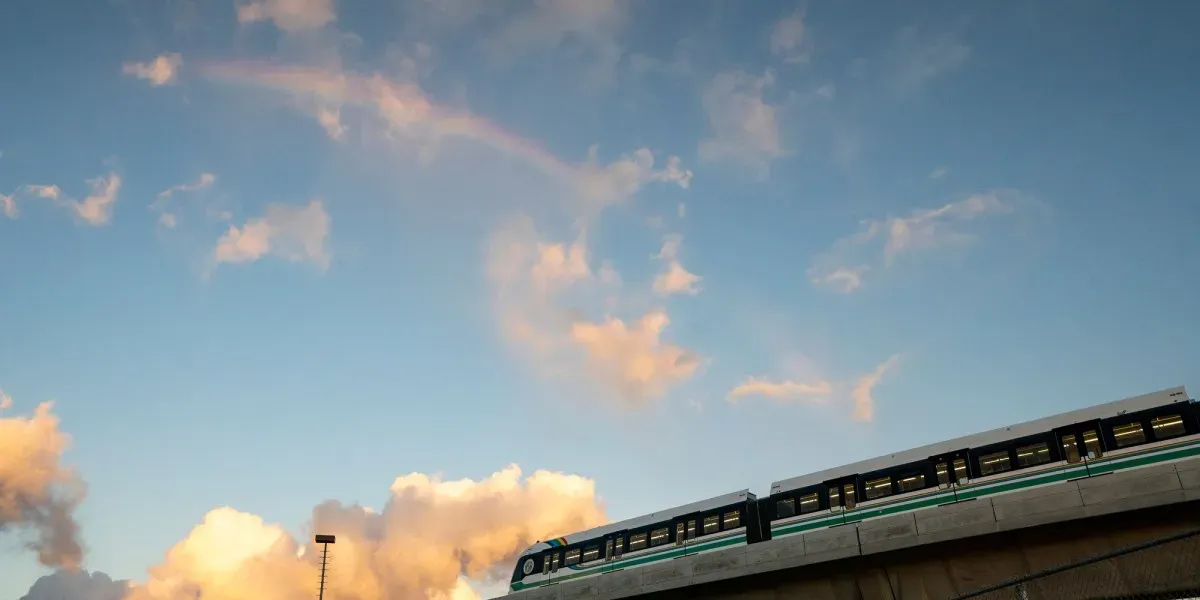
The Skyline automated light metro transit system in Honolulu has been operational for three years and has undergone expansion last year to alleviate traffic bottlenecks for commuters.
Project director Vance Tsuda attributes the lack of incidents involving automation to the absence of human error, highlighting that even hybrid systems are less safe than completely automated ones. According to Tsuda, a human's oversight can lead to serious consequences, such as an open door being overlooked and a train cleared for departure prematurely.
Tsuda's stance is in contrast to David King, an associate professor of urban planning at Arizona State University, who emphasizes the importance of maintaining a perfect success rate to maintain public trust. The Fort Totten crash and other incidents involving automation have set back the technology, according to King.
King points out that while private industry is allowed to experience some level of failure, the same tolerance does not apply when it comes to government-run projects. He cites Elon Musk's SpaceX as an example, where several rocket failures would be catastrophic for NASA's budget if they occurred in a public sector context.
The ambitious transit automation effort underway in Los Angeles aims to address one of the country's most notorious traffic congestion areas - beneath the Santa Monica Mountains. This region separates the bustling Westside employment hub from the San Fernando Valley, creating significant travel difficulties for residents and commuters.
The proposed new subway line in Los Angeles would be an automated system, unlike the existing one under the same mountain range near Hollywood, which still requires a human driver on board. According to Cecily Way, who oversees planning for the Sepulveda Project at LA Metro, the new proposal envisions shorter and more frequent trains.
The new line would also feature station doors designed to protect passengers waiting on the platform from approaching trains, mirroring a similar design element in the Washington project. This attention to safety features reflects an effort to prioritize passenger well-being in the development of these automated transit systems.
The successful implementation of driverless trains in Los Angeles or Washington could serve as a catalyst for other cities to adopt similar technology, according to experts. As one observer noted, such a breakthrough would send a clear signal that automation is not only technologically feasible but also desirable for major transit lines.
Facts based on reporting originally published by Fortune.
You may republish this story, in full or in part, if you credit News Central Site and link to it (licence CC BY 4.0). Photos are not included.