Sound Designers Use Unconventional Methods to Create Godzilla's Roars
The filmmakers behind the new Godzilla movie experimented with speakers at a dam to capture the monster's vocalizations.
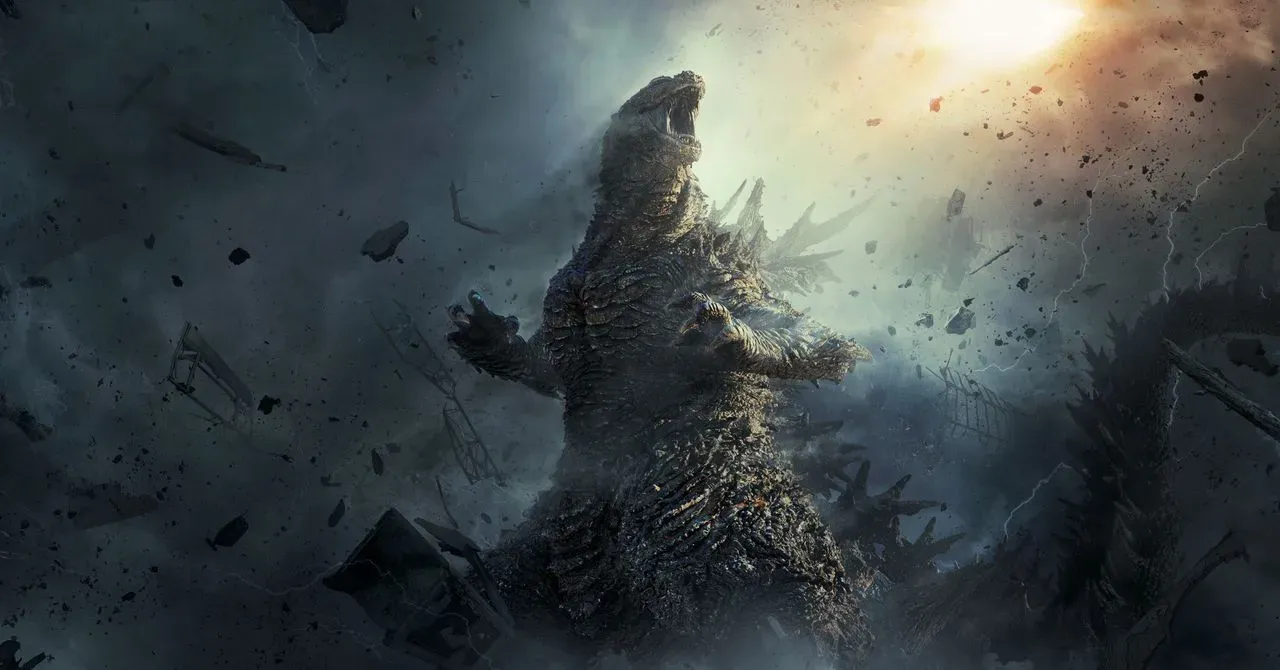
Filmmakers behind the new Godzilla movie have been experimenting with unconventional methods to create the iconic monster's terrifying roars. Sound designer Natsuko Inoue and her team used a unique technique to capture the massive vocalizations of Godzilla and its arch-nemesis, King Ghidorah.
To achieve this, they took speakers to the top of an outdoor dam, much to the distress of nearby picnickers and strollers who were caught off guard by the loud noises. The intention was to create a massive sound field that would be picked up by microphones to create the illusion of the monsters' roars.
According to sound designer Natsuko Inoue, her team initially had doubts about whether this approach would work. However, when they first tested it, the results were striking - and reassuring for everyone involved.
The filmmakers behind Godzilla Minus Zero pushed the boundaries of sound design to bring their monstrous creations to life. To simulate Ghidorah's dragon-like wings, they experimented with a rubber fisherman's suit and mixed it with the sounds of an accordion-like air duct.
Creating a believable on-screen presence for two iconic monsters is no easy feat, especially after the commercial success of Godzilla Minus One. That 2023 film grossed $114 million worldwide at the box office, setting high expectations for its sequel.
The new trailer showcased during the film's panel at NYCC promised an action-packed ride with aerial dogfights and a showdown between Godzilla and Ghidorah that will leave audiences on the edge of their seats. The sequel is directed by Takashi Yamazaki and features visual effects from Tatsuji Nojima, who has been making waves in the industry.
Nojima's journey as a visual effects artist began when he was still a teenager, working on animation projects as a hobby before joining Shirogumi as a compositor. His talent caught the attention of director Yamazaki, who encouraged him to develop his skills further.
The filmmakers behind "Godzilla Minus Zero" pushed the boundaries of visual effects to create an immersive experience for viewers. To achieve this, Nojima and his team employed advanced techniques, including simulating millions of particles to capture the intricate details of ocean water.
One notable example of their work is a shot from the trailer where Godzilla bursts out of the ocean while chasing a seaplane. The scene's whitewater effect was recreated by simulating 200 million particles, demonstrating the level of detail and realism that can be achieved through computer-generated imagery. This approach allowed the filmmakers to bring the monster's iconic roar to life in a way that terrified audiences.
The film is set for release on November 6 in US theaters and November 3 in Japan, which has become a significant date in the Godzilla franchise, marking the original film's release in 1954.
Facts based on reporting originally published by Wired.
You may republish this story, in full or in part, if you credit News Central Site and link to it (licence CC BY 4.0). Photos are not included.