Sled Dogs' Success Linked to Shorter Leg Bones
A new study has found that sled dogs have shorter leg bones than other breeds, which may have enabled them to pull loads more efficiently in the Arctic.
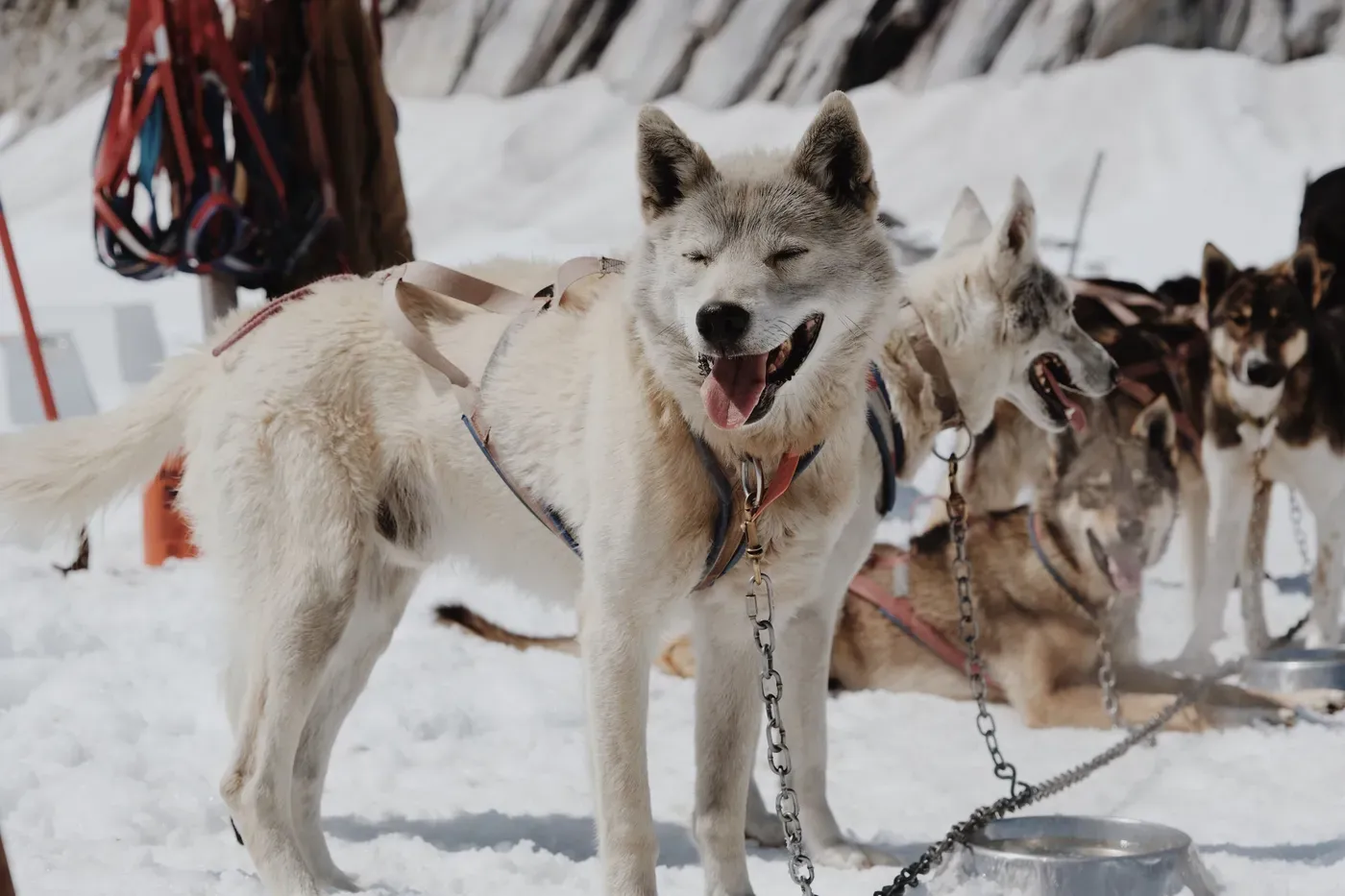
For centuries, dogs have been instrumental in helping humans traverse the harsh Arctic terrain, hauling vital supplies and equipment across vast expanses of snow-covered land where other domesticated animals struggled to survive.
A new study published recently has shed light on a key factor behind the success of sled dogs: their relatively short legs. Researchers discovered that current sled dogs and their ancient counterparts from 2,000 years ago shared a common trait - significantly shorter leg bones compared to similar species.
This finding is based on an examination of the remains of ritually buried dogs, which revealed that these animals had around 6% shorter leg bones than other similar breeds. This adaptation may have enabled sled dogs to pull loads more efficiently, allowing them to play a crucial role in human survival and mobility in the Arctic.
According to Dr. Mitya Kletzerman, lead author of the study from the University of Haifa in Israel, sled dogs have been an indispensable part of Arctic communities for millennia. They enabled people to hunt, relocate, and travel between communities, facilitating knowledge exchange and idea sharing.
Without the aid of sled dogs, human survival and mobility in the Arctic would be severely compromised. The study's findings could provide valuable insights into how humans adapted to life in this harsh environment over the past 9,000 years, highlighting the crucial role that sled dogs have played in shaping human history.
Researchers have long been puzzled by the origins of dog sledding in the Arctic region. While evidence suggests that humans and sled dogs first began working together around 9,000 years ago on Zhokhov Island in modern-day Russia, pinpointing the exact timing and spread of this practice has proven challenging due to the scarcity of archaeological finds related to sledding equipment.
Studies have shown that animals used for work can exhibit distinct physical characteristics in their skeletons. For instance, reindeer employed for racing and carrying loads display variations in their limb bones compared to those not subjected to similar labor. Building on this knowledge, Kletzerman's team hypothesized that sled dogs might also develop specific skeletal traits enabling them to adapt to the demands of pulling a sled.
To investigate this hypothesis, the researchers developed a biomechanical model to analyze how a dog's body would handle the physical strain of hauling a loaded sled. Their simulations revealed that one effective strategy for generating force is for the dog to lower its center of gravity, thereby increasing its capacity to pull the load.
According to Kletzerman, when an individual or animal pulls a load, it tends to throw them off balance backward. By positioning their center of mass lower or more forward, however, they can counteract this effect and generate greater pulling force.
The researchers continued their investigation into the unique characteristics of sled dogs by analyzing the skeletal proportions of modern canids. To determine whether modern sled dogs have a lower center of mass due to shorter leg bones, they examined 60 canid specimens, including sled dogs, wolves, mongrels, and spitzes.
The team measured the lengths of five long bones in these specimens: the humerus, radius, and ulna in their forelegs, and the femur and tibia in their hind legs. After adjusting for overall skeletal size, they found that sled dogs had relatively shorter radius, ulna, and tibia bones compared to non-sled canids.
On average, these bones were about 6% shorter in sled dogs than in other canid species. It is unclear how this trait developed over time, but researchers speculate that selective pressure may have preserved it because it provided an advantage to sled dogs.
To understand whether this characteristic was present in ancient dogs, the team examined 82 ancient dog bones and three ritually buried skeletons from archaeological sites associated with ancestral Inuit populations in Chukotka, Russia. These sites date back about 2,000 to 500 years ago.
About 89% of the ancient bones analyzed showed a pattern consistent with modern sled-dog skeletal proportions, featuring shorter leg bones. This was also true for all three ritually buried dogs examined by the team.
The study of ancient Inuit dogs reveals that their short legs were not a result of genetic mutations or breeding practices, but rather an adaptation for pulling sleds in the harsh Arctic environment.
These biomechanically advantageous features allowed people to traverse the region for thousands of years, with evidence suggesting this partnership between humans and dogs dates back at least 9,000 years.
Facts based on reporting originally published by Phys.org.
You may republish this story, in full or in part, if you credit News Central Site and link to it (licence CC BY 4.0). Photos are not included.