Ireland Faces Challenges in Tourism Market Amid Economic Uncertainty
Tourism Ireland's Chief Executive Alice Mansergh highlighted the challenges facing the country's tourism market at the Skift Transatlantic Summit.
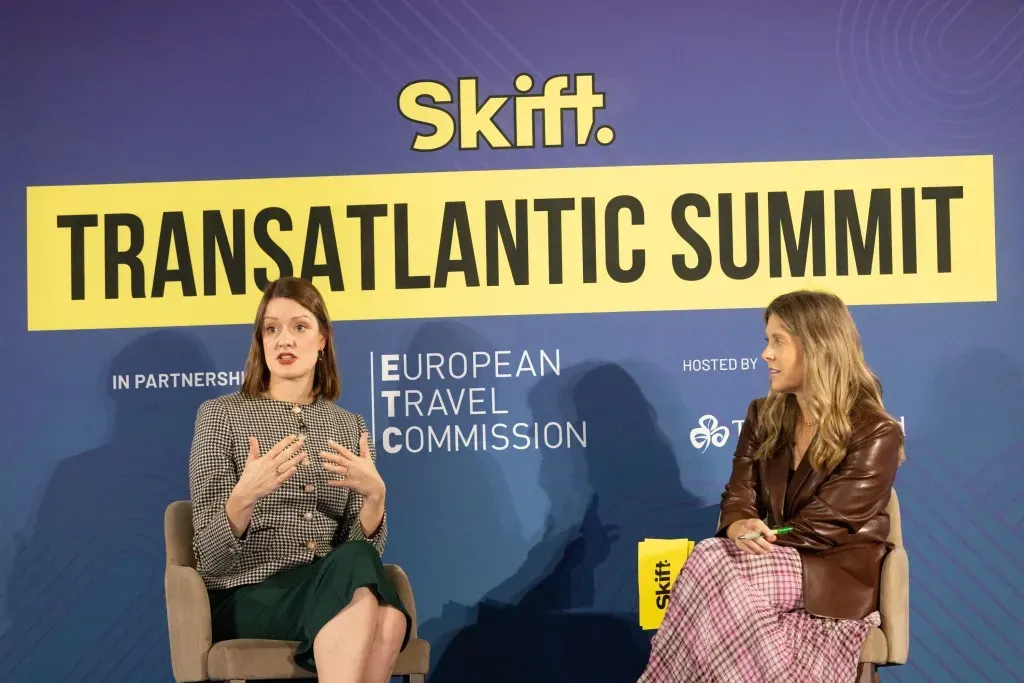
A major challenge is emerging for Tourism Ireland as it navigates a rapidly changing travel market. The country's Chief Executive, Alice Mansergh, highlighted this issue at the Skift Transatlantic Summit, where she discussed the island of Ireland's strategies to maintain its appeal to travelers.
North America remains one of Ireland's most valuable visitor markets, but the outlook is becoming increasingly uncertain. Despite continued growth in visitor numbers, there are signs that demand may be softening due to higher costs and economic uncertainty affecting travelers' spending habits.
So far this year, Ireland has seen a 5% increase in visitors from North America, with these tourists also spending 10% more than previous years. However, the past few months have been marked by a slowdown in bookings as travelers become more cautious about their finances.
In an effort to counteract this trend, Tourism Ireland is placing greater emphasis on its marketing strategy. The new "Ireland Goes Beyond" campaign aims to showcase the unique experiences and attractions that make Ireland an attractive destination for visitors.
The campaign focuses on highlighting the country's natural beauty, rich culture, and heritage as well as offering authentic local experiences that can help keep it at the top of travelers' wishlists despite the current economic uncertainty.
Maintaining air connectivity between Europe and North America is crucial for Ireland's tourism industry, according to Tourism Ireland. With jet fuel costs rising sharply and fewer Europeans traveling to the U.S., airlines are reassessing which transatlantic routes remain profitable.
To mitigate this challenge, Tourism Ireland works closely with carriers to promote strategic routes and stimulate inbound demand. The agency aims to fill planes to keep flights running, as Mansergh succinctly put it. Healthy two-way travel is essential because weaker outbound traffic from Europe can put pressure on the same routes that bring North American visitors to Ireland.
Weaker connectivity can be damaging for Ireland's tourism industry, according to Mansergh. The agency is therefore focused on maintaining air connections with key markets.
North America accounts for just over a third of Ireland's inbound overseas revenue, while Europe contributes roughly another third. Britain offers another opportunity, with visitors from the nearest neighbor twice as likely to return.
Tourism Ireland recognizes that diversifying its visitor base is crucial in this uncertain market. The agency acknowledges that relying too heavily on one market can be risky, and now is not the time for such dependence.
To adapt to the evolving travel landscape, Tourism Ireland is revamping its digital strategy by leveraging generative AI. The organization's content now contributes to a significant portion of queries about the destination across popular AI tools like ChatGPT and Claude.
The goal is to shape the recommendations provided by these platforms, favoring lesser-known attractions and local businesses that might otherwise go unnoticed. This approach aims to showcase Ireland's unique experiences and cultural heritage.
Tourism Ireland is also aware that visibility in AI search depends on online conversations about a destination. The organization has taken this into account when promoting Halloween as a celebration rooted in the ancient Irish festival of Samhain.
To build awareness, Tourism Ireland has been sharing its own content across various platforms, including Reddit and YouTube, while also engaging with travelers on Tripadvisor. This multi-channel approach aims to create a cohesive message about what Ireland wants to be known for.
The organization's focus is not solely on technology-driven experiences but also on authentic cultural encounters that bring visitors closer to local traditions. Examples of such experiences include sheepdog demonstrations, cider-making farms, and traditional currach-building.
Tourism Ireland is prioritizing authenticity in its marketing efforts to cater to travelers' growing desire for real-life experiences.
The organization's focus on digital connectivity will continue in 2027, as it aims to reach visitors through new channels and provide them with compelling reasons to visit the country. This approach reflects Tourism Ireland's strategy of protecting established connections while exploring emerging opportunities.
By doing so, Tourism Ireland is giving travelers a strong incentive to explore more of the island of Ireland, which will ultimately drive tourism growth in the face of an increasingly uncertain market.
Facts based on reporting originally published by Skift.
You may republish this story, in full or in part, if you credit News Central Site and link to it (licence CC BY 4.0). Photos are not included.