President Donald Trump urges voters to pretend he is on the ballot in final stretch before midterms
New polling data suggests that Democratic midterm voters are more motivated by opposition to President Trump than Republican voters are driven by support for him.
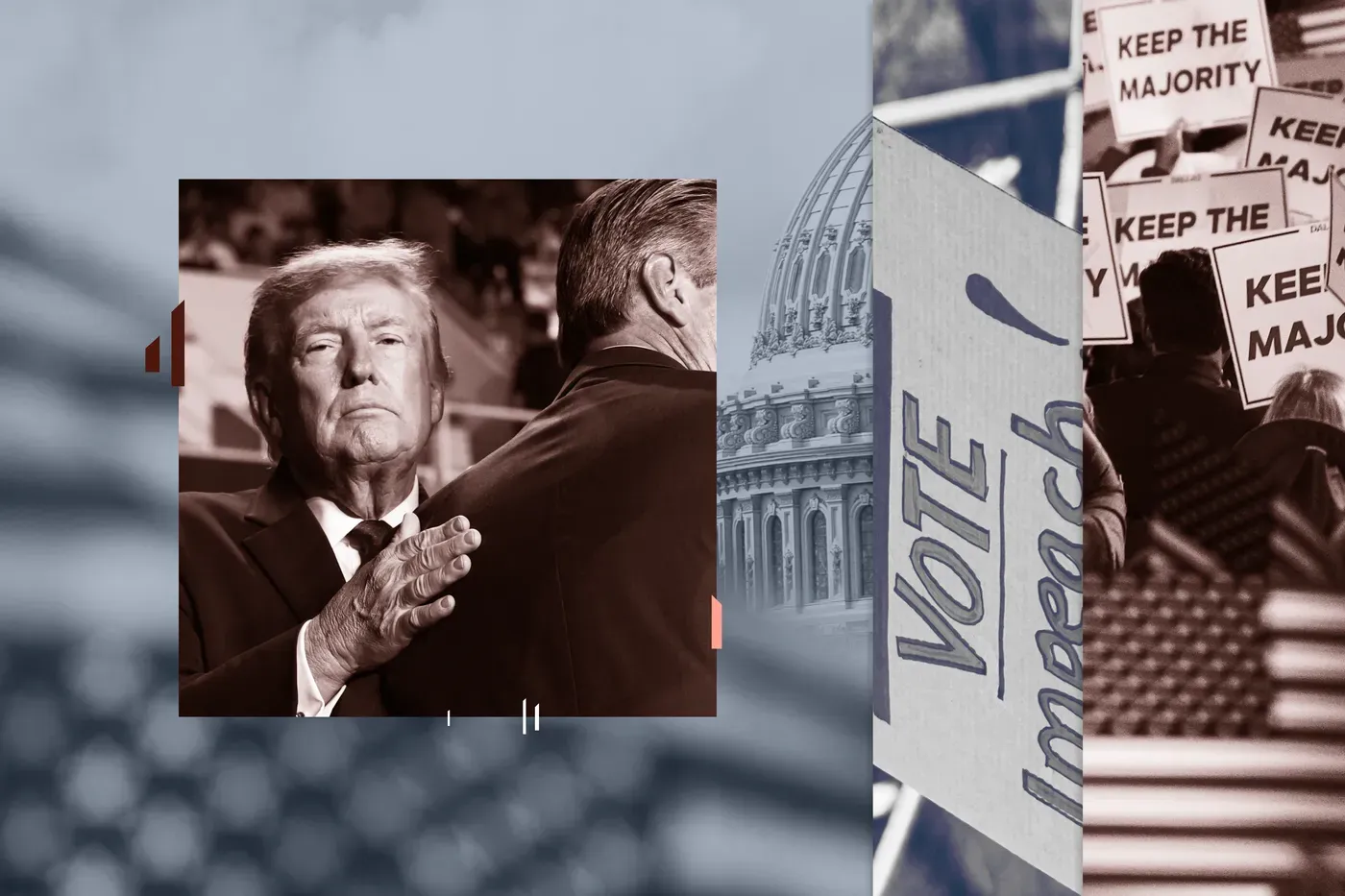
President Donald Trump is making a bold move in the final stretch before the midterms, urging voters to "pretend he's on the ballot.
The strategy may not pay off, however, as new polling data suggests that Democratic midterm voters are more motivated by opposition to Trump than Republican voters are driven by support for him. In fact, nearly half of Democrats say they'll be voting mainly to oppose the president, compared to just 38% of Republicans who claim to be voting mainly in his favor.
The results also reveal a notable trend among Republican voters: many are more concerned with winning their local elections than blindly following Trump's lead. A significant majority - half of all respondents - say they'd prefer their candidate to win, even if it means speaking out against the president. This pragmatism could be an ominous sign for Trump's re-election prospects.
While it's not uncommon for voters in the party out of power to be more motivated during midterm years, these lopsided findings are a stark reminder that Trump has fundamentally reshaped the GOP over the past decade. His brand and political capital are now on the line as he stakes his reputation on delivering Republican wins in November.
The poll's findings come at a critical time, with just weeks to go before the election. With voter frustration over high prices poised to play a significant role in this year's midterms, it remains to be seen how Trump's strategy will ultimately play out.
A significant number of Republican midterm voters are focused on supporting local candidates rather than rallying behind President Trump's agenda.
According to recent polling data, 48% of GOP voters say their primary motivation is to show support for a local candidate, suggesting that Trump's influence may be waning among party faithful.
The contrast between Republican and Democratic voter motivations is stark, with only 37% of Democrats saying they are primarily motivated by supporting a local candidate.
While President Trump's loyal supporters are keen on keeping their leader at the forefront of the midterms, it seems even they want candidates to maintain some distance if it means securing a win. In multiple policy areas, including taxes and border security, majorities of those who identify as part of the MAGA movement agree that letting candidates establish their own identities could be beneficial.
White House spokesperson Davis Ingle emphasized Trump's importance to the Republican Party, calling him its unequivocal leader, best messenger, and unmatched motivator. However, she also highlighted the GOP's focus on tangible accomplishments like tax cuts and border security. By contrast, she claimed Democrats are running on a platform of investigations, obstruction, and impeachment.
As Trump takes his campaign trail to battleground states and red states, Republican candidates in tight races face a delicate balancing act. They must navigate maintaining their base's support while avoiding alienation from crucial moderate and independent voters. This task becomes even more daunting as they consider whether appearing alongside Trump might hurt them politically.
A national GOP operative described the situation as Republicans being forced to choose which finger to cut off, implying that there is no easy solution to this problem. With Trump's presence on the campaign trail, candidates are left quietly weighing the potential consequences of their decisions.
As the midterm elections approach, a growing number of Republican candidates are choosing to distance themselves from President Trump's policies and events in key battleground states. In Iowa, where voter frustration has been building over issues such as tariffs and rising costs stemming from the Iran war, some GOP hopefuls have opted not to attend rallies or mention Trump in their campaign ads.
In several states, including Iowa, Republican candidates are avoiding public breaks with the president on policy while still limiting direct references to him in campaign materials. This cautious approach is evident even in traditionally red states that have recently become competitive. For instance, in battleground Georgia, GOP gubernatorial nominee Rick Jackson has carefully navigated his relationship with Trump.
Some observers believe that Trump's presence on the campaign trail may not necessarily boost Republican chances. In fact, Jason Shepherd, a former Cobb County GOP chair who supports Jackson, suggests that Trump's visits to key states could even energize Democratic voters and create an uneven playing field. I don't know that Trump coming [to Georgia] helps Republicans more so than it excites Democrats, Shepherd noted.
Republican candidates are caught in a delicate situation, with their base willing to accept breaks from Trump if victory seems likely but uncertain about what might cost them the election. Until then, many will continue to tread carefully, avoiding direct confrontations or endorsements while trying to gauge the potential consequences of their decisions.
As Republican candidates navigate their relationships with President Trump, many are choosing to tread carefully in order not to antagonize him or his supporters.
This approach is driven by a desire to avoid making an enemy of the White House, as one national GOP operative noted, without necessarily committing to unwavering loyalty to the president's agenda. However, this delicate balancing act may be complicated by the fact that Democratic voters are highly motivated to reject Trump's policies and see his endorsement as a negative factor in their voting decision.
The potential for Republican candidates' attempts to walk this tightrope to backfire is further underscored by the observation of North Carolina-based GOP strategist Paul Shumaker, who characterized the midterm elections as being driven by anger management and failed expectations".
Facts based on reporting originally published by Politico.
You may republish this story, in full or in part, if you credit News Central Site and link to it (licence CC BY 4.0). Photos are not included.