Nvidia Seeks New CEO Following Jensen Huang's Resignation
The search for Nvidia's next CEO has begun, with the company facing significant challenges in the rapidly evolving AI landscape.
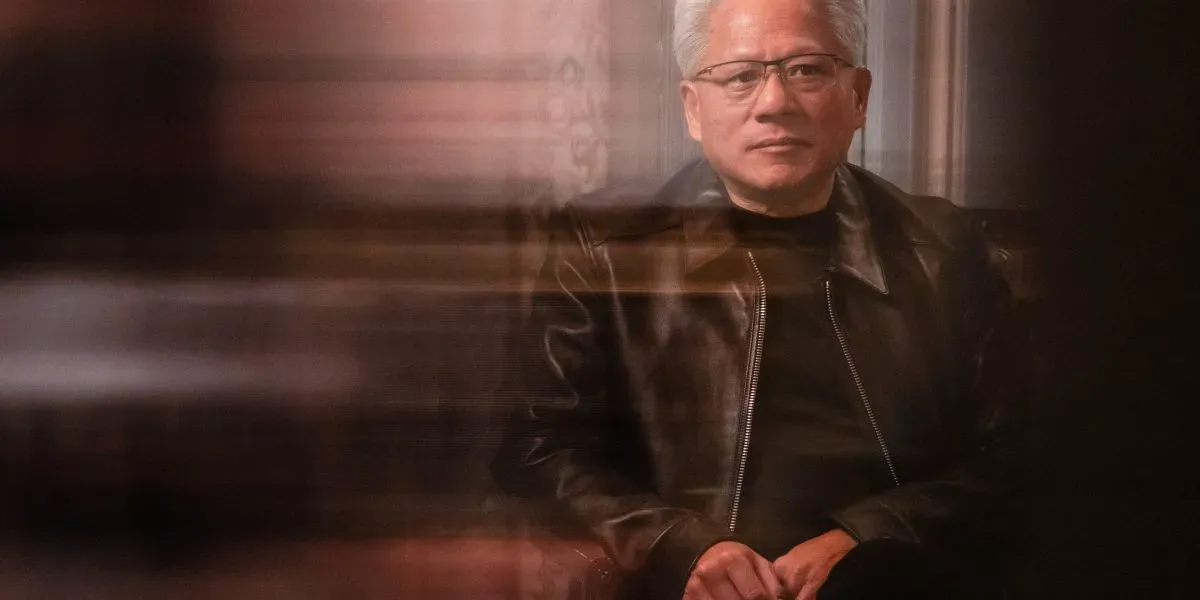
Nvidia's search for its next CEO is underway, following Jensen Huang's resignation from the top spot. The company's board has engaged a search firm to find his successor, who will face immense pressure to lead the tech giant forward.
The new chief executive will have their work cut out for them, as Nvidia navigates rising competition and geopolitical headwinds in the rapidly evolving AI landscape. With expectations running high, the incoming CEO will be tasked with building on the company's impressive success story while also addressing challenges that lie ahead.
A common pitfall for successors to founders is trying to fill their shoes, rather than forging their own path. According to Robert Kelley, a professor of management at Carnegie Mellon University's Tepper School of Business, this attitude can hinder the transition process and create an impossible standard for the new leader to meet.
Replacing a founder-CEO is often complicated by the outgoing leader's continued involvement in the company. Founders typically dedicate decades of their lives to building their firms, with Jensen Huang serving 21 years as Nvidia's CEO before his exit. This level of commitment can make it difficult for successors to establish themselves and chart their own course.
Founders' prolonged presence after leaving the top job is a common phenomenon, as they often linger on in some capacity. Spencer Stuart research found that nearly half of founder-CEOs stayed on as board chair, compared to just over a third of non-founder CEOs. This can create tension for incoming leaders who need space to assert their own vision and leadership style.
As Nvidia embarks on its search for a new CEO, it's clear that the stakes are high. The company's next leader will have to navigate complex challenges while also addressing the legacy of Jensen Huang's tenure at the helm.
The aftermath of Jensen Huang's departure from Nvidia is likely to be a challenging period for the company's new leadership. The emotional investment of long-time employees in Huang will not dissipate overnight. Many staff members who benefited financially from his tenure are still loyal to him and may feel uneasy about his exit.
Nvidia's unique family ties add another layer of complexity to the situation. Three relatives of Huang are still employed at the firm, with his children Spencer and Madison holding positions within the company. His son-in-law Nico Caprez is vice president of global AI infrastructure growth, a role that carries significant influence.
The loyalty of Nvidia employees to Huang has been fostered over many years, during which he made numerous staff members very wealthy through their stock options. This financial windfall has created a strong emotional bond between Huang and his team, making it difficult for the new leadership to break free from his legacy.
As the company navigates this period of transition, its new leader will have to tread carefully to avoid alienating long-time employees who remain devoted to Huang. The new CEO's ability to manage this delicate situation will be crucial in determining the future success of Nvidia.
The presence of Huang's relatives within the company has also raised questions about their potential influence on the new leadership team. Will they maintain a close relationship with the former CEO, or will they distance themselves from his legacy and focus on supporting the new leader?
Replacing a founder as CEO can be a challenging task, requiring a delicate balance between honoring the legacy of the previous leader and charting a new course for the company. This is according to Spencer Stuart's advice for successors of founders, who must have the courage to find their own unique voice and approach while still respecting what was built by the founder.
However, there are instances where CEOs who follow founders succeed in leading the company to growth and success. For example, when Brian Niccol took over as CEO of Chipotle Mexican Grill after Steve Ells' departure in 2018, he helped the company recover from a major food safety crisis and oversaw significant revenue increases.
The case of Sundar Pichai succeeding Larry Page at Google is another notable example of a successful transition. Pichai has overseen remarkable revenue growth during his tenure as CEO, not only for Google but also for its parent company Alphabet. His leadership has been instrumental in driving the company's continued success and expansion.
Despite these examples, many CEOs who follow founders struggle to find their footing and ultimately fail in their roles. According to Spencer Stuart's analysis, 21% of CEOs who replaced founder-CEOs between 2015 and 2022 left within two years, compared to 16% of all S&P 1500 CEOs appointed during the same period.
Jensen Huang's legacy at Nvidia is still a topic of discussion, with some calling for his return to the company despite his previous statement that he could never truly be replaced. As the founder who built the company from scratch, Huang owns just 3.6% of Nvidia and has no supervoting shares, limiting his influence over the company's direction.
The future of Nvidia under its new leadership remains uncertain, with many questions surrounding how closely they will maintain ties to Huang's legacy and whether they will prioritize supporting their own vision for the company or trying to revive Huang's approach.
Facts based on reporting originally published by Fortune.
You may republish this story, in full or in part, if you credit News Central Site and link to it (licence CC BY 4.0). Photos are not included.