Tariff Refunds Allocated to Employee Bonuses at TJX
TJX, a parent company of discount retailers, has allocated $167 million of its tariff refunds towards employee bonuses.
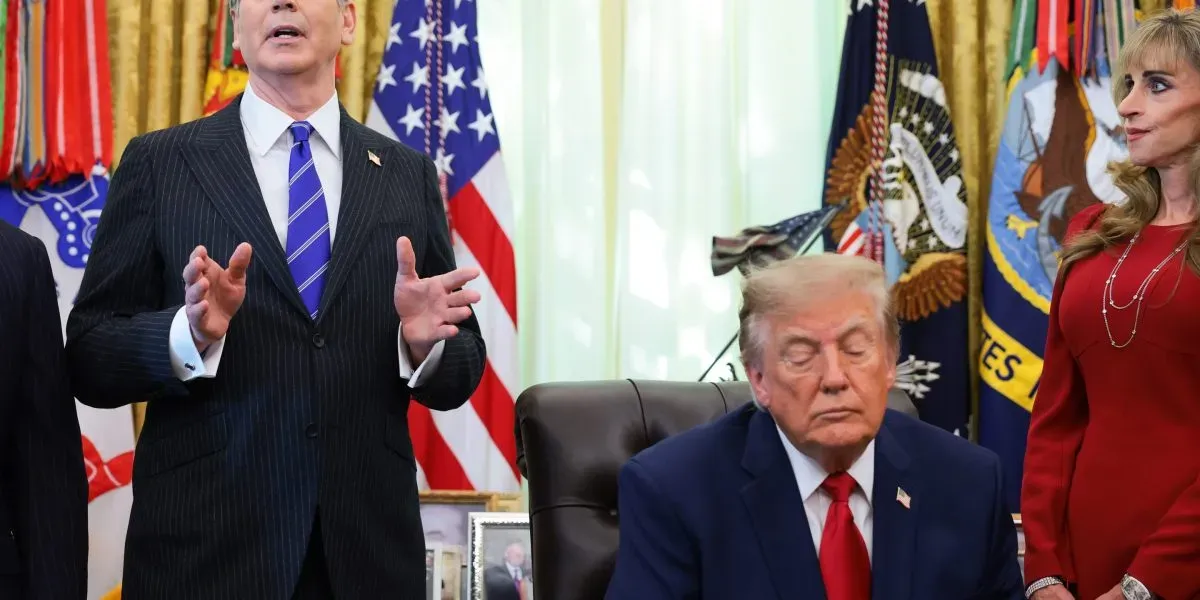
TJX, parent company of discount retailers TJ Maxx and Marshalls, has allocated $167 million of its $463 million in tariff refunds towards bonuses for non-executive associates. This decision follows guidance from U.S. Trade Representative Jamieson Greer who suggested in March that companies pass on refunds as a bonus or raise to their employees.
Greer's advice was clear: "because that's the purpose of the program." However, TJX has not committed to passing any savings onto consumers through lower prices. The company is instead set to continue booking bonus costs in its quarterly earnings for the next period, despite expecting no further tariff refunds.
A recent analysis by the Federal Reserve Bank of New York found that nearly 90% of the economic burden from tariffs fell on U.S. firms and consumers. This raises questions about whether companies are truly committed to sharing their windfalls with employees or simply using them as a means to boost executive pay.
TJX is not alone in its approach, with several other publicly traded companies opting to use tariff refunds for employee bonuses rather than passing them onto customers. Titleist-maker Acushnet and industrial tool producer Stanley Black & Decker have both disclosed plans to allocate millions of dollars returned from tariffs towards employee compensation packages.
ProPublica has identified at least nine public companies that are following this trend, including those in the retail and manufacturing sectors. As U.S. companies continue to receive over $100 billion in tariff refunds, it remains unclear whether consumers will ultimately benefit from these rebates or if they will simply line the pockets of corporate executives.
Tariff refunds are being used for a variety of purposes among companies receiving them.
TJX, parent company of TJMaxx, has reported using $167 million of its $463 million in tariff refunds on compensation and bonuses, with this sum representing one-third of the total amount received by the firm. The money is being spent on year-end incentive compensation and discretionary bonuses for eligible employees globally. This move has sparked debate over whether companies are prioritizing profits over consumer benefits.
A portion of TJX's remaining $296 million in refunds will be allocated towards supporting future growth, but it remains unclear how this will be achieved or if prices will decrease as a result. The company maintains that its off-price retail model already offers consumers competitive pricing, with prices 20%-60% lower than those at full-price retailers.
TJX has been joined by other companies in using tariff refunds for internal purposes. Acushnet, an American golf equipment manufacturer, reported allocating $12 million of its $45.8 million in IEEPA tariff refunds towards incentive compensation for employees. This move suggests that some firms are prioritizing employee benefits over consumer rebates.
Stanley Black & Decker has also noted that its tariff refund gain was partially offset by variable incentive compensation costs and growth investments. The company's decision to allocate a portion of the funds towards taxes raises questions about the effectiveness of the rebate system in benefiting consumers directly.
The allocation of tariff refunds by companies continues to raise concerns over corporate priorities and transparency. As some firms commit to passing on rebates or lowering prices, others seem to be using the money for internal purposes, leaving it unclear whether consumers will ultimately benefit from these rebates.
As the Supreme Court's ruling on tariffs comes into effect, several American importers are set to receive reimbursement for over $166 billion in import taxes paid under the International Emergency Economic Powers Act (IEEPA). This decision has triggered a payout of more than $115 billion from U.S. Customs and Border Protection through its CAPE tool.
Some companies are using these tariff refunds to reward their employees, with TJX being a notable example. However, it's unclear whether this practice is widespread or if it's limited to specific firms. It appears that some companies are choosing to allocate their rebate funds towards internal purposes rather than passing them on to consumers.
Companies have been forced to adapt their supply chains and reduce job opportunities due to the uncertainty surrounding tariffs. Andrew Greenland, an assistant professor of economics at North Carolina State University, notes that this has led many firms to prioritize survival over growth. In such a scenario, executives may receive bonuses as a way to compensate for lost value in company stock resulting from tariff-related market fluctuations.
The rationale behind using tariff refunds for executive compensation is not unique to TJX. Other companies might be employing similar strategies to make up for losses incurred due to negative investor sentiment and tariff uncertainty. This approach could be seen as an attempt by executives to regain control and stability within their organizations.
The refunding of tariffs has become a contentious issue in the US, with some companies using the funds to pay corporate bonuses.
This approach could be seen as an attempt by executives to regain control and stability within their organizations, but it is also sparking outrage among American consumers who are still waiting for their share of the tariff refunds.
Many consumers have filed class action lawsuits against companies that have yet to return the money they spent on increased prices passed down from US businesses facing tariffs. The suits claim that these companies are essentially passing the costs onto consumers and then recovering them through tariff refunds.
Economists point out that American households bore the brunt of the tariffs under IEEPA, with estimates suggesting that they paid around $1,000 more annually due to the trade restrictions.
The distribution of tariff refunds by TJMaxx's parent company has raised eyebrows, with a significant portion allocated to corporate bonuses.
Companies are under no obligation to use tariff refunds in a specific manner, Greenland pointed out, and keeping returns could be seen as a lucrative move, even if it means passing costs onto customers. Consumers have limited leverage over firms, Greenland noted, implying that companies may not prioritize refund distribution.
Facts based on reporting originally published by Fortune.
You may republish this story, in full or in part, if you credit News Central Site and link to it (licence CC BY 4.0). Photos are not included.