New species of insect found living on spider's web in China
A newly discovered species of insect has been found to live its entire life cycle on a spider's web, raising questions about the delicate balance between these tiny creatures and their massive arachnid hosts.
A newly discovered species of insect has been found to live its entire life cycle on a spider's web, raising questions about the delicate balance between these tiny creatures and their massive arachnid hosts.
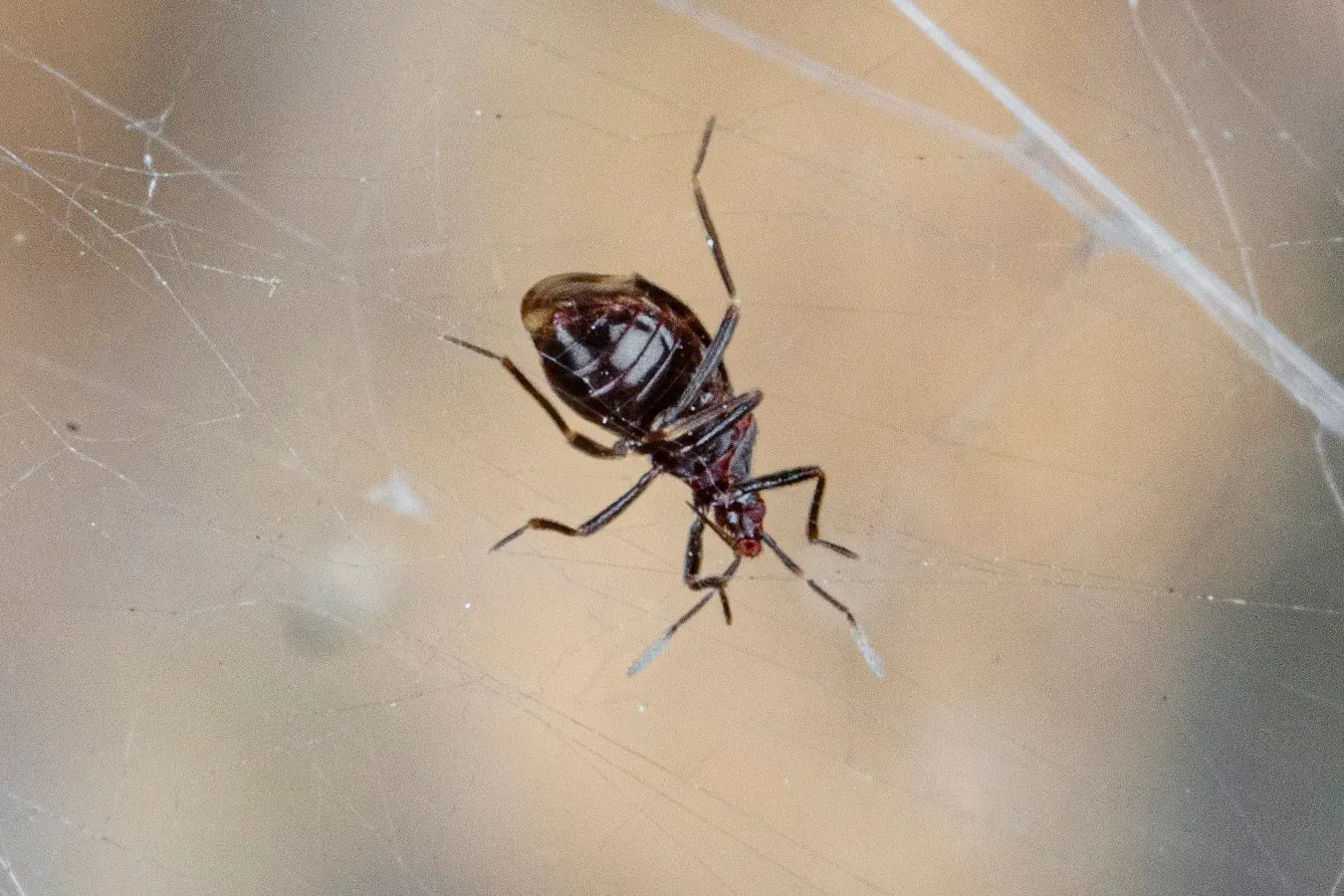
The insect, known as Heissophila sinica, is a type of true bug that feeds on other small insects. It is able to navigate the intricate silk threads of the spider's web with ease, often going unnoticed by its host. This unique relationship has left scientists fascinated about how these tiny creatures coexist with their larger counterparts.
Researchers at China Agricultural University in Beijing have been studying web-loving bugs in China since the 2020s. According to lead researcher Haoyang Xiong, these insects are rare and occur in low numbers, making them difficult to study. They also exhibit unusual behavior, which has sparked interest among scientists.
The study of web-loving bugs is still in its early stages, with many species remaining poorly understood. Heissophila sinica is no exception, having been found in just one location so far - a region in China's Fujian province where funnel web spiders are common.
The discovery of Heissophila sinica has shed new light on a unique relationship between insects and arachnids. The tiny reddish bugs have been found to thrive in a region of China's Fujian province where funnel web spiders are common.
Their physical characteristics set them apart from other known species, leading researchers to conclude that they belong to an entirely new genus. A key factor contributing to their survival is the size difference between the spider and the insects themselves, which may deter the spider from seeing them as prey.
The bugs feed on scraps left behind by the spiders after meals, as well as web-dwelling mites - some of which are even parasites of the spiders. They also gather around the spider's molting sites to drink its body fluids, a behavior that has left scientists unsure about the nature of their relationship with the arachnids.
Researchers note that Heissophila sinica may be commensal organisms, neither helping nor hindering the spiders' survival. This phenomenon highlights the complexity and diversity of interactions between different species in their natural habitats.
The discovery of a newly described insect has shed light on its unique lifestyle, where it may spend its entire life on a spider's web. The team has observed all stages of this insect's development, from eggs to juveniles and adults, coexisting on the same web.
Despite its sticky surroundings, the insect is able to move around on the silk without getting stuck. Researchers believe that the insect's unusual feet may be responsible for this ability, as they lack many of the complex structures found in other insects' feet. This adaptation allows the insect to thrive in an environment where most others would struggle.
The research team has been commended for their fieldwork efforts and documentation of the natural history of these bizarre insects. Randall Schuh from the American Museum of Natural History in New York praises the team's dedication, noting that studying such tiny creatures can be challenging due to the harsh conditions they inhabit.
To further understand the evolution of these web-dwelling insects, the research team plans to expand their collection efforts in China and surrounding regions. By gathering genetic data, they aim to shed more light on the mysterious lives of these spider web tenants, providing valuable insights into the complex interactions between species in their natural habitats.
Facts based on reporting originally published by New Scientist.
You may republish this story, in full or in part, if you credit News Central Site and link to it (licence CC BY 4.0). Photos are not included.