Breakthroughs in Neutrino Research Recognized by Nobel Prize Committee
The recent Nobel prize announcement recognizes Francis Halzen's leadership on the IceCube Neutrino Observatory in Antarctica.
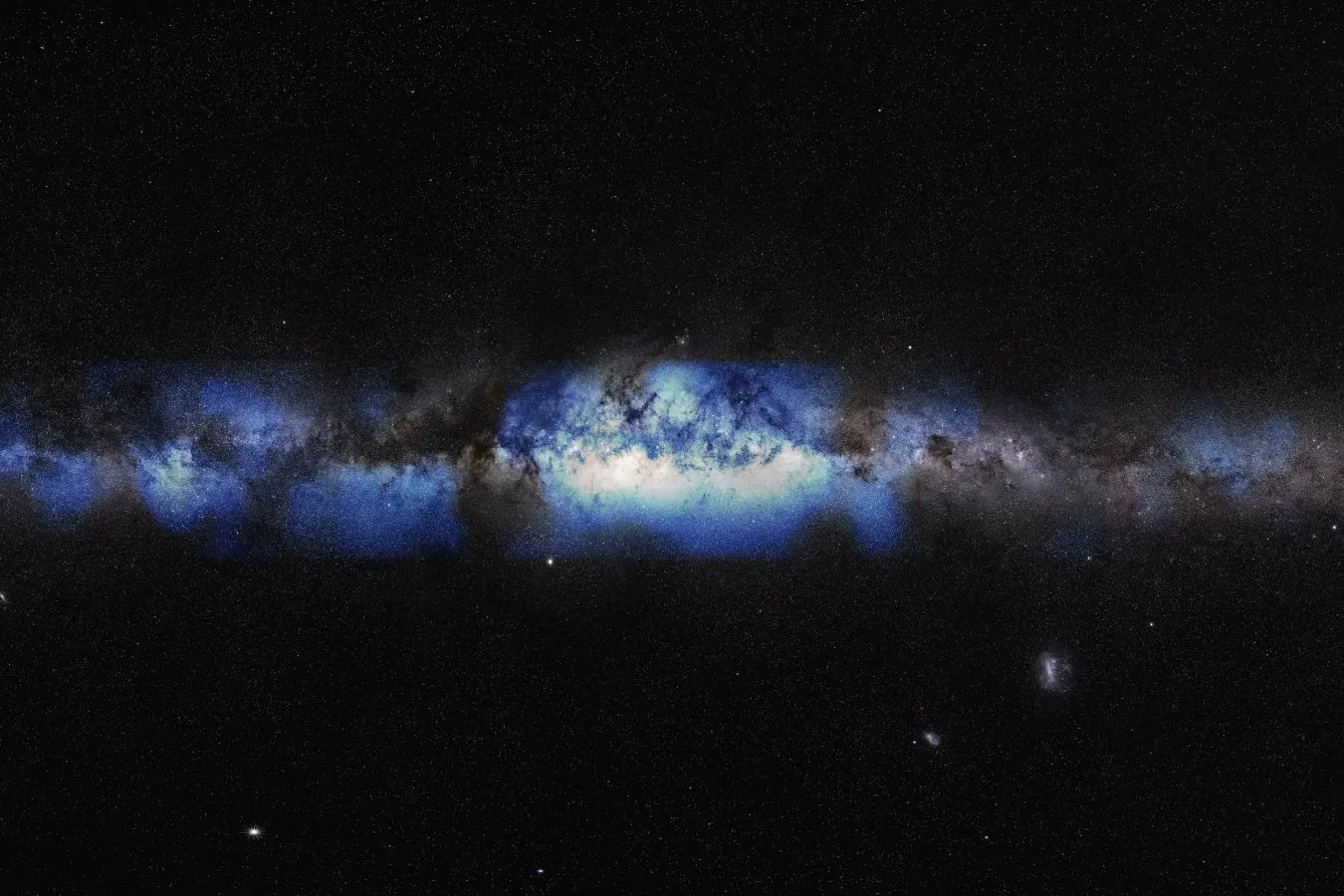
Breakthroughs in neutrino research have long been awaited by scientists, and a recent Nobel prize announcement is being seen as a major milestone in this field. The winner of this year's award was Francis Halzen, recognized for his leadership on the IceCube Neutrino Observatory in Antarctica.
This research facility has made significant contributions to our understanding of neutrinos, which are subatomic particles that have unique properties. They come in three distinct flavours and can oscillate between these identities as they travel through space.
Neutrinos' ability to change identities is a key aspect of their behaviour. This property is linked to the mass of these particles, but despite extensive research, scientists still do not fully comprehend how neutrinos acquire their mass.
The study of neutrinos has far-reaching implications for our understanding of the universe.
Neutrinos produced in stars, including our own sun, are created as a by-product of nuclear fusion processes that also generate light. These same phenomena play a role in stellar deaths, such as supernovae, which are massive explosions that occur when a star runs out of fuel.
One notable example is Supernova 1987A, the closest supernova to our solar system in centuries, observed across various parts of the electromagnetic spectrum. This event was particularly interesting because it marked the first time scientists were able to connect observed neutrinos with such an explosion.
Hours before light from the supernova became visible, three different neutrino detectors on Earth detected an influx of these elusive particles. The discovery of neutrinos arriving before light provided valuable insights into this cosmic event. It also highlighted the unique properties of neutrinos that allow them to travel long distances through space without interacting with matter.
The detection of neutrinos from Supernova 1987A underscores their role as messengers from distant stellar events, providing scientists with a new perspective on these phenomena.
Neutrinos have long been known for their ability to pass through matter with ease, barely interacting with other particles as they stream through space.
This characteristic has proven invaluable in helping scientists study distant stellar events, including supernovae like 1987A. By observing the neutrinos emitted by such explosions, researchers can gain a deeper understanding of these cataclysmic occurrences and their impact on the surrounding environment.
The IceCube Neutrino Observatory at the South Pole in Antarctica has been instrumental in harnessing the power of neutrinos for astrophysical research. This cutting-edge facility was conceptualized by a team led by Halzen, who envisioned using neutrinos as a lens to peer into the cosmos and uncover new insights about the universe.
The creation of IceCube marked the beginning of a new era in neutrino astrophysics, with thousands of scientists collaborating over the years to develop and refine this groundbreaking technology.
The images captured by IceCube's neutrino detector reveal a complex and asymmetric landscape, filled with mysterious blobs that are ripe for investigation.
This asymmetry has piqued the interest of researchers, who often rely on symmetry to indicate the presence of interesting phenomena - but in this case, the unknown is all the more intriguing.
Neilson now leads a research group focused on deciphering the secrets of the galactic centre through neutrino observations, specifically seeking to understand what accelerates particles to relativistic speeds within that region.
The challenge lies in correlating neutrino sources with high-energy light sources, which are believed to originate from the same location.
Facts based on reporting originally published by New Scientist.
You may republish this story, in full or in part, if you credit News Central Site and link to it (licence CC BY 4.0). Photos are not included.