NASA's New Space Telescope Set to Launch in 2031
The new telescope from NASA will soon reveal hidden secrets in the night sky by capturing events such as stellar flares and exploding stars.
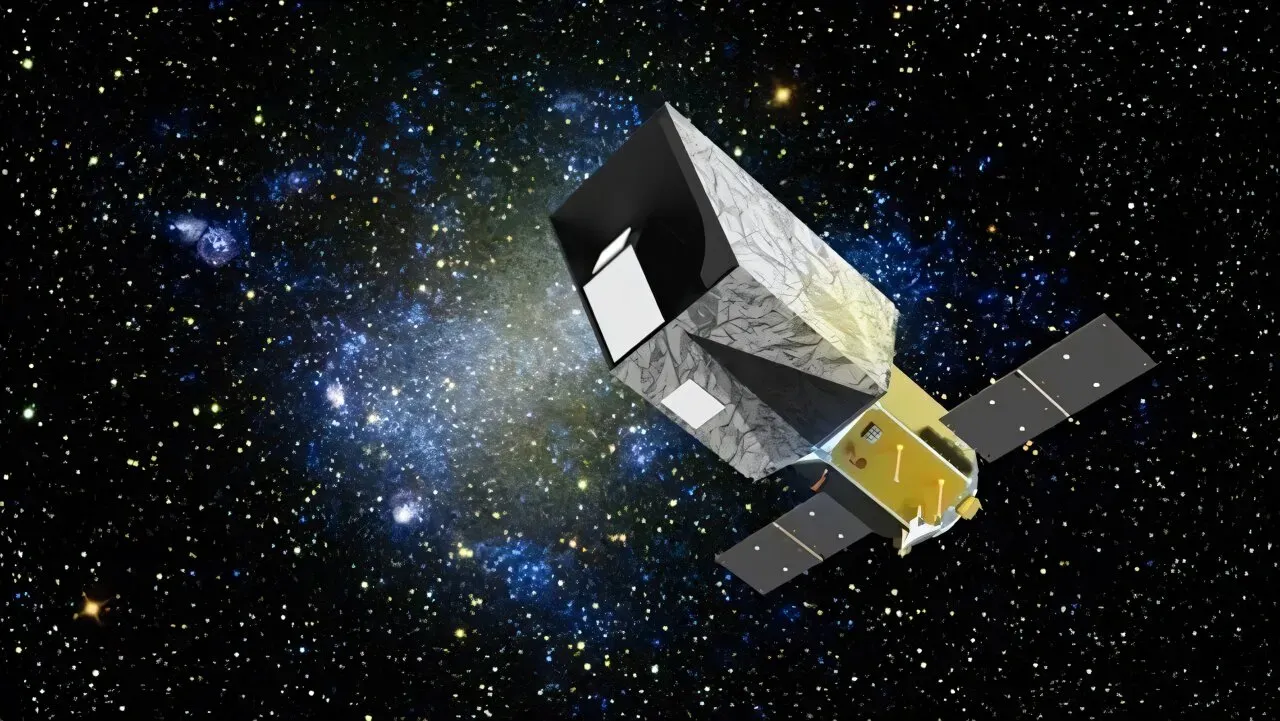
The night sky may appear tranquil to the naked eye, but a new space telescope from NASA will soon change that perception by revealing its hidden secrets in ultraviolet light. The telescope, set to launch in 2031, is designed to capture the fleeting and often catastrophic events that occur in our universe.
These events, such as stellar flares and exploding stars, are invisible to us due to their emission of UV radiation, which lies beyond human vision. A backyard telescope may not be able to detect these phenomena, but with the help of specialized technology, astronomers can glimpse them in all their glory.
The launch of NASA's new UV space telescope marks a significant milestone in astronomical research, as it will allow scientists to study these previously hidden events in unprecedented detail. By observing the night sky through the lens of UV light, researchers hope to gain valuable insights into the behavior and evolution of stars and galaxies.
As we gaze up at the stars, we often fail to notice the cataclysmic events unfolding around us, simply because they emit radiation beyond our visual range. But with NASA's new telescope, these cosmic fireworks will be visible for all to see, shedding light on a universe that is far more dynamic than we ever imagined.
The telescope's advanced technology will enable scientists to capture images and data in unprecedented detail, giving them a unique window into the workings of the universe. By studying these events up close, researchers hope to unravel some of the mysteries of the cosmos and gain a deeper understanding of its intricate mechanisms.
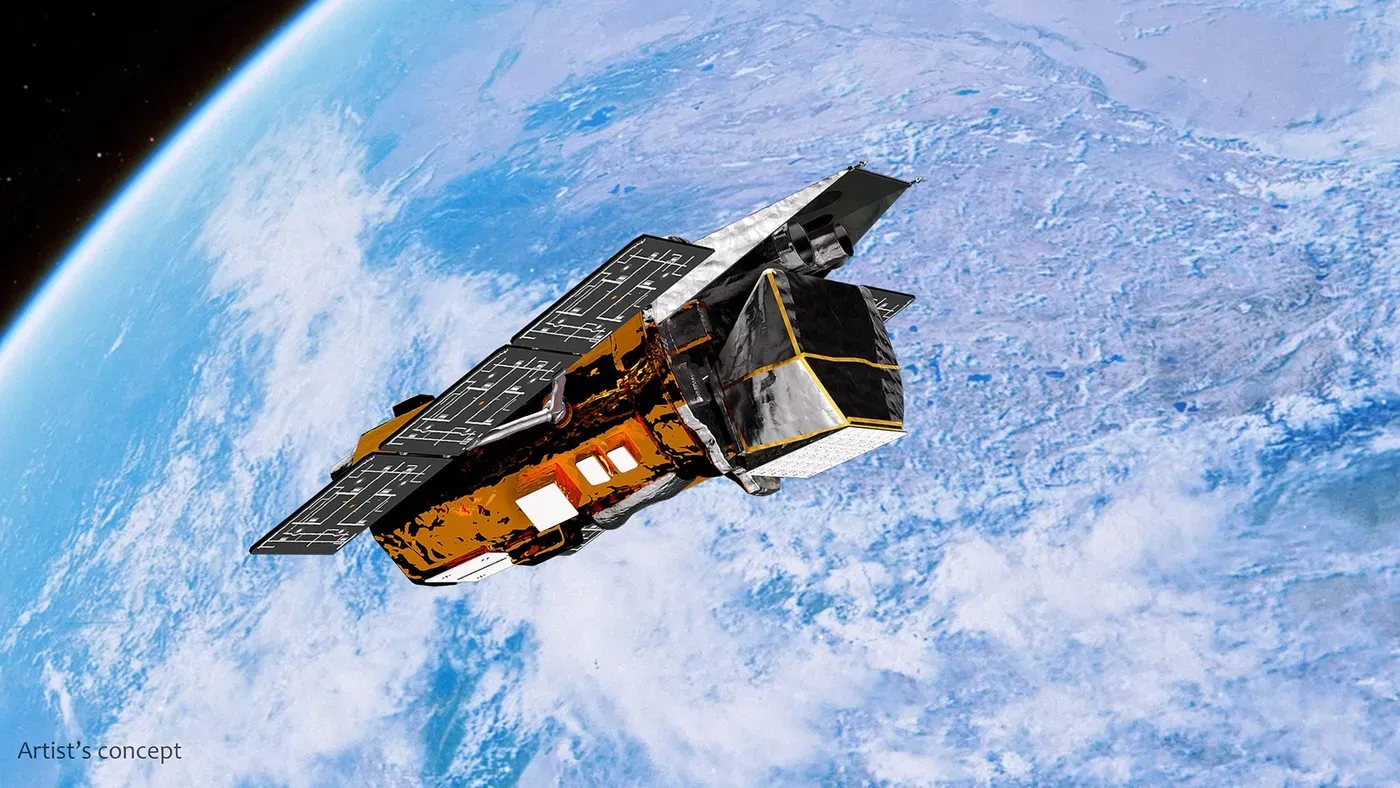
A new space telescope that specializes in observing ultraviolet light will be launched by NASA in 2031. The UltraViolet EXplorer, or UVEX for short, is a mission led by Caltech that aims to conduct an all-sky survey of near- and far-ultraviolet light.
The UVEX mission marks a significant step forward in the exploration of the ultraviolet universe, according to Caltech President Ray Jayawardhana. He described it as "a bold leap" that will help scientists better understand the vast array of light that fills our cosmos. This includes not just visible light but also radio waves and gamma rays.
The UVEX telescope is designed to fill a gap in our current understanding of the universe by providing an all-sky survey in ultraviolet light. This will complement surveys conducted by other telescopes, such as the Nancy Grace Roman Space Telescope, which will observe in infrared, and the ESA's Euclid Space Telescope, which will perform three deep-field surveys in visible light.
Unlike traditional space telescopes that focus on observing distant objects in exquisite detail, survey telescopes like UVEX play a crucial role in science. They enable scientists to map large areas of the sky, gathering data on millions or even billions of celestial objects. This information is essential for understanding the universe's structure and evolution.
The UVEX mission will join several other NASA space telescopes that are currently conducting all-sky surveys. These include SPHEREx, which observes in near-infrared light, and others like the Nancy Grace Roman Space Telescope and the Vera Rubin Observatory, which will image the night sky repeatedly over a decade.
The wealth of data collected by modern astronomy is set to grow even larger thanks to NASA's upcoming UV space telescope, UVEX. Scheduled for launch in 2031, this new addition will significantly enhance our understanding of the universe.
According to a white paper outlining the mission, UVEX will conduct a wide-ranging survey of the sky, gathering observations that are up to 100 times deeper than those collected by its predecessor, GALEX. This ultraviolet space telescope's two-year baseline mission is designed to provide a detailed picture of the universe.
UVEX's observations will be focused on nearby low-mass galaxies that shine brightly in ultraviolet light. These galaxies play a crucial role in the universe and their study will complement existing research by other telescopes, including the James Webb Space Telescope (JWST) and the Nancy Grace Roman Space Telescope.
This emphasis on low-mass galaxies is one of three core aspects of the UVEX mission. Another key area of focus for the telescope is its ability to rapidly respond to new discoveries in space.
The data collected by UVEX will also be used to study individual targets, providing scientists with a more detailed understanding of these celestial objects.
The new space telescope being developed by NASA, known as UVEX, is poised to make significant contributions to our understanding of the universe in several key areas. One area of focus will be on low-mass, low-metallicity galaxies, which are characterized by their limited star-forming capabilities and distinct evolutionary patterns.
These galaxies play a crucial role in shaping the growth and evolution of the local universe, and scientists hope that UVEX's advanced imaging and spectroscopic surveys will provide valuable insights into how they form and evolve. By studying these galaxies up close, researchers can better understand the complex processes governing their development.
In addition to its work on low-mass galaxies, UVEX will also be tasked with exploring the dynamic universe through time-domain surveys. This involves monitoring celestial objects over time to detect transient events such as compact object mergers and stellar explosions.
These events are often shrouded in mystery due to their brief duration and faint signals, but UVEX's advanced capabilities will allow it to quickly point at these events and observe them as they unfold. This will provide scientists with a wealth of new data on the environments, energetics, and emission processes involved in these phenomena.
The sheer volume of data generated by UVEX is expected to be substantial, rivaling that produced by notable missions like the ESA's Gaia mission. Like Gaia, UVEX's findings are likely to have far-reaching implications for a wide range of research areas, from astrophysics and cosmology to planetary science and more.
The launch of UVEX in 2031 marks a significant milestone for astronomers and astrophysicists, as it will be the first new ultraviolet (UV) space telescope in two decades. This state-of-the-art instrument will create detailed deep-sky maps in UV, allowing scientists to study distant objects with unprecedented precision.
One of the key features of UVEX is its ability to discern different wavelengths of light coming from distant objects, making it possible to identify specific chemical elements present. This capability will be particularly valuable when studying extreme events such as supernovae and gamma-ray bursts.
UVEX's findings are likely to have a significant impact on our understanding of the universe, particularly in areas related to gravitational waves. These ripples in space-time, predicted by Einstein, are generated when extremely dense objects like neutron stars and black holes merge.
The UVEX mission will complement existing gravitational-wave observatories by providing UV observations of these events. This will enable scientists to gather more comprehensive data on the properties of these cosmic phenomena.
As with any new telescope or mission, there is always a possibility that unexpected discoveries may be made. Scientists are eager to see what insights UVEX will bring to our understanding of the universe, and how its findings will shed new light on some of the most pressing questions in astrophysics and cosmology.
The launch of NASA's UV space telescope, known as UVEX, is set to take place in 2031, marking a significant milestone for astrophysics research.
Every time scientists observe the universe in a new wavelength, they often discover something unexpected and gain valuable insights into its workings. The UVEX telescope will build upon this principle by providing unprecedented access to ultraviolet radiation from distant galaxies and stars, allowing researchers to study phenomena that are invisible to current telescopes.
Facts based on reporting originally published by Phys.org.
You may republish this story, in full or in part, if you credit News Central Site and link to it (licence CC BY 4.0). Photos are not included.