Microbats Studied through Citizen Science Project in Western Australia
Researchers have developed a novel approach to studying microbats using citizen science in Western Australia.
A novel approach to studying microbats has been developed by a team of researchers who have turned to citizen science to help fill in the knowledge gaps surrounding these fascinating creatures.
Microbats are notoriously difficult to find and study due to their nocturnal habits, small size, and fast flight, making them a challenging subject for scientists. To overcome this obstacle, researchers recruited a handful of volunteers from Western Australia to participate in a citizen science project.
The volunteers were equipped with bat detectors that convert the ultrasonic calls of microbats into sound recordings that humans can hear. These devices also help identify which bats are present by capturing the distinct frequencies and patterns of each species' calls.
Bats are incredibly diverse, with over 80 different species found in Australia alone, ranging from the tiny little forest bat to the larger gray-headed flying fox. Globally, they make up around 22% of all mammal species, except for those that inhabit Antarctica.
The project's focus on citizen science aims not only to gather valuable data about microbats but also to engage the public and encourage a deeper understanding of these animals and their importance in ecosystems.
Bats can be broadly categorized into two groups: microbats and megabats. Although these terms are not formal scientific classifications, they are commonly used to distinguish smaller bats from their larger counterparts. In Australia, microbats tend to feed on insects, while megabats, such as flying foxes, primarily consume fruit, nectar, and pollen.
The unique characteristics of bats make them fascinating creatures. As the only mammals capable of true flight, they flap their wings actively rather than relying on gliding or falling. Bats also play a crucial role in maintaining ecosystem balance. For instance, flying foxes contribute to pollination and seed dispersal for native plants, while insect-eating microbats help regulate insect populations.
Despite their importance, bats often go unnoticed by the general public. Their nocturnal behavior means that people rarely encounter them up close. Additionally, misconceptions and negative perceptions about bats persist in society.
Researchers face challenges when studying bats due to their nocturnal habits and tendency to roost during the day in hard-to-access locations such as tree hollows and caves. To locate these elusive creatures, scientists often rely on specialized equipment like ultrasonic bat detectors.
Our research team analyzed 51 published studies on bat citizen science projects from around the world and found that acoustic surveys were the most common approach used to locate these elusive creatures.
Acoustic surveys involve using ultrasonic detectors to record bats as they fly past, but few studies have investigated what participants gain from being involved in such projects. This lack of focus led our team to conduct its own study on the benefits of citizen science for bat research and conservation.
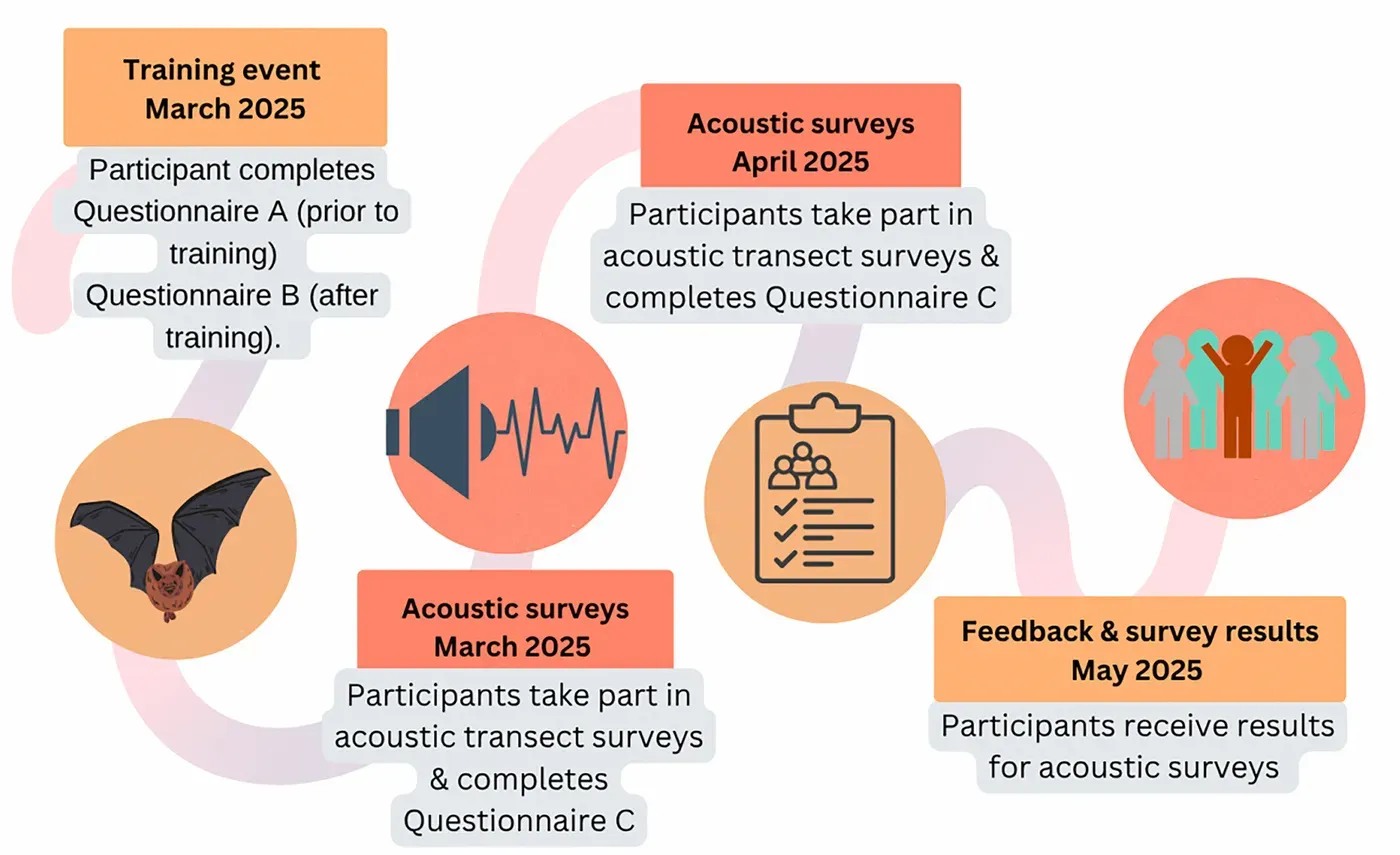
In 2025, we invited residents of Perth's City of Wanneroo to participate in a bat-finding mission, recruiting volunteers through social media and local environmental networks. We trained participants to use bat detectors connected to smartphones and taught them about the local bat species that inhabit the area.
Our volunteers conducted surveys along set routes through bushland near their homes, listening for and recording bats as they flew by. Over the course of 23 surveys, our team collected data on five different bat species, with Gould's wattled bat being the most commonly detected species.
The study's findings have shed light on which bat species are present in Perth's urban areas, raising questions about why some bats are better adapted to living among humans than others.
To gain a deeper understanding of people's perspectives on bats, researchers conducted in-person surveys with participants three times: before they began collecting data, immediately after completing the training session, and following their own survey efforts. These questionnaires probed participants' knowledge of bats, their attitudes towards these animals, and how connected they felt to nature.
The results showed that participants gained a greater understanding of bats and developed a stronger sense of connection with the natural world through their involvement in the research project. Moreover, researchers observed positive changes in how participants viewed bats, indicating a shift from fear or indifference to appreciation.
Some participants reported overcoming initial fears or lack of exposure to bats by conducting their own surveys, while others enjoyed the opportunity to safely observe nocturnal wildlife in its natural habitat at night, highlighting the educational and experiential value of citizen science projects.
The experience of participating in bat surveys has been transformative for many individuals, allowing them to overcome initial fears or lack of exposure to these nocturnal creatures.
Some participants discovered that conducting their own surveys not only helped them develop a newfound appreciation for bats but also provided an opportunity to safely observe wildlife in its natural habitat at night. This hands-on experience often sparked a sense of wonder and curiosity about the natural world, motivating individuals to learn more about the species they encountered. In some cases, participants even reported developing a deeper understanding of the importance of conservation efforts.
Ultimately, citizen science projects like bat surveys offer a unique opportunity for people to contribute to scientific research while also fostering a greater appreciation for the natural world and its inhabitants. By participating in these initiatives, individuals can play an active role in advancing our understanding of nocturnal animals and promoting their conservation.
Facts based on reporting originally published by Phys.org.
You may republish this story, in full or in part, if you credit News Central Site and link to it (licence CC BY 4.0). Photos are not included.