Gene Identified in Algal Virus Suggests Role in Protein Evolution
Researchers at a leading university have made a groundbreaking discovery in the field of virology and molecular biology. A gene for a tandem potassium channel, a complex protein essential for human physiology, has been identified in an algal virus.
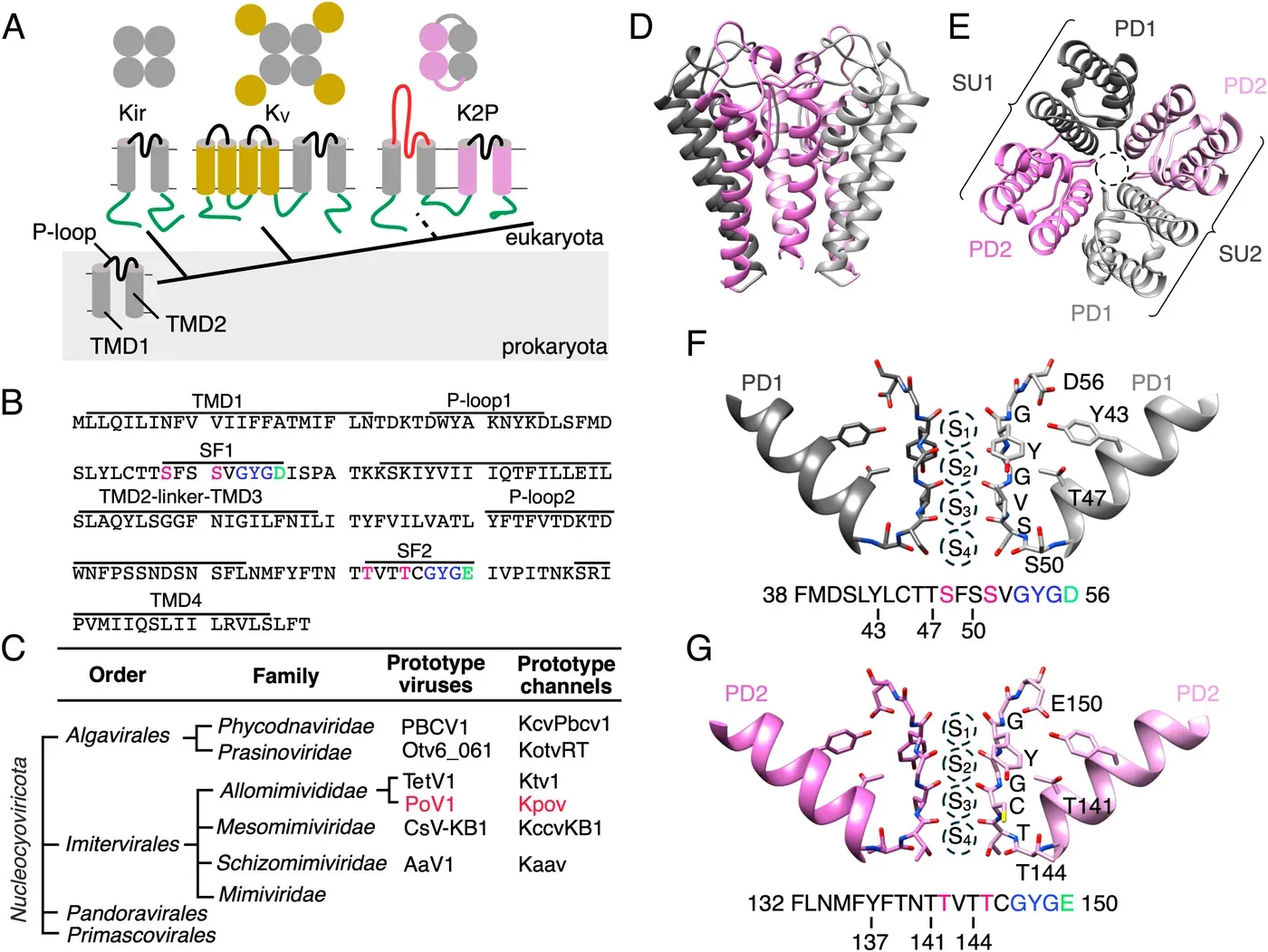
Researchers at a leading university have made a groundbreaking discovery in the field of virology and molecular biology. A gene for a tandem potassium channel, a complex protein essential for human physiology, has been identified in an algal virus. This finding suggests that giant viruses may have played a significant role in the evolution of intricate proteins.
Tandem potassium channels are crucial for various bodily functions, including stabilizing cell membrane potential and regulating electrical excitability in nerve cells. They facilitate the flow of potassium ions across cell membranes, which is essential for maintaining proper cellular function. The unique structure of tandem potassium channels sets them apart from other types of potassium channels.
The discovery of a tandem potassium channel gene in an algal virus raises questions about its evolutionary origins. Unlike other potassium channels, precursors to tandem potassium channels have not been found in bacteria, leading researchers to explore alternative explanations for their emergence.
This finding has significant implications for our understanding of protein evolution and the role that giant viruses may play in shaping the complex proteins essential for life. Further research is needed to fully comprehend the relationship between these viruses and the development of intricate proteins.
The research team's findings suggest that this gene encodes a protein capable of functioning as a potassium channel, which is essential for various cellular processes.
Dr. Oliver Rauh, a scientist involved in the study, highlights the significance of these experiments, which demonstrate the functional properties of the protein encoded by the viral gene.
A closer examination of the evolutionary relationships between the newly discovered viral channel and known tandem potassium channels has revealed an unexpected discovery: this viral gene did not originate from the host's genetic material.
The giant virus has proven to be a treasure trove of fascinating proteins, offering insights into complex protein evolution.
Research on this virus has already led to significant discoveries, including the identification of a light-controlled ion channel that is being explored in optogenetics, a field that was recently recognized with the Nobel Prize. This remarkable finding highlights the importance of studying viruses as a source of novel biological components. The discovery also underscores the potential for harnessing viral proteins to develop new medical treatments.
A closer examination of the evolutionary relationships between this newly discovered potassium channel and known tandem potassium channels has revealed an unexpected origin: the viral gene did not originate from its host.
Facts based on reporting originally published by Phys.org.
You may republish this story, in full or in part, if you credit News Central Site and link to it (licence CC BY 4.0). Photos are not included.