Groundbreaking Discovery in Graphene Electron Behavior
Physicists have used a cutting-edge slow-motion electron camera to visualize how intense electric fields drive electrons in graphene to jump across energy gaps.
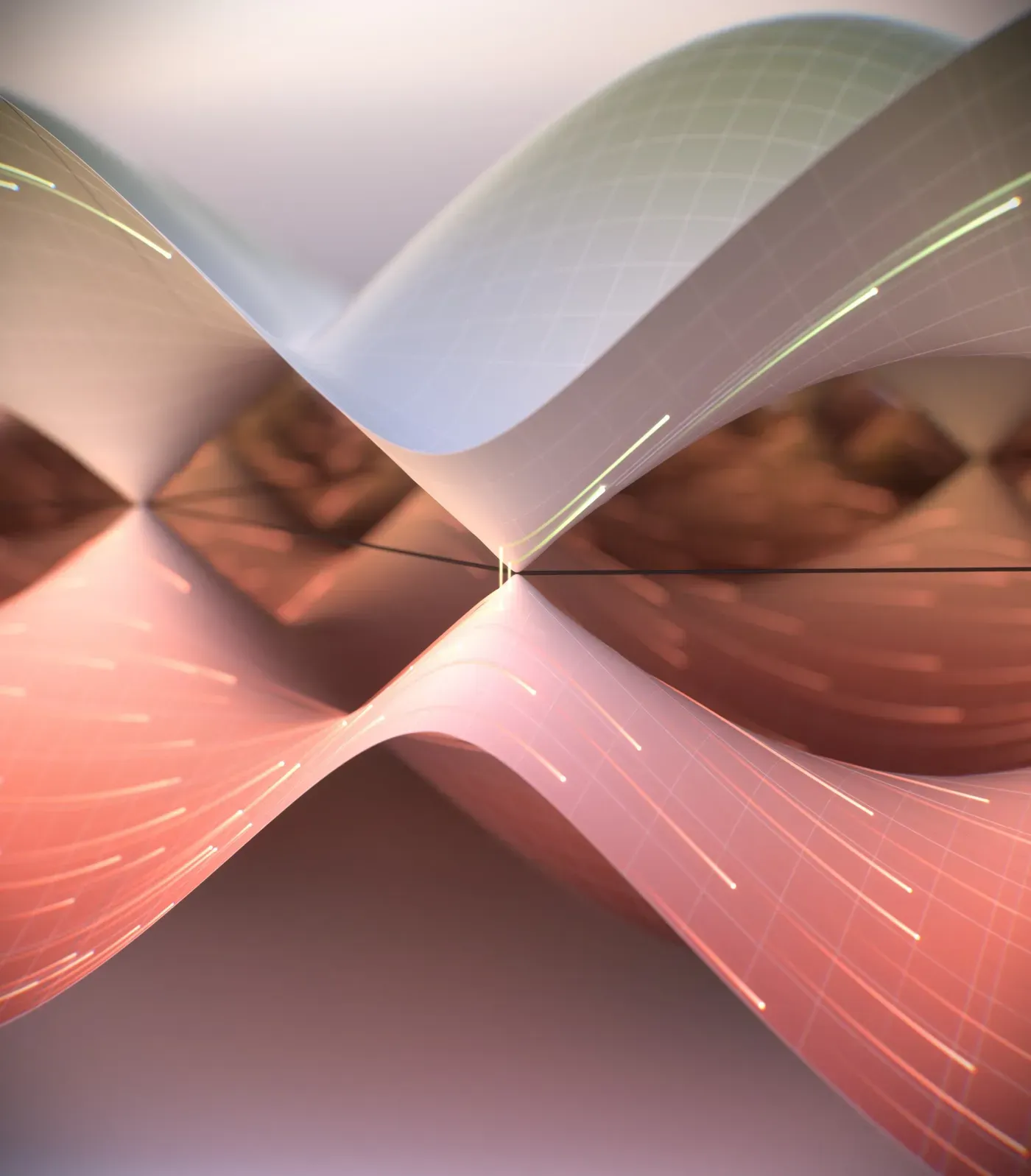
Physicists have made a groundbreaking discovery using a cutting-edge slow-motion electron camera that reveals how intense electric fields drive electrons in graphene to jump across energy gaps in an unexpected manner.
This novel combination of laser technology and electron microscopy has allowed researchers from Regensburg, Marburg and Jülich to visualize the ultrafast dynamics of electrons as they switch between energy bands. The phenomenon is akin to riding an elevator where the floor indicator suddenly jumps from one number to another without passing through all the intervening floors.
The researchers have been able to observe how electrons are accelerated by the electric field of a light pulse and then transition between energy bands, seemingly defying conventional rules. In semiconductors and related materials, electrons typically occupy specific energy ranges or bands separated by a forbidden energy gap.
However, during these Landau-Zener-Majorana transitions, electrons appear to effortlessly cross this forbidden zone. Such processes have long been suspected of playing an increasingly important role in high-speed semiconductor electronics.
The research team's findings suggest that these quantum jumps could be crucial for the development of faster and more efficient electronic devices. By understanding how electrons behave during these transitions, scientists can better design materials and technologies for the next generation of electronics.
In their study published in Nature, the researchers from Regensburg, Marburg and Jülich provide a detailed account of their observations, offering new insights into the complex behavior of electrons in graphene.
The researchers employed a novel combination of laser technology and electron microscopy to observe the extremely fast processes involved in light-driven quantum jumps in graphene. This allowed them to capture a large number of electrons simultaneously and witness those that undergo a quantum mechanical transition while moving.
A crucial component of this setup is a photoemission momentum microscope, which records the energies and states of motion of the electrons and generates a map of their distribution. Unlike traditional microscopes, it does not provide magnified images but rather maps the electron's behavior.
The team faced the challenge of combining electron spectroscopy with extremely fast oscillating light fields that could set the electrons in motion in a controlled manner. This required developing an experiment that had been years in the making and involved tracking electrons across the entire energy landscape of a solid in real time.
The experiment was made possible by tailor-made, atomically thin carbon layers produced at Forschungszentrum Jülich. These precision experiments demand material with nearly perfect atomic-level purity to prevent impurities from obscuring the delicate quantum dynamics of the electrons.
Another critical factor for the study was the use of 'rotated' graphene, a specialty developed at Jülich. This allowed the team to observe the quantum dynamics emerge particularly clearly, providing valuable insights into the behavior of electrons in this unique material.
The researchers emphasize that the precision and quality of the samples used were essential for achieving the desired results. The combination of cutting-edge technology and high-quality materials enabled them to capture a fundamental quantum mechanical process during their first measurement campaign.
The slow-motion electron camera has yielded some astonishing results in its study of graphene under strong light fields. The images reveal that electrons can overcome the band gap in graphene with a tunneling probability as high as 100%. This is a surprising finding, given the conventional understanding of quantum mechanics.
These observations also show that Landau-Zener-Majorana transitions can occur even when the energy states involved are far apart. However, it's not the separation of these states that determines the likelihood of such transitions. Instead, it's the speed at which electrons approach the band gap that plays a crucial role.
The dynamic nature of these transitions sets them apart from standard quantum mechanical tunneling through a spatial energy barrier. In this context, the rate at which electrons move towards the band gap is a critical factor in determining the outcome of the transition.
These findings have significant implications for our understanding of quantum mechanics and its applications. The new method can be used to investigate not only fundamental quantum transitions but also the processes that limit control over electrons in materials.
The study's results are particularly relevant to the development of technologies where electrons are controlled directly by light, rather than electrical voltages. Graphene measurements already show how interactions with the crystal lattice disrupt the orderly movement of electrons.
Further research using this method could lead to new insights into the electronic properties of various quantum materials and their selective control with light. This has the potential to open up entirely new possibilities for future technologies.
Researchers have made a groundbreaking discovery using a slow-motion electron camera to observe light-driven quantum jumps in graphene, a highly conductive material composed of carbon atoms.
The experiments captured the intricate dynamics of Landau-Zener-Majorana transitions, where electrons transition between different energy states under the influence of external light. This has allowed scientists to visualize and analyze these processes in unprecedented detail, providing new insights into the behavior of quantum systems. The findings have significant implications for advancing our understanding of quantum phenomena and their potential applications.
Facts based on reporting originally published by Phys.org.
You may republish this story, in full or in part, if you credit News Central Site and link to it (licence CC BY 4.0). Photos are not included.