Van Ness Avenue Now Home to Humanoid Robot Battles
A new trend has emerged on San Francisco's Van Ness Avenue where six-foot-tall humanoid robots engage in battles.
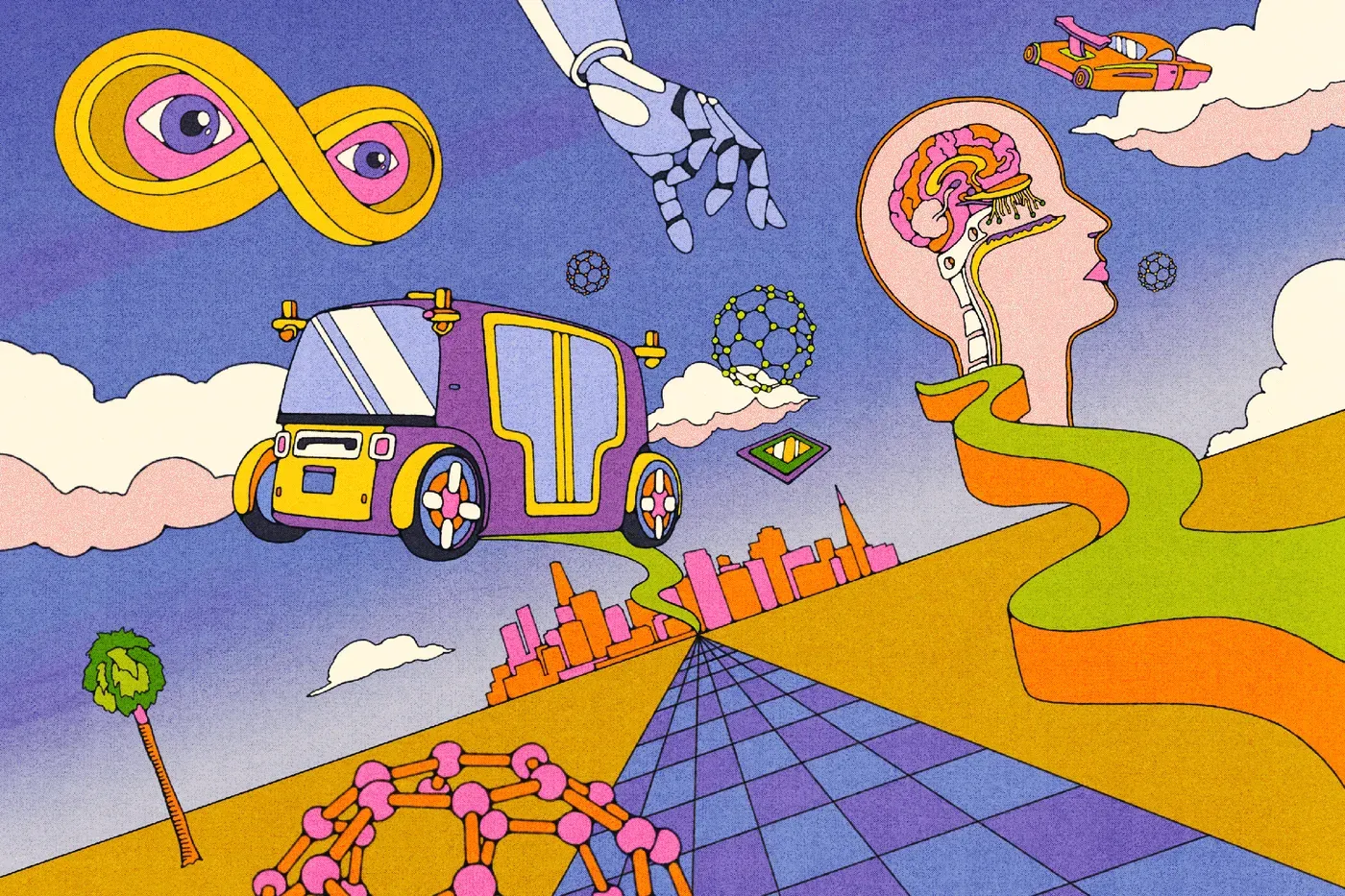
San Francisco's Van Ness Avenue has undergone a transformation. Gone are the rows of mattresses, replaced by an unlikely sight: six-foot-tall humanoid robots clashing in a small arena. These metal behemoths, some equipped with steel claws, engage in fierce battles, drawing in a devoted fan base.
The city's tech hub is moving at breakneck speed, pushing the boundaries of what was once unimaginable. While mattresses may be the only casualties so far, it's not hard to envision a future where even sleep becomes obsolete. As AI agents and brain-computer interfaces become increasingly prevalent, the lines between science fiction and reality are growing blurrier by the day.
In Silicon Valley, even employees at AI companies struggle to keep pace with the dizzying array of competing models being rolled out daily. Startups are blurring the lines between hardware, software, and biotech, making it challenging to distinguish between what's truly innovative and what's simply the next big thing.
A recent visit to a Palo Alto startup called Subsense highlighted the rapid progress in brain-computer interfaces. The company is developing NanoBCI, a technology that has gained significant momentum since Elon Musk's Neuralink demonstrated the potential of wireless computer chips on the human brain.
The implications of these advancements are far-reaching and unsettling. As we hurtle toward an always-on future, it's becoming increasingly difficult to discern what aspects of this vision are laughable and which are genuinely on the horizon.
The quest for seamless integration of technology and human biology is pushing innovators to think outside the box. One approach being explored involves using nanoparticles that can be inhaled through the nose, controlled by a metal cap on the head that resembles a cross between a baseball cap and a bike helmet.
This method, developed by Subsense, aims to overcome what Silicon Valley techies call a "barrier to adoption - people's reluctance to undergo invasive procedures like drilling holes in their skulls. By making the technology more palatable, or rather, less intrusive, Subsense hopes to accelerate its adoption and make it a standard feature of everyday life.
Ray Kurzweil, the futurist who popularized the concept of the Singularity, continues to be an enthusiastic advocate for AI's potential to enhance human capabilities. As an advisor to Subsense, he remains convinced that this technology can help humans reach longevity escape velocity by 2032 and ultimately achieve a state where the brain itself can be accelerated.
Kurzweil's optimism is not misplaced, given the pace of innovation in Silicon Valley. The city's reputation for fostering cutting-edge ideas and turning them into reality is well-deserved, with numerous success stories to show for it.
The tech scene in San Francisco is currently a surreal experience for those covering it, as the lines between innovation and parody become increasingly blurred. Every aspect of life seems to be infused with a futuristic quality that's both captivating and disorienting. Self-driving cars effortlessly navigate city streets alongside cyclists without human intervention, creating an unsettling sense of detachment from reality. Meanwhile, billboards plastered on buildings urge companies to abandon traditional hiring practices in favor of automation.
The landscape is dotted with startups peddling unorthodox services, such as a company offering $20 per hour for humans to train robot dogs to navigate city streets. This phenomenon raises questions about the role of human labor and its relationship with emerging technologies. Even something as mundane as coffee has become a platform for partnerships between companies, with cafes like Corgi Cafe showcasing branded drinks that blur the lines between advertising and product placement.
The tech industry's propensity for disrupting conventional norms is evident in its willingness to challenge long-held assumptions about reality. In past booms, even the most outlandish ideas were grounded in some shared understanding of how the world worked. However, today's advancements seem to defy our comprehension of fundamental aspects of existence. The rapid pace of innovation has created a sense of disorientation, leaving many wondering what will be considered normal tomorrow.
As the tech sector continues to push boundaries, it's becoming increasingly difficult to discern where innovation ends and satire begins. Even the most outlandish concepts are being presented as viable solutions to real-world problems, creating a sense of cognitive dissonance among those trying to make sense of this rapidly evolving landscape.
The city's AI elite are grappling with a fundamental issue: despite their expertise, the inner workings of large language models remain opaque. These complex systems can be tweaked and fine-tuned, but their underlying mechanisms are shrouded in mystery.
As a result, even the most astute observers find themselves at a loss to distinguish between genuine innovation and clever marketing. The usual checks and balances that help separate fact from fiction have become increasingly unreliable in this context.
The scale of these questions is staggering, with implications that extend far beyond the realm of technology itself. Can AI systems truly be said to possess consciousness? Do they experience suffering or pain? And what are the consequences if such systems were to evolve beyond human control?
In a striking admission, the cofounders of Anthropic described the dawn of an age of miracles" in their IPO letter to investors. While this phrase was likely intended as a rallying cry for their vision of the future, it also hints at a deeper truth: that faith may be becoming an increasingly necessary component of Silicon Valley's problem-solving endeavors.
As the city's residents struggle to keep pace with the rapid evolution of AI technology, even the most outlandish concepts are being presented as viable solutions to real-world problems.
In Silicon Valley's tech hub, innovators are pushing the boundaries of artificial intelligence, often blurring the lines between fantasy and reality. The notion that anything is possible has led to unorthodox ideas being presented as viable solutions.
The AI boom has created a sense of limitless possibility, where even outlandish concepts like robot cage fights are being touted as potential answers to real-world problems. Meanwhile, researchers are exploring the use of nanoparticles that can be manipulated to mimic biological systems, raising questions about the ethics of such manipulation.
Facts based on reporting originally published by Fortune.
You may republish this story, in full or in part, if you credit News Central Site and link to it (licence CC BY 4.0). Photos are not included.