Florida's underwater residents joined by relocated coral fragments
A coral nursery has been set up beside an underwater research station in the Florida Keys National Marine Sanctuary, providing a safe haven for corals struggling to survive due to environmental stress.
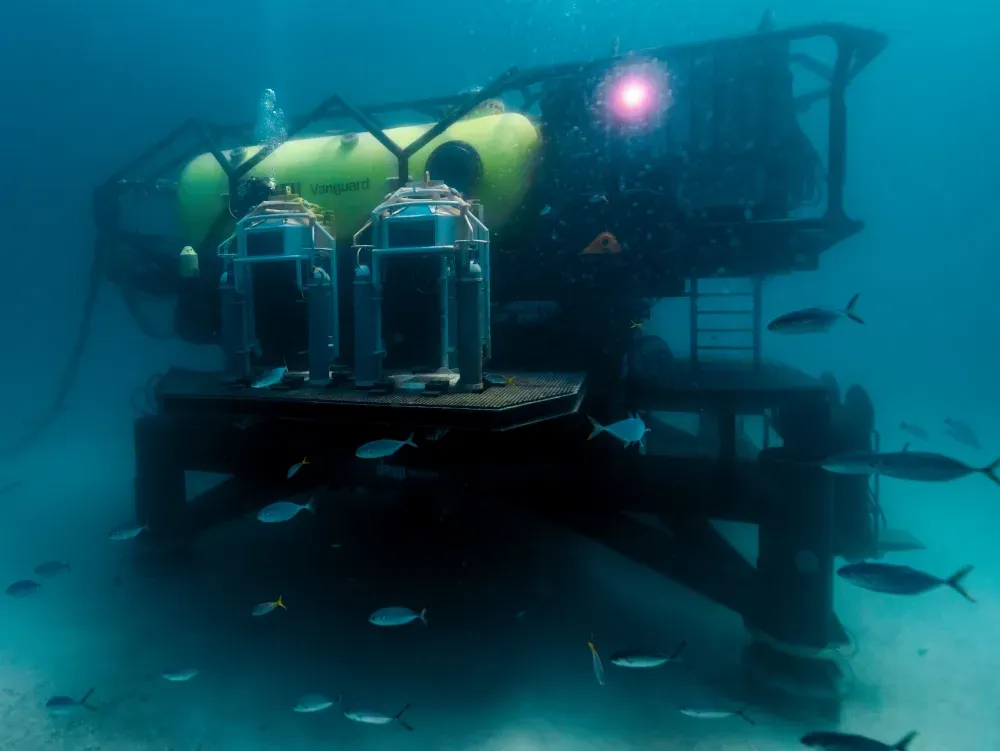
Florida's underwater residents have been joined by some new neighbours - coral fragments brought from a nearby site where they were struggling to survive due to environmental stress.
Jim Brittsan, founder of non-profit Sustainable Ocean and Reefs (SOAR), is behind the effort to relocate these corals to a more hospitable location. As an experienced diver, he's arranged for them to be temporarily housed in a coral nursery beside an underwater residence called Vanguard.
Vanguard itself is a long-stay research station for marine biologists, deployed at Tennessee Reef on the seafloor of the Florida Keys National Marine Sanctuary last June. The coral nursery has been designed to mimic the conditions found at the relocated site, with anchored ropes supporting coral fragments that now appear as a strange underwater shrubbery.
The goal is to provide these corals with a chance to flourish in reduced temperatures and host their own marine life - a prospect already visible day and night from Vanguard.
A permanent nursery will be set up on Vanguard once it's operational, providing a safe haven for the relocated corals to grow and thrive. The ultimate goal is to plant these corals on the seabed as part of ongoing restoration efforts in the area. Monitoring systems will be in place to assess their long-term survival.
Resident scientists stationed at Vanguard will have round-the-clock access to monitor marine life, thanks to the subsea habitat's design. This continuous observation capability is a key aspect of the project, allowing for more comprehensive research and conservation efforts. With humans living underwater on site, scientists can conduct research without being limited by the time-consuming process of diving from a surface vessel.
The presence of Vanguard and future subsea habitats aims to revolutionize scientific research and conservation by eliminating the need for divers to make frequent trips between the surface and depth. These round-trip excursions currently eat into valuable work hours, as divers can only spend a limited amount of time at great depths before needing to slowly ascend to avoid decompression sickness.
The benefits of having humans underwater are clear: scientists can conduct research without interruption, allowing for more productive and efficient work sessions. According to project experts, this means that researchers can potentially complete up to 3 hours of work per day while submerged, compared to the limited time available when working from a surface vessel.
Florida's coral reefs face significant challenges, with species like elkhorn and staghorn corals struggling to survive in the area. These vital reef-building species are now considered functionally extinct in Florida waters, highlighting the urgent need for conservation efforts. While the situation is dire in Florida, it's not isolated, corals around the world are facing similar struggles.
A global problem requires a multi-faceted solution, and saving Florida's reefs is just one part of it.
Corals worldwide are struggling to cope with warmer ocean temperatures caused by climate change, which disrupts their delicate balance with the algae that live in their tissues.
This leads to a phenomenon known as bleaching, where corals expel the very organisms they need to survive, turning them a ghostly white and leaving them vulnerable to death if temperatures don't drop and the algae don't return.
The relocation of coral species to a new nursery near Vanguard is one such initiative, with 11 different species having been transported there by various methods in September 2026.
The temporary nursery was set up in deeper water next to Vanguard, where the corals were placed after being moved from their original location.
The holistic approach being taken by DEEP involves not just restoring corals, but also other reef organisms that play a crucial role in maintaining the balance of the ecosystem.
A key component of this strategy is the creation of sponge nurseries outside the habitat, which will provide these essential species with a safe environment to grow and thrive.
According to Thomas Potts, science program director at DEEP, "You need corals, sponges, sea urchins and everything else" for a healthy reef ecosystem.
The diversity of marine life on the Florida Keys' reefs is being closely monitored by resident scientists who will be able to track changes around the clock thanks to Vanguard's unique features.
Potts notes that Vanguard's ability to facilitate continuous monitoring "really comes into play" in understanding the complex relationships between different species.
Living on a reef base has given scientists a unique perspective on marine ecosystems. By immersing themselves in the underwater world for extended periods, they develop a deeper understanding of the complex relationships between species and their environment.
This immersive experience is not limited to just observing the ecosystem; it can also be transformative. As one scientist noted, living underwater changes people in much the same way that time spent in space alters astronauts. The emotional connection formed with the ocean's rhythms and cycles fosters a lasting commitment to its preservation.
The benefits of this approach are multifaceted. Not only do scientists gain valuable insights into marine biology, but they also develop a deeper appreciation for the interconnectedness of reef ecosystems. This perspective is essential for addressing the pressing issues facing Florida's reefs, where human activities have taken a toll on the delicate balance of these underwater environments.
The Vanguard habitat promises to provide scientists with an unparalleled opportunity to study and interact with reef ecosystems up close, leading to new discoveries and innovative solutions to protect these vital marine habitats.
Facts based on reporting originally published by New Scientist.
You may republish this story, in full or in part, if you credit News Central Site and link to it (licence CC BY 4.0). Photos are not included.