Housing Permitting Activity Varies Across US States
A recent study by the University of Nevada, Las Vegas' Lied Center for Real Estate has ranked all 50 states and the District of Columbia based on new home permitting activity.
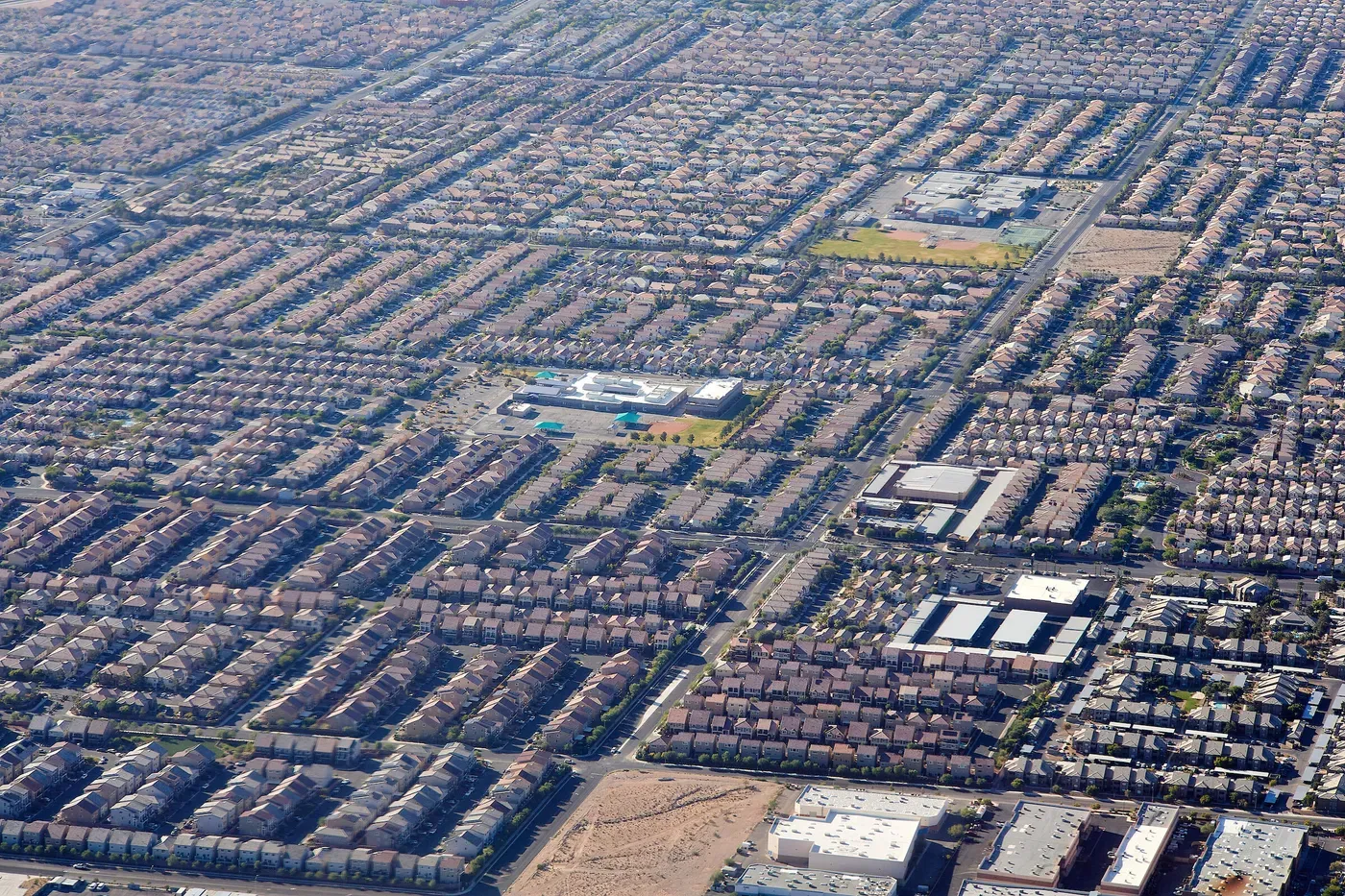
The United States is seeing a surge in housing prices, but a recent report has shed light on the pipeline of new homes being built across the country. The University of Nevada, Las Vegas' Lied Center for Real Estate has published a comprehensive study that ranks all 50 states and the District of Columbia based on their new home permitting activity.
The research paper analyzed data from the U.S. Census Bureau covering January to August 2026, comparing it to previous years. This allowed researchers to identify trends and patterns in state-level housing supply. The rankings provide policymakers and the public with a clear understanding of where each state stands in terms of new home construction.
The study breaks down its findings into four categories: overall permitting activity, single-family homes, multifamily units, and condos. By examining these areas, researchers can pinpoint potential opportunities for growth and identify regions that are struggling to keep up with demand. This information can be used to inform local and state policies aimed at addressing the housing crisis.
Each state's mix of housing types is also examined in the report, offering insights into where there may be room for expansion or diversification. The study's findings could potentially attract new residents, economic development, and even homeownership opportunities to areas that are struggling with affordable housing options.
The lack of affordable housing options in many parts of the US has been a pressing concern for communities nationwide. However, according to economists Shawn McCoy and Nicholas Irwin, addressing this issue requires a focus on supply rather than demand.
McCoy, an economist and director of the Lied Center for Real Estate, emphasizes that alleviating housing challenges hinges on cities' ability to build more homes. As he notes, affordability is not just about being able to afford one's home but also about finding a home to rent or buy in the first place.
The report highlights the importance of understanding the supply side of the market in determining future housing prices. Irwin, the Lied Center's research director and economics professor, points out that cities can influence housing development through community pressure on elected officials.
State policymakers have been provided with a comprehensive look at their performance compared to others in terms of new housing supply pipeline. This analysis aims to identify areas where policies could be adjusted to boost development and mitigate rising costs.
The study's findings are crucial for local decision-makers seeking to create more affordable housing options, which can attract new residents, stimulate economic growth, and encourage homeownership in areas struggling with housing affordability.
Nevada has seen a significant decline in new housing supply, with permits per resident dropping by 29% over the past year. This steep drop is part of a larger trend where some states are struggling to keep up with demand for affordable housing.
The numbers tell a story of stagnation: while the nation as a whole permitted 968,187 units from January through August 2026, Nevada's permits per resident fell sharply, from 12,662 to 8,986. This has put it in a precarious position, where it is one of only two states permitting fewer homes than its projected household growth.
Kansas, on the other hand, has emerged as a quiet leader in new housing supply. Despite ranking 19th in permits per resident, it has seen a significant increase in overall permits, rising by 31% over the past year and 56% since 2023. This upward trend is particularly notable given its relatively low starting point.
Kansas's success can be attributed in part to its focus on "missing middle housing," which includes two- to four-unit dwellings such as condos or duplexes. The state has seen a surge in this type of development, with rates five times higher than the national average.
The types of new housing developments being permitted across the US vary significantly from state to state. Mississippi stands out for its high proportion of single-family permits, accounting for a whopping 95% of all permits issued in the state.
In contrast, urban areas like Washington D.C. and New York City are dominated by multifamily developments, with 87% and 74% of permits respectively being for apartments rather than individual homes. Interestingly, South Dakota leads the nation in terms of multifamily permits per resident, boasting a rate more than twice the national average.
The traditional hotspots of Florida, Texas, and Arizona have seen a significant slowdown in new housing development, with these states collectively issuing 28,538 fewer units between January and March this year compared to the same period in 2025. Despite their relatively high rates of permitting per resident, they rank lower down the list in terms of momentum.
Meanwhile, other states are picking up the pace, with New York alone accounting for a significant increase of 9,616 new units (up 46%) between January and March this year, contributing to an overall rise of 474 in the national total. This growth is particularly noteworthy given that these states were previously lagging behind.
Rhode Island and New York are notable examples of states with low rates of permitting per resident, but both have seen significant increases in recent years, with Rhode Island nearly doubling its permits since 2023 (up 93%) and New York experiencing a rise of 64%.
The data reveals that some states have made significant strides in increasing their permitting rates, while others continue to lag behind. For instance, Rhode Island and New York have seen notable increases in recent years, with Rhode Island nearly doubling its permits since 2023.
A closer examination of the rankings shows that states like Oregon and Washington have maintained high permitting rates over time.
Facts based on reporting originally published by Phys.org.
You may republish this story, in full or in part, if you credit News Central Site and link to it (licence CC BY 4.0). Photos are not included.