Federal Reserve Chairman Kevin Warsh references "death march hikes" in speech
Kevin Warsh referenced Donald Kohn's infamous hiking tradition in his inaugural speech at Jackson Hole.
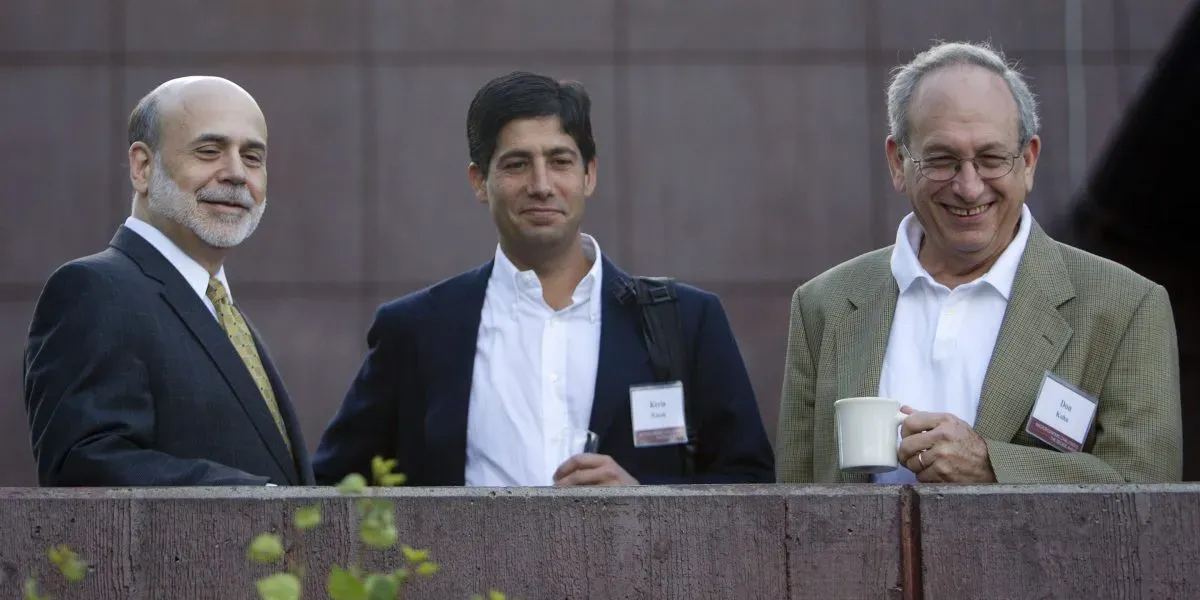
In a nod to a past hiking tradition, Federal Reserve Chairman Kevin Warsh referenced his former colleague Donald Kohn's infamous "death march hikes during his inaugural speech at Jackson Hole in August.
The hikes, which took place several years ago, were a regular occurrence for the group of central bankers who would meet annually at the symposium. However, it seems that not everyone was as enthusiastic about the rigorous expeditions as they were about the more leisurely strolls taken by others.
Kohn, then vice chair of the Federal Reserve Board of Governors, was reportedly unaware of his hiking companions' nickname for their outings, which had earned the moniker death march among peers. It is unclear whether Kohn himself ever knew he was leading these grueling hikes.
Warsh's speech at Jackson Hole served as a reminder to those in attendance that even in the most high-stakes and serious of discussions, there can be room for levity and humor. The reference to the death march hikes may have been intended to humanize Warsh and put his audience at ease.
The contrast between Kohn's grueling hikes and what Warsh described as a more leisurely pace taken by others was likely meant to highlight different approaches to leadership, with some leaders taking a more relaxed approach and others pushing for greater intensity.
Don Kohn was surprised to learn that he would be featured prominently in Kevin Warsh's recent speech at Jackson Hole.
Warsh had approached Kohn before taking the stage to clear the air about the reference to the infamous death march" hikes, which were meant to illustrate different approaches to leadership. According to Kohn, the mention of his grueling hikes was intended as a lighthearted way to break the tension and add some humor to an otherwise serious discussion.
Kohn was pleased with Warsh's speech overall, praising its constructive tone and thoughtful approach to laying out principles for navigating economic challenges. He also appreciated that Warsh acknowledged a previous mistake by discussing the current economic situation in detail, something he had refused to do at the July Federal Open Market Committee meeting.
Warsh's decision to correct his earlier stance was seen as a positive step, particularly given its impact on markets. The fact that yields rose following the speech, with Treasuries shifting uncomfortably, was likely due in part to Warsh's shift away from providing forward guidance, which had become a contentious issue at the July meeting.
Warsh's 100th day in office was marked by a speech at the Federal Reserve Bank of Kansas City's annual conference, where he shared insights on inflation and the real economy.
Analysts and economists took comfort from Warsh's hawkish stance on inflation and his consideration for the broader economic implications. This shift in perspective was noted by Don Kohn, who saw it as a constructive approach to artificial intelligence.
Kohn commended Warsh for acknowledging the uncertainties surrounding AI and its potential benefits to monetary policy. He suggested that this marked a departure from earlier views expressed by Warsh on the subject.
Claudia Sahm, creator of the Sahm Recession Indicator, had previously expressed surprise at Warsh's definitive stance on forward guidance.
The Jackson Hole speech delivered by Fed Chairman Kevin Warsh has sparked a range of reactions from market observers and economists.
According to Don Kohn, a veteran of the Federal Reserve, Warsh initially took a firm stance on forward guidance during their interactions, using it as a means to avoid discussing the economy and inflation. This approach was seen as an attempt to sidestep questions about interest rate expectations.
Kohn has expressed his initial disappointment with Warsh's stance, suggesting that the Chairman had become entrenched in his views.
Market analysts were eager to dissect the implications of Warsh's speech, particularly in relation to monetary policy. Some may have been puzzled by the Chairman's decision to begin his address by referencing a hike, albeit one of a physical nature rather than an interest rate increase.
Kohn has also shared some personal anecdotes about his interactions with Warsh and Mark Carney, recalling a memorable hiking trip through Paintbrush Canyon where they engaged in extensive discussions on inflation targets and nominal GDP.
The hikes led by Don Kohn have become infamous in Fed circles, but some believe their reputation has been somewhat exaggerated.
Kohn recalled a memorable trek through Paintbrush Canyon where he engaged in extensive discussions on inflation targets and nominal GDP targets with his counterparts from other central banks.
These informal meetings provided an opportunity for central bankers to trade ideas and share experiences in a more relaxed setting than the conference rooms. Kohn noted that many hikes over the years featured lively conversations about pressing issues, particularly with representatives from other central banks.
Kohn emphasized that these hiking excursions were a valuable platform for open discussions on complex topics, allowing central bankers to gain insight into each other's thinking and approaches.
As Don Kohn's hiking excursions were known for being grueling and intense, Kevin Warsh's approach is seen as more adaptable and open to change. According to Kohn, Warsh came into his role with preconceived ideas but has since adjusted them based on what he has learned while working at the Fed.
Warsh's experience within the institution has provided him with a deeper understanding of its inner workings, including the resources available and the perspectives of his fellow policymakers and staff.
Facts based on reporting originally published by Fortune.
You may republish this story, in full or in part, if you credit News Central Site and link to it (licence CC BY 4.0). Photos are not included.