European Space Agency and Japan Collaborate on Mercury Mission
A historic milestone has been achieved as two spacecraft have successfully entered orbit around Mercury after an eight-year journey through the inner solar system.
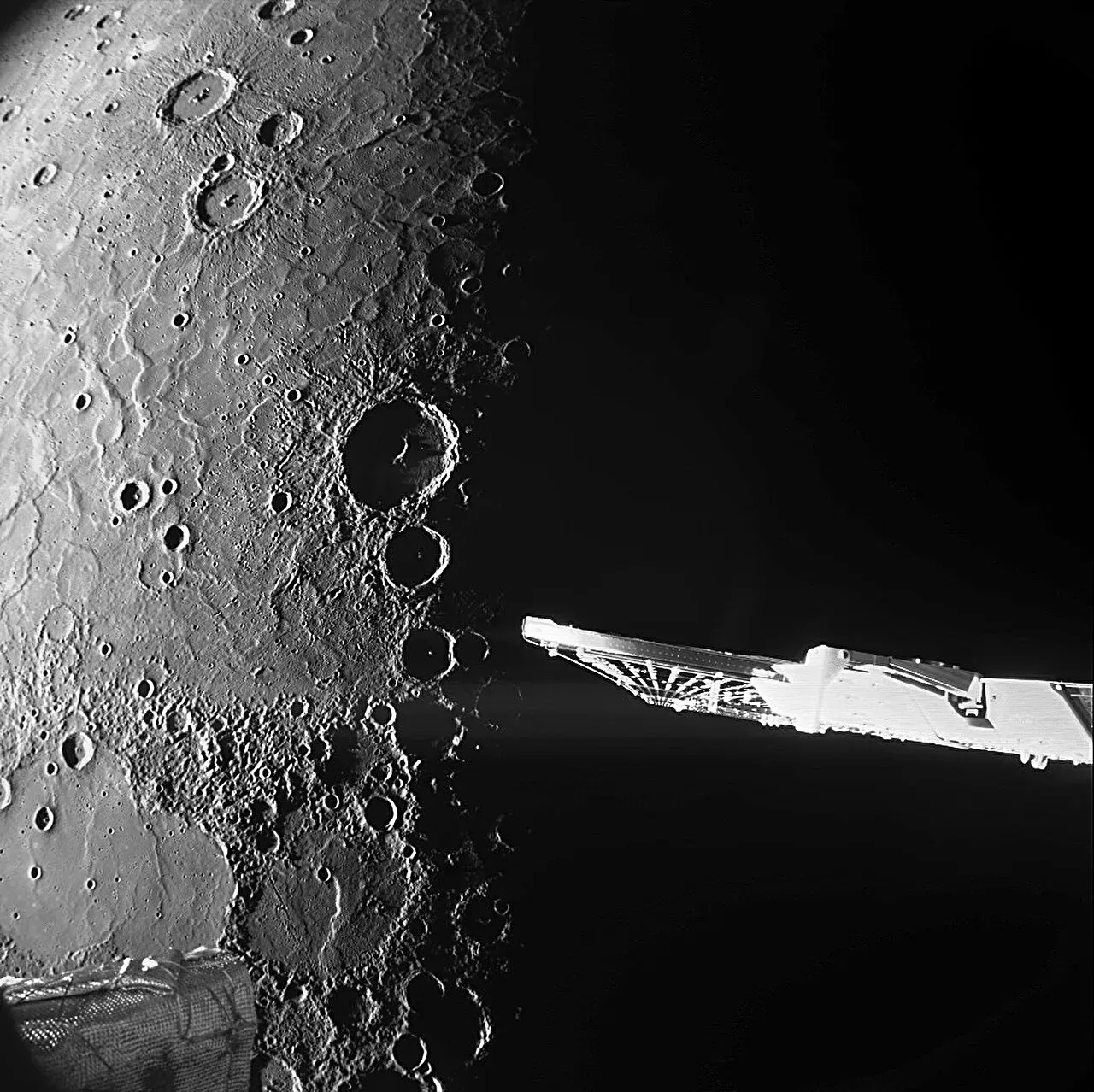
A historic milestone has been achieved as two spacecraft have successfully entered orbit around Mercury after an eight-year journey through the inner solar system. This remarkable feat marks the beginning of a mission to unravel the mysteries of our smallest planet.
The European Space Agency and Japanese space agencies collaborated on this ambitious project, code-named BepiColombo, which is estimated to have cost $2 billion (1.7 billion euros) to develop. The spacecraft will separate next month, allowing each to map and study Mercury from different altitudes.
Flight controllers in Germany anxiously monitored the spacecraft's progress as it entered Mercury's orbit, with several hours passing before confirmation of success was received. Social media updates were used by the European Space Agency to announce BepiColombo's arrival, while teams worked tirelessly to analyze the data streaming back from the spacecraft.
BepiColombo is only the third spacecraft to visit Mercury, which is the closest planet to the sun and surprisingly small, comparable in size to our moon.
The journey to Mercury has been a long one for BepiColombo, launched in 2018 after years of planning and preparation. The spacecraft took a circuitous route, flying past Earth once and Venus twice before utilizing gravity assists from Mercury itself six times over the course of its nearly four-year voyage.
These gravitational maneuvers added up to an impressive total distance traveled: more than 6 billion miles (10 billion kilometers) put BepiColombo's odometer in high gear. The spacecraft's long route was deliberate, designed to conserve fuel and ensure a successful arrival at Mercury's orbit.
Once the conjoined spacecraft shed their mother ship in September, they embarked on the final leg of their journey, setting the stage for a new era of exploration at Mercury. Lead project scientist Geraint Jones is eager for the data that will soon begin streaming down to Earth, saying we can't wait for all the new data to start coming in come spring.
The arrival of BepiColombo marks a significant milestone for astronomers studying Mercury's dense interior and exterior magnetic field. The spacecraft's separate components, one from the European Space Agency and the other from Japan's Aerospace Exploration Agency, will provide unprecedented measurements of the planet's surface features, including impact craters, volcanic plains, mountain ridges, and peaks that rise as high as 3 miles (4 1/2 kilometers).
The extreme temperatures on Mercury pose a significant challenge to electronic and engineering systems, which can be severely strained by temperatures exceeding 800 degrees Fahrenheit.
Keeping the spacecraft's instruments cool is crucial for the mission, as Jones emphasized in an email: "The spacecraft and its instruments need to be kept as cool as possible, which is a huge technical challenge in itself."
Despite its proximity to Earth, Mercury remains one of the least explored planets in our solar system, with only a handful of visitors having ventured there, including Voyager 2's flyby in the 1980s.
Facts based on reporting originally published by Phys.org.
You may republish this story, in full or in part, if you credit News Central Site and link to it (licence CC BY 4.0). Photos are not included.