Economic Hardships Did Not Deter Thanksgiving Celebrations During The Great Depression
Families found ways to make the holiday special despite their circumstances during the 1930s economic downturn.
In times of economic hardship, it's natural to question the value of celebrations like Thanksgiving. When basic needs are unmet, a lavish feast can seem like an extravagance. However, having something to look forward to and share with loved ones is crucial for morale during difficult periods.
The Great Depression brought unparalleled economic devastation in the 1930s, making it impossible for many Americans to afford even basic necessities, let alone a traditional Thanksgiving meal. Yet, families found ways to make the holiday special despite their circumstances. They demonstrated remarkable resourcefulness and creativity in preparing meals with limited ingredients.
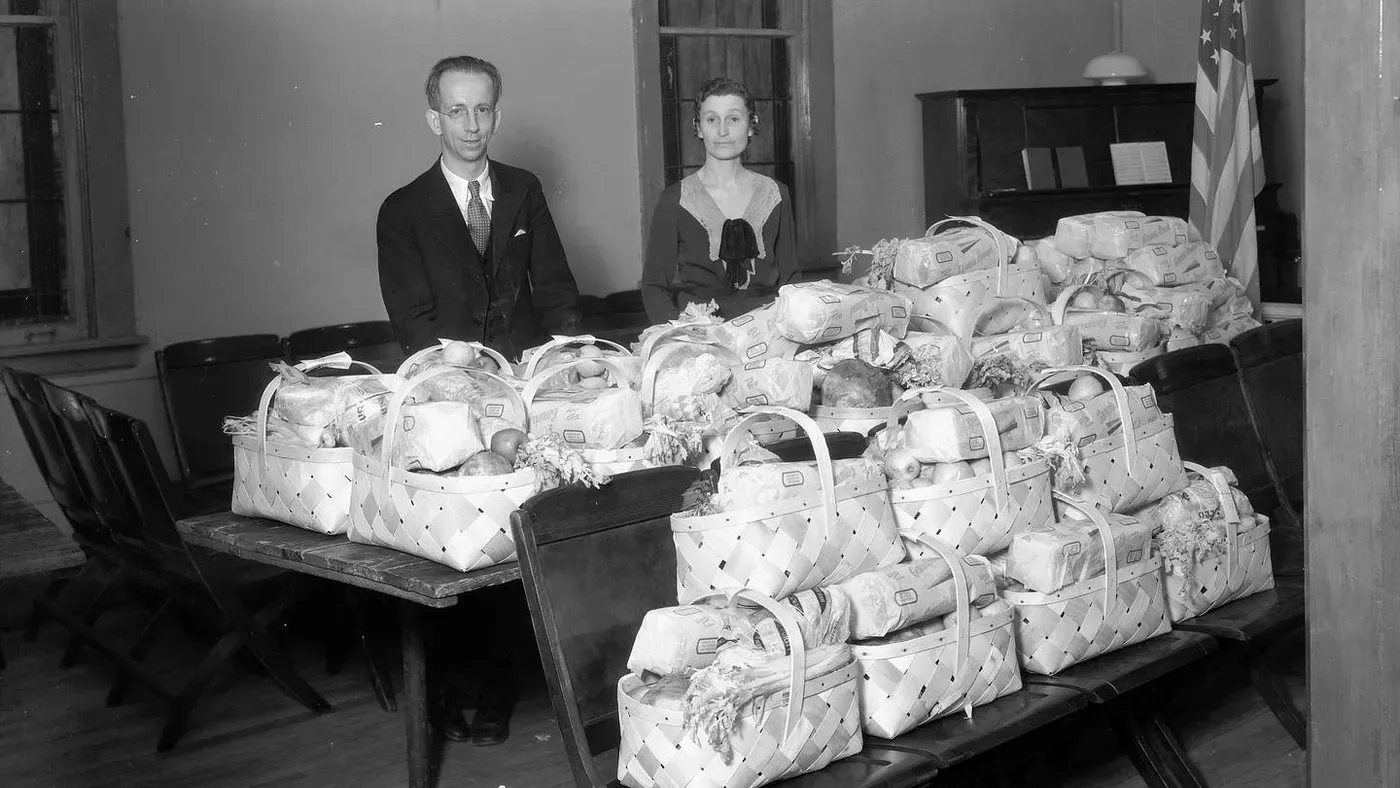
The typical Thanksgiving spread was far from what we know today during this period. Many people had to rely on government assistance programs or charitable organizations for food, and even then, the options were severely limited. However, families made do with what they had, often turning to traditional recipes that required minimal ingredients and effort.
As one might expect, Thanksgiving dinner was a stark departure from its modern counterpart during the Great Depression. People used their skills and imagination to create simple yet meaningful meals that brought them closer together. Despite the hardships, these gatherings played a vital role in boosting spirits and providing hope for a brighter future.
The Great Depression cast a long shadow over American lives, and Thanksgiving was no exception. Families struggled to make ends meet, and traditional holiday meals were often out of reach. Yet, even in the face of hardship, people found ways to adapt and celebrate.
In place of the usual turkey, many families resorted to alternative proteins. Meat was scarce and expensive, so they made do with whatever they could afford. For some, this meant relying on soup kitchens or charities that provided Thanksgiving meals.
The menu may have been humble, but it showed a remarkable resourcefulness in the face of adversity. People got creative with leftovers and scraps, turning old hen into a satisfying main course. Mock duck was another popular substitute, made by wrapping flank steak around stuffing and roasting it to perfection.
This makeshift dish was surprisingly convincing, evoking the luxury of a high-end meal without breaking the bank. It's a testament to the ingenuity of Depression-era cooks who managed to turn scraps into something special. Porcupine meatballs were another clever invention, made by sticking rice into ground beef to make it go further.
Rice was used as a filler in many dishes during this period, and its versatility proved invaluable. By incorporating it into porcupine meatballs, families could stretch their food budget and make a meal feel more substantial. It's a small but significant detail that speaks to the resilience of those who lived through these difficult times.
In a bid to make meals more filling, cooks also experimented with cooking techniques. Old chickens, no longer able to lay eggs, were used as a last resort, but only if cooked carefully to avoid tough meat.
In an effort to stretch their Thanksgiving meals during the Great Depression, Americans turned to creative substitutions for traditional ingredients. Porcupine meatballs were one such invention, achieved by mixing ground beef with rice to make it more filling.
Flank steak wrapped around stuffing and roasted was another clever imitation of a fancy dish. This "mock duck" was a cost-effective way to create the illusion of a luxurious meal, making it feel more like a special occasion. The use of leftover meat in this manner also helped reduce food waste.
Stale bread was a staple ingredient for many dishes during this time, and stuffing was one that benefited greatly from its availability. People would add various ingredients they had on hand to their stuffing, including apples, raisins, or chestnuts foraged from their surroundings.
Dandelion salads were another popular side dish, as the plants were easily gathered from home gardens or yards. This resourcefulness helped families make the most of what little food they had available to them.
In the midst of economic hardship, Depression-era families still found ways to celebrate Thanksgiving with a traditional meal. Canned vegetables played a crucial role in these gatherings, as they were not only affordable but also readily available. Recipes from radio shows like Aunt Sammy's Homemaker's Half Hour helped families liven up their canned food offerings, making dishes such as creamed pearl onions and candied sweet potatoes.
These recipes not only added flavor to the meal but also provided a sense of normalcy in uncertain times. The fact that potatoes were inexpensive made mashed potatoes a staple at many Thanksgiving tables. This was especially important given the limited availability of other ingredients, which were often out of reach for those struggling financially.
Dessert, an essential part of any Thanksgiving celebration, presented a unique challenge during this period. With sugar and other baking essentials being luxury items, pumpkin pie became a rare treat. Only those who could afford to purchase canned pumpkin purée or obtain an actual pumpkin from their garden were able to make this traditional dessert.
The scarcity of ingredients forced families to get creative with sweet treats. Instead of relying on traditional recipes, they used canned foods as substitutes, making do with what little they had available. This resourcefulness not only helped families save money but also ensured that everyone could enjoy a festive meal together.
As families sat down to their Thanksgiving feast, they were reminded that even in times of hardship, there was still much to be thankful for. The simple yet satisfying meals they shared brought people closer together and provided a sense of community during a difficult period.
During the Great Depression, American families turned to resourceful uses for everyday ingredients to create satisfying meals on Thanksgiving. Sweetened condensed milk became a staple in many households, allowing them to make a rich sugar cream pie as a dessert option.
The versatility of tomato soup was also put to use in an unconventional way: it was used as a main ingredient in making a cake. Despite sounding unappetizing to modern palates, the resulting tomato soup cake was surprisingly sweet and dense, thanks to its simple ingredients.
When all else failed, families could rely on B & M Brown Bread, a canned product that offered a sweet and cake-like treat during difficult times.
Facts based on reporting originally published by Mental Floss.
You may republish this story, in full or in part, if you credit News Central Site and link to it (licence CC BY 4.0). Photos are not included.