A breakthrough may be on the horizon for the Riemann hypothesis
Mathematicians have been trying to prove Bernhard Riemann correct since he proposed the hypothesis in 1859, but so far, no conclusive proof has been found.
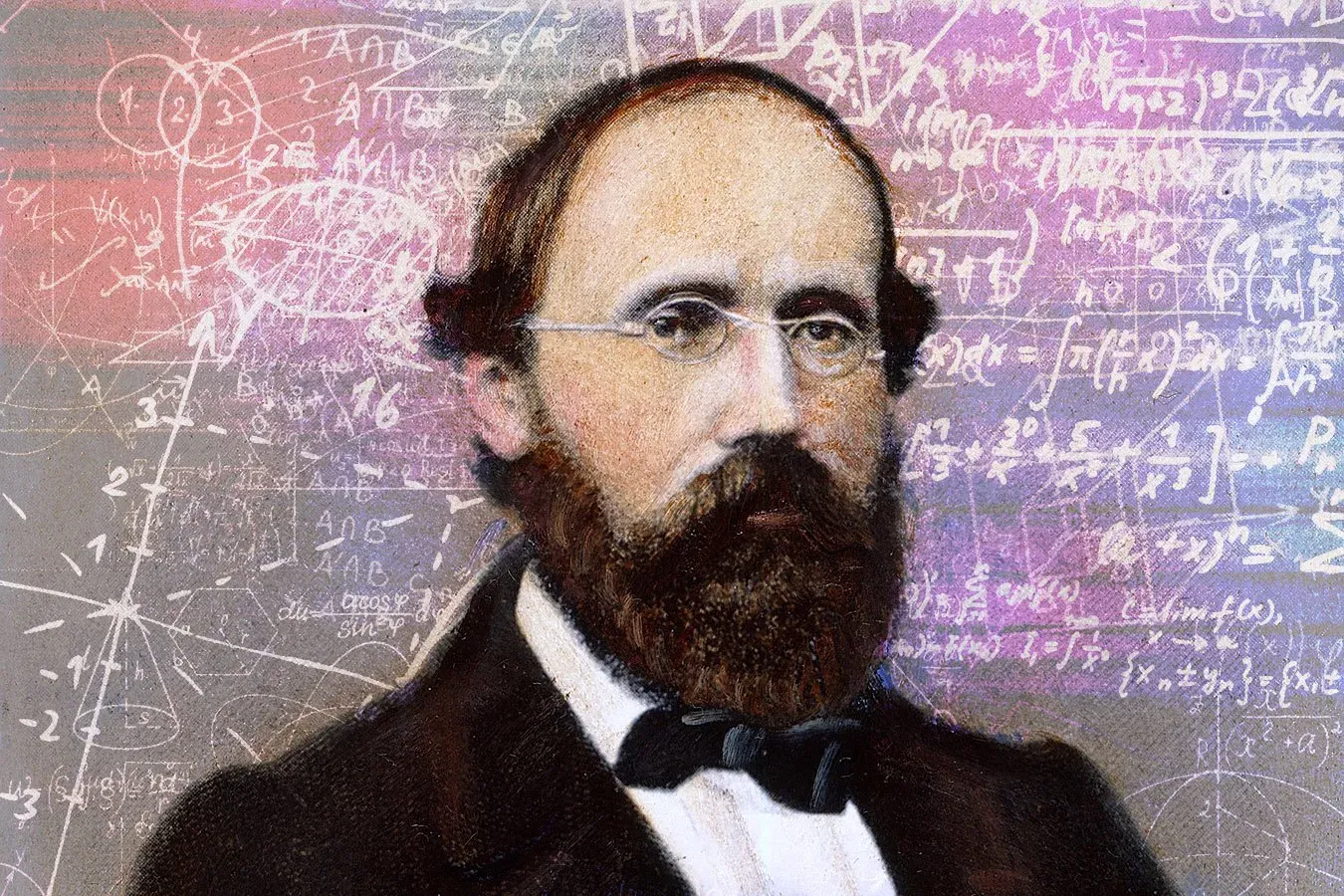
Mathematicians have been stumped by a century-old problem that challenges the fundamental nature of numbers, but a breakthrough may be on the horizon. The Riemann hypothesis, first proposed by Bernhard Riemann in 1859, has been an enigma for many years.
Riemann suspected that prime numbers exhibit a pattern rather than being randomly distributed, but he never provided conclusive proof. His successors have spent over a century trying to prove him right, and the problem has become one of mathematics' most enduring unsolved puzzles.
The solution to the Riemann hypothesis could revolutionize our understanding of mathematical functions and shed light on the underlying structure of numbers. If proven true, it would be a monumental achievement that could change the course of mathematics forever.
Riemann made a casual remark in his 1859 memoir about a mathematical function, stating that its properties were "very probably true. However, he never provided definitive proof, leaving mathematicians to grapple with the problem for generations.
The Riemann hypothesis revolves around prime numbers, the building blocks of all mathematical systems. Prime numbers are those that can't be divided by any number except for 1 and themselves. Every other number is constructed from a combination of primes.
Prime numbers appear to be scattered randomly throughout the number line, making their distribution seemingly unpredictable. However, this randomness belies a deeper structure waiting to be uncovered. Mathematicians have long sought to understand how primes are distributed among all numbers.
The Riemann hypothesis proposes that the spacing of prime numbers can be inferred from another set of complex numbers tied to the Riemann zeta function. These complex numbers come in pairs, with one part being real and the other imaginary. When plugged into the Riemann zeta function, they produce a zero.
The resulting zeros are called non-trivial zeros, which might seem like an oxymoron given their significance in mathematics. The sum of these complex numbers over a sequence allows mathematicians to predict the distribution of primes up to a certain high number.
Riemann's formula effectively sheds light on the seemingly random appearances of prime numbers among all other numbers. By tying together prime numbers and complex numbers, he created a framework for understanding their intricate relationships. This breakthrough has far-reaching implications for mathematics and its many applications.
The Riemann hypothesis relies on a crucial assumption: that all zeros, when plotted in a specific coordinate system, lie on a single vertical line. This fundamental concept has been at the heart of mathematicians' efforts to crack the problem for centuries.
Riemann's calculations were instrumental in confirming this idea, but he was unable to provide a more general proof, leaving the hypothesis as an open question that would go on to become one of mathematics' most enduring enigmas.
The Riemann hypothesis has been dubbed the queen of all the Millennium Problems" by Scott Armstrong at Sorbonne University in Paris. Its elusive nature has captivated mathematicians for years, with many attempting to solve it but ultimately falling short.
Mathematicians have made significant progress in verifying parts of the hypothesis using computers. For instance, they've confirmed that the first 12 trillion non-trivial zeros line up on Riemann's predicted vertical line, although this is still a far cry from proving the hypothesis more broadly.
The verification process for the new proof is an intricate one, requiring careful examination of the 17 million lines of Lean code generated by the AI.
Alex Walker at University College London has not had a chance to review the code yet, and so cannot comment on its validity, he says in an interview.
The announcement of the breakthrough did little to clarify how the AI arrived at its conclusion, with experts still left wondering about the specific mathematical techniques employed.
Some commentators have speculated that the AI was able to draw upon connections between number theory and arithmetic geometry that were not previously apparent, potentially revealing new insights into these fields.
Early analysis suggests that the Lean code is being adapted for review on a computer capable of handling its complexity, providing a crucial check on the proof's validity.
The Riemann hypothesis has far-reaching implications for various mathematical functions, particularly those similar to the zeta function. One such example is the generalised Riemann hypothesis, which affects numerous results that have been proven subject to its validity.
According to John Nicholson at the Max Planck Institute for Mathematics in Germany, a significant number of these results rely on the correctness of the generalised Riemann hypothesis. Moreover, several fast algorithms used in algebraic number theory require this hypothesis as a foundation for their calculations.
The Riemann hypothesis has also been linked to theories in quantum physics, specifically those related to chaos in quantum systems. Enrico Bombieri's warning about the potential consequences of its failure still resonates, but recent advancements in computational power and human ingenuity may have mitigated these concerns, providing a more stable understanding of prime number distribution.
Facts based on reporting originally published by New Scientist.
You may republish this story, in full or in part, if you credit News Central Site and link to it (licence CC BY 4.0). Photos are not included.