Electrochemical Sensor Developed Using Artificial Intelligence
Researchers at Sungkyunkwan University have made significant progress in developing an ultrasensitive electrochemical sensor for detecting extremely low concentrations of vitamin C.
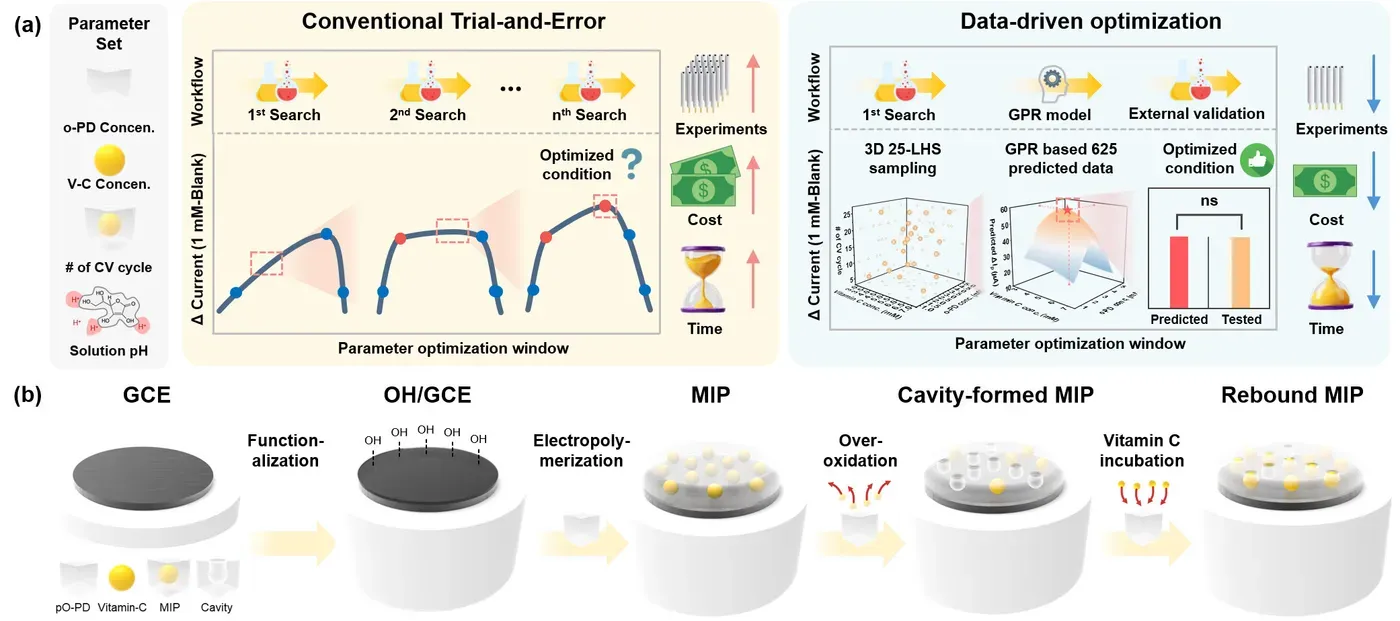
Researchers at Sungkyunkwan University have made significant progress in developing an ultrasensitive electrochemical sensor for detecting extremely low concentrations of vitamin C. The breakthrough was achieved by incorporating artificial intelligence into the sensor development process, allowing the team to identify promising fabrication conditions with limited experimental data.
The use of AI in this context enabled the researchers to streamline the optimization process, reducing the need for extensive trial-and-error experimentation that is often required when developing sensitive electrochemical sensors. By leveraging the capabilities of AI, the team was able to pinpoint the most effective fabrication conditions, thereby accelerating the development of the sensor.
Vitamin C plays a crucial role in antioxidant protection and immune function, making it essential to accurately measure its levels in the blood. However, conventional analytical techniques often require sophisticated equipment, which can be limiting for widespread use. The new electrochemical sensor aims to address these challenges by providing a more accessible and efficient means of detecting vitamin C.
The researchers employed a molecularly imprinted polymer (MIP) material in their design, which is capable of selectively recognizing vitamin C molecules. This specialized material enables the sensor to detect even trace amounts of vitamin C, making it an invaluable tool for assessing nutritional status.
The team behind this innovative sensor design employed a materials-informed approach to optimize its performance. By matching the molecular structure of the target molecule, vitamin C, with specific recognition sites in the material, they created a precise fit.
To further refine their design, researchers combined this material with artificial intelligence-based machine learning algorithms. This powerful combination enabled them to predict the optimal fabrication conditions for producing high-performance sensors.
The optimization process focused on four critical parameters: material concentrations, electrochemical polymerization cycles, solution pH, and their interactions. By evaluating these variables at multiple levels, they generated a vast array of possible combinations, 625 in total, from which to choose.
Using machine learning, the team trained an algorithm with data from 25 initial experiments, allowing it to pinpoint promising conditions that had not been tested previously. The recommended settings were then used to fabricate sensors, which were subsequently validated through experimental testing.
The study's findings have significant implications for the development of sensors that can detect disease-related biomarkers and environmental pollutants at extremely low concentrations.
Researchers are now planning to expand the use of AI in sensor design beyond optimizing fabrication conditions, with a focus on recommending suitable sensing materials for specific target molecules. This could lead to the creation of highly sensitive sensors capable of detecting even minute amounts of substances.
The ultimate goal is to develop sensors that can identify and quantify disease-related biomarkers and environmental pollutants at concentrations as low as parts per trillion, paving the way for early detection and treatment of diseases and improved environmental monitoring.
Facts based on reporting originally published by Phys.org.
You may republish this story, in full or in part, if you credit News Central Site and link to it (licence CC BY 4.0). Photos are not included.