Drone Attacks Raise Concerns About Security in the Black Sea Region
A recent spate of drone attacks on cargo ships in the Black Sea has raised concerns about the region's security, with two ships struck within Bulgaria's exclusive economic zone.
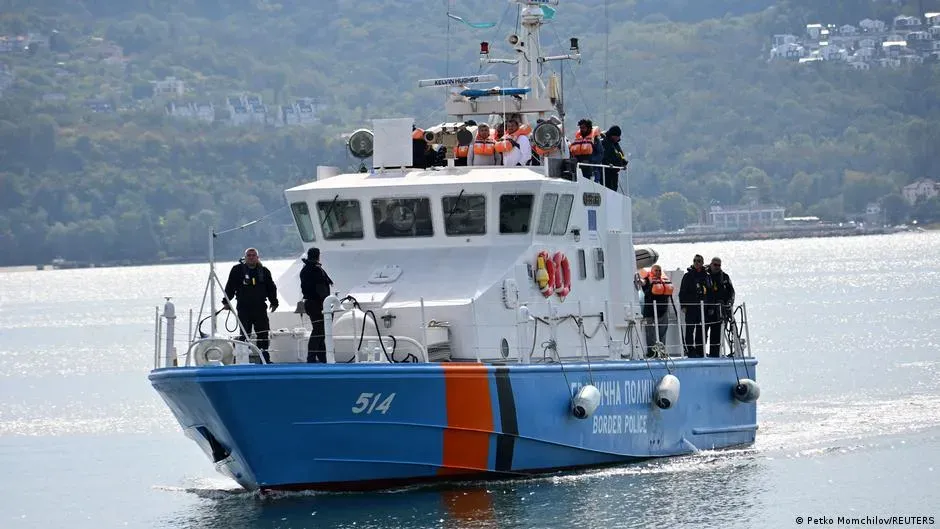
A recent spate of drone attacks on cargo ships in the Black Sea has raised concerns about the region's security. The incidents have highlighted the complex nature of the issue and the potential vulnerability of the area to threats from Russia.
On October 6, two cargo ships were struck by drones within Bulgaria's exclusive economic zone in the Black Sea. One of the ships, Alfa Watan, sank as a result, while the other, Able, sustained significant damage. The crew members of the latter vessel were rescued and taken to a military hospital for treatment.
The sinking of the Alfa Watan has left its crew still unaccounted for, with a search and rescue operation being conducted by Bulgarian authorities. This incident occurred just one day after another cargo ship, Royad Mammadov, was struck by a drone off the coast of Romania, resulting in the loss of two lives.
The recent attacks on cargo ships carrying grain from Ukraine have led to growing doubts about the safety of the western Black Sea region. This area, which includes the coastlines of Bulgaria and Romania, had previously been seen as relatively secure compared to other parts of the Black Sea.
The Bulgarian government has been cautious in its response to Tuesday's drone attack on two ships in the Black Sea.
Prime Minister Rumen Radev downplayed the incident, suggesting that it was not particularly serious given the frequency of ship sinkings in the region.
However, Bulgaria's Foreign Ministry issued a statement condemning the attack as an "absolutely unacceptable violation of international law".
The Ukrainian government has taken a more direct stance on the issue, with President Volodymyr Zelenskyy unequivocally blaming Russia for the incident.
Zelenskyy stated that Ukraine had assured Bulgaria that it was not responsible for the attack, and emphasized that the evidence pointed to Russian involvement.
The lack of a clear stance on Russia's aggression in the Black Sea region has become a recurring theme under Bulgaria's current administration.
According to Rumena Filipova, chairperson of the Institute of Global Analytics, this reluctance to name Russian aggression as the main threat is a symptom of a broader problem: Bulgaria's weak response to hybrid attacks and its tendency to downplay incidents.
Filipova attributes this weakness to the absence of effective measures to counter malicious influence from Russia and China, which she believes has been overlooked by the Bulgarian government.
A crew member from the ill-fated MV Able ship, which was attacked in the Black Sea, has come forward with his own theory about the incident: he thinks it was a Russian strike because the ship was carrying Ukrainian grain.
While this testimony is not considered hard proof, security experts agree that Russia's motives and actions point towards involvement in the attack.
The lack of experience in attributing maritime drones within Bulgaria's exclusive economic zone (EEZ) is a significant concern for security experts. When uncertainty prevails, institutions tend to adopt a cautious approach by withholding information until absolute certainty is achieved.
A direct military response or the activation of NATO's Article 5 collective defense mechanism is not expected in this scenario. The strikes on ships within Bulgaria's EEZ do not constitute a direct attack on Bulgarian sovereign territory, which would trigger such a response.
However, security experts argue that these incidents undermine the notion that the western part of the Black Sea is a secure zone due to its distance from the frontlines in Ukraine. Trad believes that this development will lead to increased pressure for enhanced maritime monitoring and anti-mining capabilities.
As a result, shipping routes may be revised with stricter routing recommendations, leading to higher insurance premiums and reduced hiring of crews. Local businesses, particularly those reliant on fishing, can also anticipate economic repercussions from the need to stay in ports due to fear of further attacks.
Bulgaria's naval defense capabilities are in dire need of improvement, according to Rumena Filipova, who emphasizes that modernization efforts must be stepped up significantly.
Filipova points out that despite recent strengthening of the Mine Countermeasures Black Sea Task Group by Romania, Bulgaria and Turkey at this year's NATO summit in Ankara, substantial gaps still exist in naval defense capabilities. She notes that Bulgarian authorities have been slow to develop joint naval defense forces and coordination with neighboring countries, particularly Romania.
Turkey's response to the recent attacks is also a concern, given that all three ships were owned by Turkish firms and some crew members were Turkish nationals. Turkish President Recep Tayyip Erdogan has already spoken with Russian President Vladimir Putin about securing navigation in the Black Sea.
Turkish influence in the region is considerable, with control of the Straits under the Montreux Convention, a large fleet in the Black Sea, and its role as mediator between Moscow and Kyiv. As Trad notes, Ankara can use these levers to pressure for safe navigation through intensified diplomacy, coordination with Bucharest and Sofia.
A key factor in Turkey's response will be whether any Turkish citizens were killed in the deliberate attacks, which could lead to a marked shift in Ankara's stance, according to Trad.
A unified response from countries in the Black Sea region is crucial to effectively counter threats from Russia, according to Maria Filipova, an expert on security and defense issues. She emphasizes that the lack of coordination between these nations hinders their collective ability to respond to potential dangers.
Filipova highlights another concern - China's growing influence in the area and its connection to Russia's activities. She notes that while China poses a military threat, it also seeks to acquire strategic assets in ports, thereby gaining control over trade and critical infrastructure. This development is particularly worrying given the close cooperation between Beijing and Moscow.
Facts based on reporting originally published by DW English.
You may republish this story, in full or in part, if you credit News Central Site and link to it (licence CC BY 4.0). Photos are not included.