CIA Agents Killed in Mexico Operation Leads to Treason Charges Against Former State Attorney General
A former Chihuahua state attorney general is facing treason charges after two CIA agents were killed in an operation to dismantle a major drug lab in northern Mexico.
Two CIA agents lost their lives in April after participating in an operation to dismantle a major drug lab in northern Mexico. The incident has sparked a chain of events that has led to treason charges against a former Chihuahua state attorney general.
The accused individual, César Jáuregui, is being held in pretrial detention at a maximum-security prison for allegedly authorizing the CIA agents' involvement in the operation. This move has raised questions about the extent of his role and whether he acted within his authority.
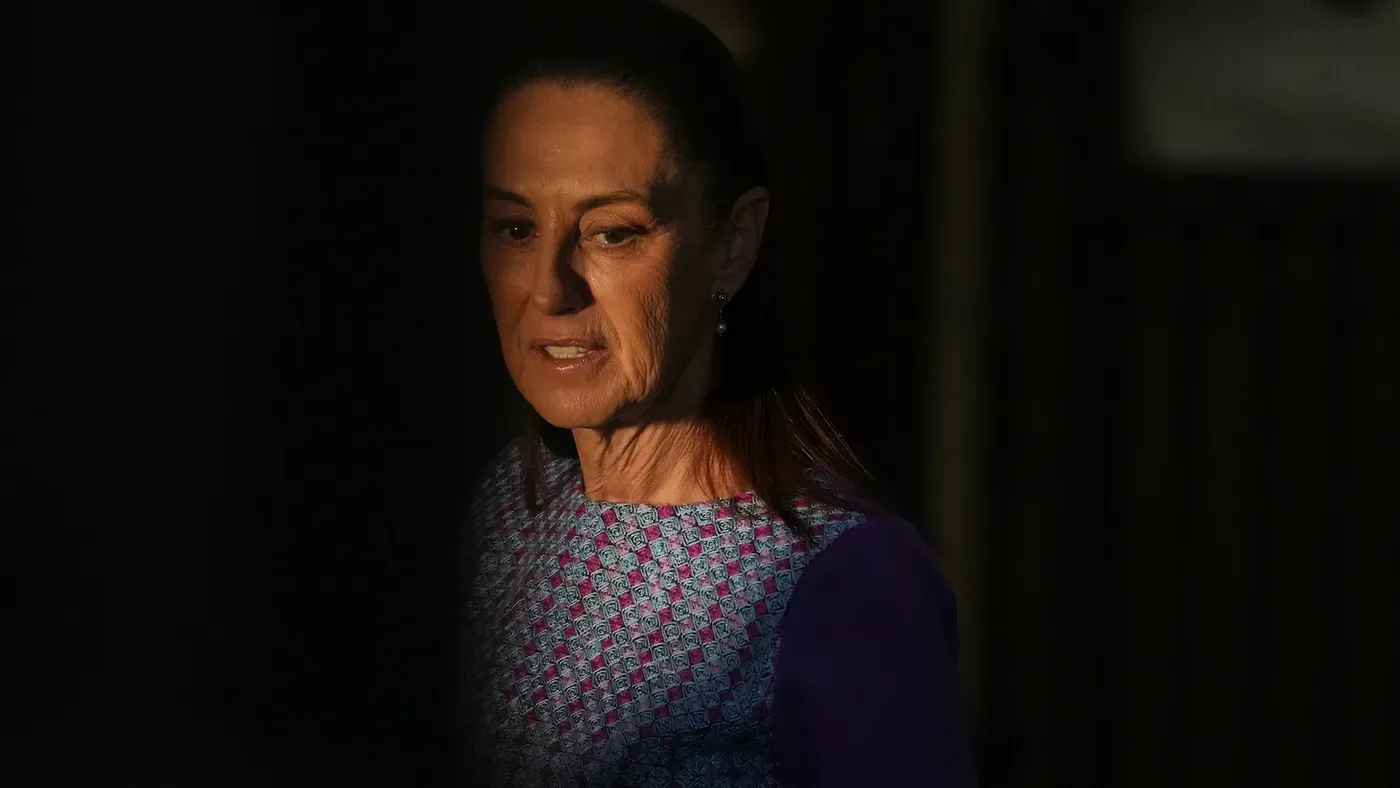
President Claudia Sheinbaum's administration has denied any knowledge or authorization of the CIA operation, stating that it was not informed about the plan. However, this assertion has been met with skepticism, especially given the sensitive nature of such operations.
The incident has also reignited speculation about the scope and reach of US actions on Mexican soil during the Trump administration.
A key argument in Jáuregui's defense is that the prosecution's push for an "exemplary punishment is motivated by a desire to prevent a similar US operation on Mexican soil as was carried out in Venezuela.
The US State Department has acknowledged being aware of Jáuregui's case, but has denied any direct connection between the case and the CIA deaths in northern Mexico.
Mexican authorities have been investigating a complex web of events that began with the dismantling of a synthetic drug lab in Chihuahua's mountains on April 19. A joint operation by state prosecutors and the army had successfully shut down several laboratories.
The subsequent traffic accident, which killed two state agents and two Americans, has been at the center of Jáuregui's treason case.
The investigation into Jáuregui's alleged role in authorizing U.S. agents to participate in a field operation has raised questions about national security and the limits of executive power in Mexico.
According to experts, Jáuregui's decision to involve American agents was a politically charged move ahead of the 2027 Mexican midterm elections. The federal government typically makes decisions on such matters, further muddying the waters around Jáuregui's actions.
The treason charges against Jáuregui carry significant penalties, with sentences ranging from five to forty years in prison. However, proving the case will be a daunting task for prosecutors due to the complexities involved.
As the debate over Jáuregui's alleged transgressions continues, it has sparked controversy within Mexico's political establishment. Some have accused Sheinbaum's Morena party of failing to uphold national sovereignty, while others claim that there is a narco-government" in place in Chihuahua state.
The implications of this treason case extend beyond Mexican politics, with some analysts warning that it sends the wrong signal to Washington. They argue that instead of discussing collaboration with the U.S., Mexico is fixated on an issue that may ultimately be dismissed.
The defense of former Chihuahua state security minister Alfonso del Mazo Jáuregui is disputing claims made by the federal prosecution in a treason case related to the death of two U.S. agents.
Luis Villegas, the former prosecutor's defense coordinator, has criticized the federal prosecution for likening the presence of the agents to a foreign invasion, calling it an unacceptable comparison.
According to the defense team, the federal prosecutor's office had initially stated that the agents were close to the Chihuahua investigations chief who was one of two deceased Mexicans involved in the operation.
In addition, there were reportedly two other U.S. agents in another vehicle traveling with the convoy at the time of the operation, but they were later expelled from the country by Mexican authorities.
The president had previously stated that none of these U.S. officials had permission to operate in Mexico, and that the military was unaware of their presence until after the incident.
The involvement of anti-drug agents in covert operations has long been a reality, often without the knowledge or approval of the federal government. This is due to the reliance on trust-based relationships between US officials and state or local authorities, which facilitates ongoing collaboration.
These clandestine actions can lead to abuses, as there are no clear rules governing their conduct. The lack of oversight allows for situations like the one in northern Mexico, where a botched operation resulted in the deaths of two CIA agents.
Facts based on reporting originally published by ABC News International.
You may republish this story, in full or in part, if you credit News Central Site and link to it (licence CC BY 4.0). Photos are not included.