Bob Chesney's Father Continues Family Football Tradition
The tradition began when Bob Chesney was a young boy watching his father at high school games in Pennsylvania, where he would hand over his dad's ballcap before kickoff.
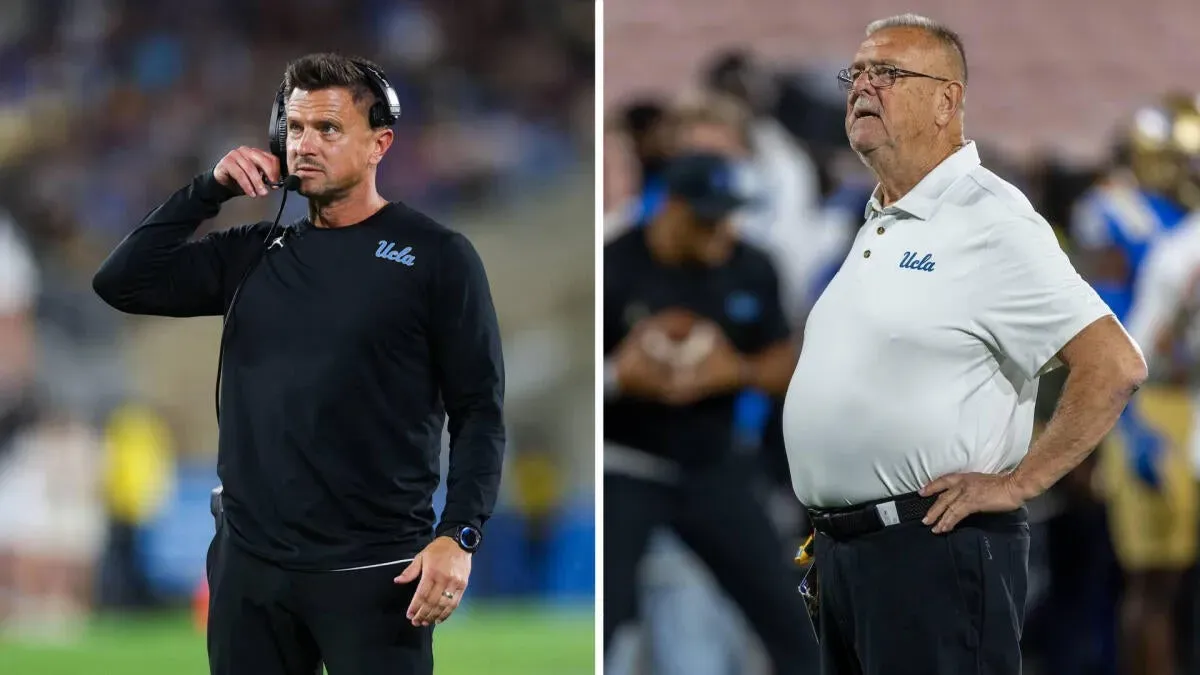
A football tradition that began in a small town in Pennsylvania has followed Bob Chesney throughout his coaching career. As a young boy, he would sit in the backseat of his family's car, clutching his father's ballcap while his dad patrolled the sidelines at Friday night high school games.
The ritual was not just about sports; it was also a community affair with his family members playing distinct roles and a neighbor volunteering to film the games. This allowed their neighbor to park close to the stadium gate in coal country, Pennsylvania. Young Bob Chesney would often grip the ballcap tightly as they approached the stadium, worried that they might not make it on time for kickoff.
As the car pulled into its parking spot, young Bob would spring out and rush towards the gate, where he would meet his father on the sidelines. He'd hand over his dad's ballcap, which became a symbol of their bond and connection to the game. This cherished tradition has stayed with him throughout his life.
Four decades later, the roles have reversed, and it's now Bob Chesney Sr. who arrives early at the UCLA football offices. He spends long hours there, attending staff meetings, working with the defensive line, and handing out candy he calls "power pills. Despite not having a title or being on the Bruins' payroll, players affectionately call him Coach Senior or simply Senior.
The 76-year-old father has become an integral part of his son's coaching team. Players have grown to respect and admire him, much like a grandfather figure. His presence is a testament to the strong bond he shares with his son and his love for the game.
As Bob Chesney prepares for one of the biggest tests of his first season at UCLA, a matchup against No. 13 Oregon at Autzen Stadium, his father will be by his side on the sidelines. This is not an isolated incident; Senior has been present for nearly every step of his son's coaching journey, from Division III Delaware Valley to the Big Ten.
Chesney has quickly made a name for himself as a successful coach, winning everywhere he's gone and now on the cusp of becoming the first UCLA coach to start his career 5-0 in 77 years. His impressive record includes winning his first four games by 14 or more points, an achievement only matched by one other Big Ten head coach.
The road to this moment has been filled with milestones, including a run that ended in the College Football Playoff last December for James Madison. The Bruins had already hired Chesney when they made it to the playoffs, but his experience and leadership played a significant role in their success.
Kulpmont, Pennsylvania is a small town with a rich history that has shaped the lives of its residents.
With a population of around 2,000 people, Kulpmont is a tight-knit community where everyone knows each other's business.
The town's economy was once driven by mining and manufacturing, but when these industries closed down, many residents left in search of work.
Today, the town has a limited number of businesses, including several bars and restaurants that cater to locals and travelers alike.
One such resident is Bob Chesney, whose family has lived in Kulpmont for generations.
Bob's grandfather, William Chesney, was a miner who tragically died at the age of 33, leaving his wife Clara with three young children and another on the way.
The mining industry offered little in terms of compensation or support to its workers, and Bob's grandmother had to rely on her family and community for help.
Bob's father, Vincent, took it upon himself to provide for his family by working multiple jobs and even becoming a skilled pool player.
In Kulpmont, names held significant meaning and were often chosen with purpose, as seen in the naming of Bob's brothers, Robert Edward and Nicholas Peter.
Growing up in Kulpmont was like being part of an extended family, where neighbors helped neighbors and children learned valuable life lessons from their elders.
As Bob Sr.'s college days drew to a close, he began making plans for his future. Over Christmas break in his senior year, he made a visit to his old high school coach's classroom.
The meeting was brief and to the point, with Bob Sr. cutting straight to business. He introduced himself as the school's next teacher and assistant coach, thanks to some behind-the-scenes help from his former coach.
In 1971, Bob Sr. started teaching fifth and sixth grade at the high school where he had once been a student. He knew that getting to practice on time would be a challenge, given the different schedules of the elementary and high schools.
To make it work, Bob Sr. volunteered for every available cafeteria duty and bus job from September to December each year. This allowed him to arrive at practice without being late.
As his coaching career progressed, he moved on to become head coach at Our Lady of Lourdes Regional, a small Catholic school in Coal Township outside Shamokin. His son played under him for four years, and Chesney's grandfather and uncle were also part of the coaching staff.
The team at Lourdes was relatively small, with only 38 players. Many of them took on multiple roles, playing both offense and defense while pushing through physical exhaustion that weakened their bodies and minds.
Bob Sr. recalls the grueling conditions under which they played, but notes that it's a different era now. At UCLA, he watches trainers use advanced technology to monitor player fatigue and adjust practice accordingly.
We would have blown those tracking devices right off our chests, Bob Sr. said, recalling the primitive methods used in his day.
Bob Chesney's decision on a major at Dickinson was met with surprise from his father, who had other plans for his son's future.
At the time, religion seemed like an unusual choice, and Bob Sr. encouraged his son to pick something that would lead to a job.
However, Bobby was determined to pursue his passion for coaching, despite his father's concerns about stability.
This decision set in motion a journey that would take Chesney from making $5,000 a year as a graduate assistant at Norwich University in Vermont to becoming one of the most successful coaches in college football.
Chesney's early years were marked by hard work and long hours, with raises coming slowly over time - he eventually earned around $30,000 per year.
During his summers off from coaching, he would often return home for odd jobs, a testament to his dedication to providing for himself and those close to him.
As Chesney's career progressed, so did his family life. He met Andrea, who would become his wife, and together they moved to Baltimore for his coaching gig at Johns Hopkins University.
In the offseason, he worked as a bartender at a club called Kamp in order to make extra money and support himself and his growing family.
Despite the financial struggles, Chesney's father remained proud of his son's perseverance and dedication to his craft.
This determination would eventually pay off, as Chesney landed a role on the CMT reality show Cowboy U" after creating an audition tape with the help of a friend at a Philadelphia casting company.
Bob Chesney Sr.'s coaching philosophy was one of gradual improvement, where every detail mattered in order to achieve success on the field. His approach involved building upon previous work, rather than trying to overhaul everything at once.
As a high school coach and later as a father, Bob Sr. attended nearly every preseason camp, walked the sidelines during games, and offered guidance to players when they needed it. This dedication earned him a reputation as a supportive figure in his son's coaching career.
A stash of old papers found by Bob Sr. at Holy Cross revealed just how much his sayings were ingrained in his son's coaching style. The purple mimeograph sheets contained special teams notes and scouting reports that he had used during his own high school days, and they still held value years later.
Bob Sr.'s humility about his own coaching abilities was evident when comparing himself to his son's vast knowledge and experience. He described his own practices as a foundation upon which more could be built, likening them to the initial coat of polish on shoes that would eventually be spit-shined for maximum shine.
NFL scouts took notice of Bob Chesney's practices, observing how seamlessly they flowed. The key was in attention to detail, with each segment lasting exactly as long as intended, no more, no less.
As the search for a new UCLA coach began, Casey Wasserman, a prominent sports and entertainment agent, reached out to Bob Chesney about the opportunity. This initial contact marked the beginning of the recruitment process, which had actually started earlier due to Bill Simmons' involvement in the search.
With JMU's continued success on the field, Bob Chesney's name kept being brought up as a prime candidate for the UCLA job. He was impressed by the athletic department's talent pool, boasting national champions, first-round picks, and Olympians among its ranks.
However, he emphasized that one crucial element was missing, a team capable of dominating in multiple sports. According to Chesney, this was achievable with just one more strong football team on board, making UCLA a potential powerhouse in the athletic department landscape.
To build this team, Bob Chesney took a unique approach by hiring players who had already experienced success at JMU. This included notable figures like Wayne Knight, Riley Robell, and Landon Ellis, as well as coordinators Dean Kennedy and Colin Hitschler, to help guide them on their new path.
As Dean Kennedy navigated his early career as a young staffer on Dan Mullen's Florida staff, he sought guidance from mentor Garrick McGee. McGee advised Kennedy to reach out to coaches across the country, and Kennedy took this advice to heart, handwriting letters to numerous programs.
Kennedy's efforts paid off when two coaches responded - Pat Fitzgerald of Northwestern and Bob Chesney of Holy Cross. However, it was Chesney who stood out for his genuine response. Rather than sending a generic letter, Chesney demonstrated a personal touch by researching Kennedy's family history and making donations to charities founded by Kennedy's parents.
Kennedy's account of this experience is telling - he credits Chesney with showcasing exceptional character at a pivotal moment in their interaction. This trait ultimately earned him a spot on Chesney's coaching staff, where he has since thrived, now overseeing UCLA's offense as one of the program's new coaches.
Facts based on reporting originally published by CBS Sports.
You may republish this story, in full or in part, if you credit News Central Site and link to it (licence CC BY 4.0). Photos are not included.