Bird Migration Through Georgia's Black Sea Coast Peaks at 1 Million
Over a million birds of prey are migrating through Georgia's Black Sea coast this autumn, making it one of the world's most significant sites for bird migration.
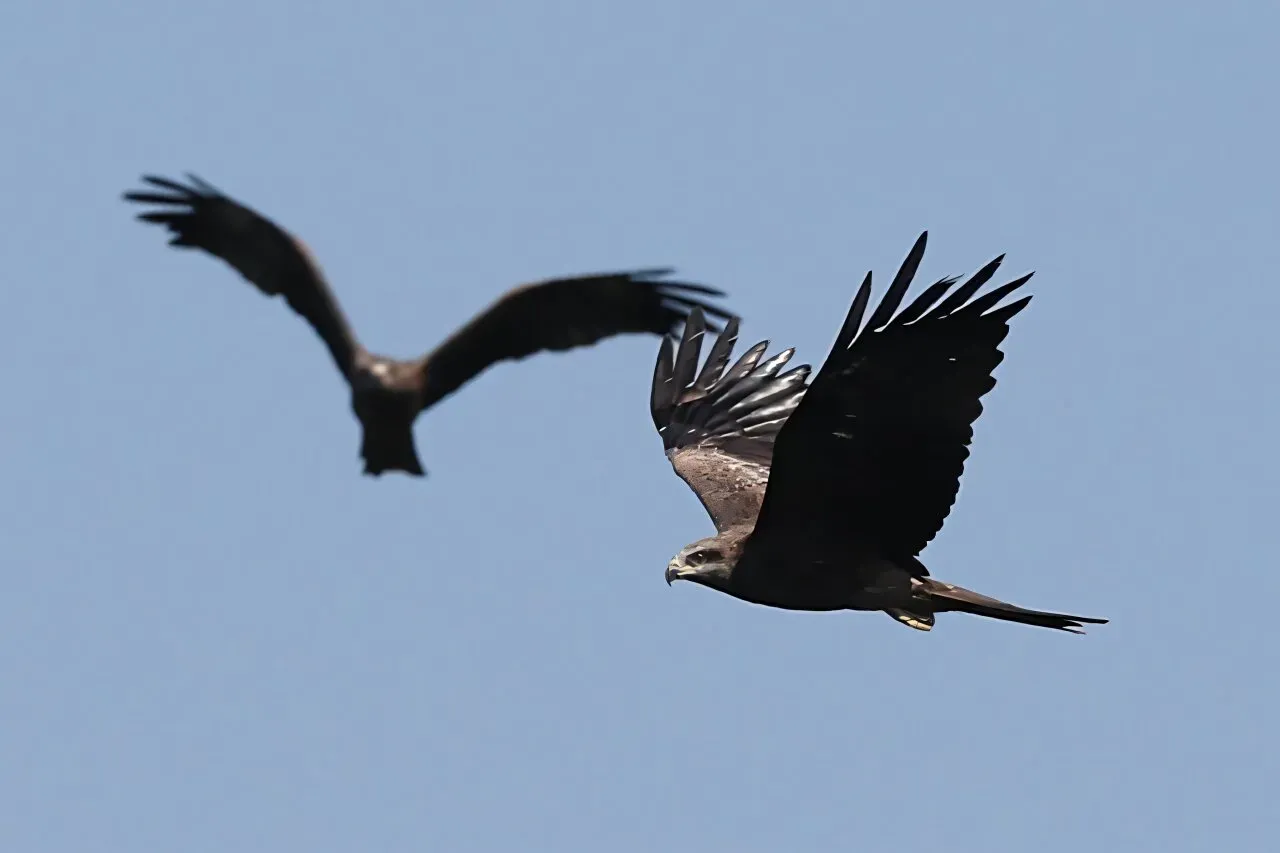
Above Georgia's Black Sea coast, a remarkable spectacle is unfolding as one million birds of prey migrate through the region. This autumnal phenomenon is taking place in an area where the Black Sea and Caucasus mountains converge, creating a crucial bottleneck for these migrating raptors.
According to Bart Hoekstra, co-chair of Batumi Raptor Count (BRC), this stretch of coastline is one of the world's most significant sites for bird migration. With over a million birds passing through each autumn, it ranks as the third-largest such location globally, behind only a few other notable sites.
Hoekstra, an ornithologist from Utrecht University, notes that the sheer density of birds in this area makes it almost impossible to avoid seeing them wherever one looks with binoculars. As he speaks, the sounds of migrating birds fill the air, while the occasional gunshot echoes through the landscape as hunters take aim at the fleeing raptors.
The most abundant species among these migrants are honey buzzards, which are followed by growing numbers of black kites, steppe buzzards, and lesser spotted eagles. However, it's worth noting that not all birds survive their journey, with an estimated 9,000 shot each autumn, according to a 2013 study from the University of Antwerp.
The harsh reality of bird migration is further complicated by the threat of illegal hunting in Georgia's Black Sea coast region.
Many conservationists have expressed their concern and frustration over the issue, with some describing it as heartbreaking to hear the sound of shots being fired at these magnificent creatures.
In addition to the emotional toll, the actual numbers are staggering, a 2013 study from the University of Antwerp estimated that around 9,000 birds are shot each autumn.
The "Batumi bottleneck, a funneling effect caused by geography and climate, brings raptors from Russia, Eastern Europe, and Kazakhstan through Georgia's Black Sea coast, making them vulnerable to hunting in this region.
In a remarkable spectacle, volunteers along Georgia's Black Sea coast have been tracking the migration of over one million raptors, meticulously counting each bird as it passes through the region.
The observers use binoculars and telescopes to scan for birds at sunrise, clicking handheld counters whenever a bird crosses an imaginary line. To avoid double-counting, the coordinators divide the passing streams into sections, with different volunteers responsible for monitoring each area.
The influx of tourists drawn by this natural wonder has brought much-needed economic benefits to rural villages in the region. Guesthouses and family hotels in Sakhalvasho and Shuamta are now filled with visitors who have come to witness the spectacle, providing a vital source of income for local families.
For some business owners, such as Ruslan Lomadze, a 45-year-old guesthouse owner in Sakhalvasho, the tourism has been transformative. It's changed life here," he said, adding that without birdwatching tourism, many local businesses would struggle to stay afloat.
The decline in bird shooting near counting stations is a welcome development, but conservationists remain vigilant about the possibility of hunters shifting their activities to unmonitored areas.
Birdwatchers have taken over sites previously used by hunters, marking a significant shift in the region's ecosystem. However, funding remains a concern for the project, and if it dries up, there is a risk that hunters could return to these areas.
An anonymous donation of 15,000 euros has breathed new life into the autumn count, which was on the brink of collapse due to fundraising difficulties. This timely intervention has ensured that the project can continue its vital work in monitoring bird populations.
Thanks to the records collected by this project since 2008, researchers have gained valuable insights into the migration patterns of different bird species across breeding grounds where other forms of data collection are challenging.
Facts based on reporting originally published by Phys.org.
You may republish this story, in full or in part, if you credit News Central Site and link to it (licence CC BY 4.0). Photos are not included.