Archaeologists Uncover Ancient Figurines in Southeast Romania
Two ancient figurines, The Thinker and the Seated Woman, have been unearthed in a prehistoric cemetery in southeast Romania.
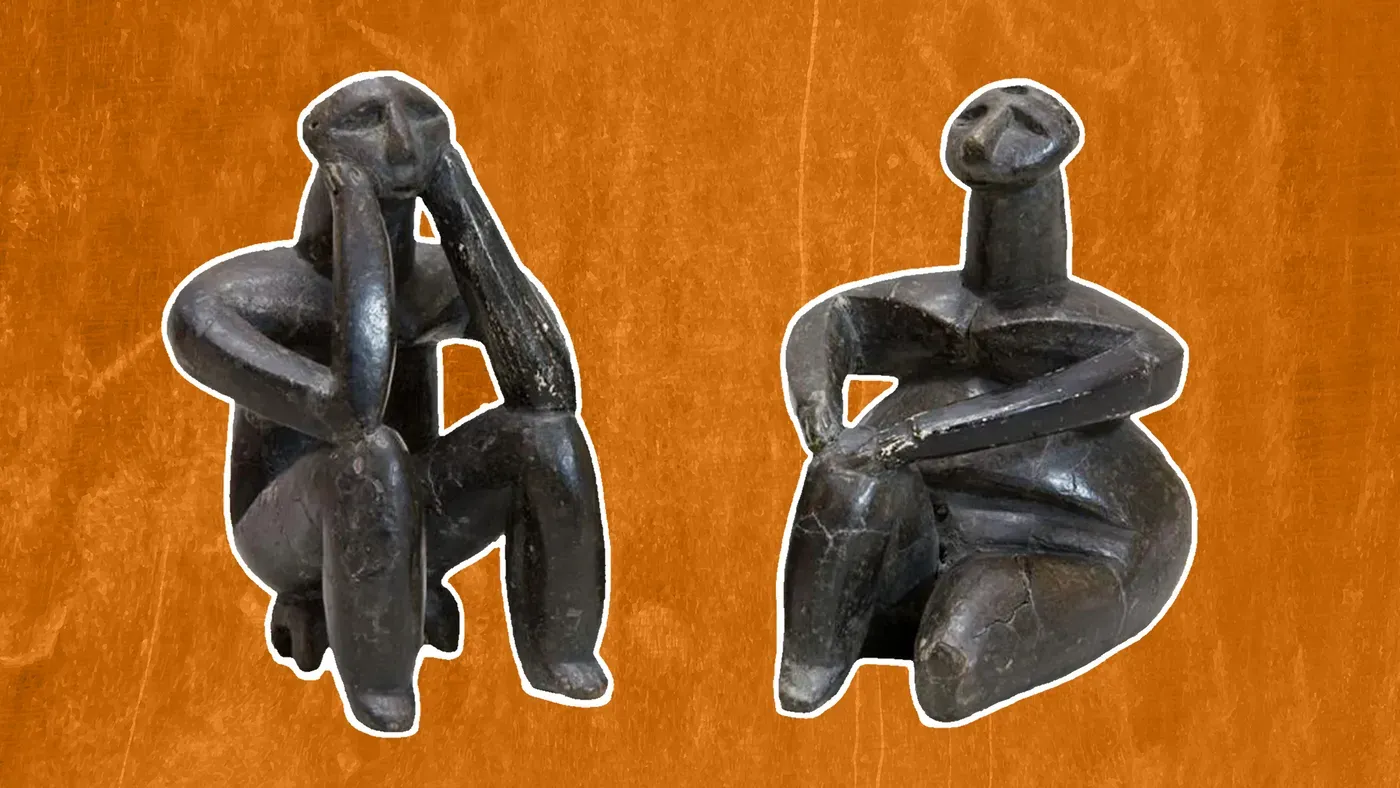
Archaeologists have unearthed two ancient figurines from a prehistoric cemetery in southeast Romania, shedding light on the mysterious culture of the region.
In 1956, while excavating a Stone Age grave, archaeologists stumbled upon these enigmatic artifacts that are now considered an integral part of Romania's cultural heritage. The Thinker and the Seated Woman, as they are known, were crafted by people from the Hamangia culture and may hold secrets related to ancient astronomical beliefs.
The Thinker figurine stands at approximately 5 centimeters in height and is depicted sitting on a low stool with four legs. His posture is characterized by a slight bend forward, rounded back and neck, with his arms folded on his knees and his head resting in his hands. This pose gives him an air of contemplation, earning him the nickname inspired by Auguste Rodin's famous bronze sculpture.
The Seated Woman figurine, equally intriguing, is believed to represent the female counterpart, with its own unique features that contribute to Romania's rich cultural legacy. The National Museum of Romanian History houses these two artifacts, which are not only significant discoveries but also a testament to the country's history and heritage.
The Seated Woman's facial features are characterized by a small face and a long, bent neck. Her body is shaped by prominent hips, thighs, and breasts, giving her a distinctly feminine appearance. Her right leg is bent, with her hands resting on her knee in a relaxed pose.
The Thinkers figurines are significant not only because of their age but also due to the culture that created them. Dating back around 7,000 years, these artifacts were crafted by the Hamangia people, a Late Neolithic society that flourished from the Danube River to the Black Sea. This region was home to sheep and goat herding communities that built defensive hilltop settlements.
The hamlets of this era are notable for their spiral-decorated pottery and human-shaped figurines. However, what sets the Thinkers apart is their seated posture, a departure from the typical standing position seen in other female figurines found at the Cernavodă cemetery. This uniqueness has sparked debate about the significance and purpose behind these enigmatic objects.
Berciu's interpretation of the Thinkers' role in sun worship suggests that they may have served a magical or spiritual function, drawing inspiration from later Bronze Age groups in Europe who revered solar deities. The Nebra sky disc from Germany and an ornate sun chariot from Denmark are examples of artifacts that reflect this cultural affinity for solar worship.
The two figurines found in a 7,000-year-old grave in Romania have sparked debate among archaeologists about their intended meaning and purpose.
Some experts believe that the sculptures were created as a pair to represent contrasting principles of masculinity and femininity, possibly even symbolizing a Neolithic family unit. Alternatively, others think they might portray two mourners who accompanied the deceased to the afterlife. The ambiguity surrounding these ancient artifacts has only added to their mystique.
The enigmatic Thinker figurine has become an iconic emblem for the National Museum of Romanian History, reflecting the enduring fascination with these mysterious relics from a bygone era.
Facts based on reporting originally published by Live Science.
You may republish this story, in full or in part, if you credit News Central Site and link to it (licence CC BY 4.0). Photos are not included.