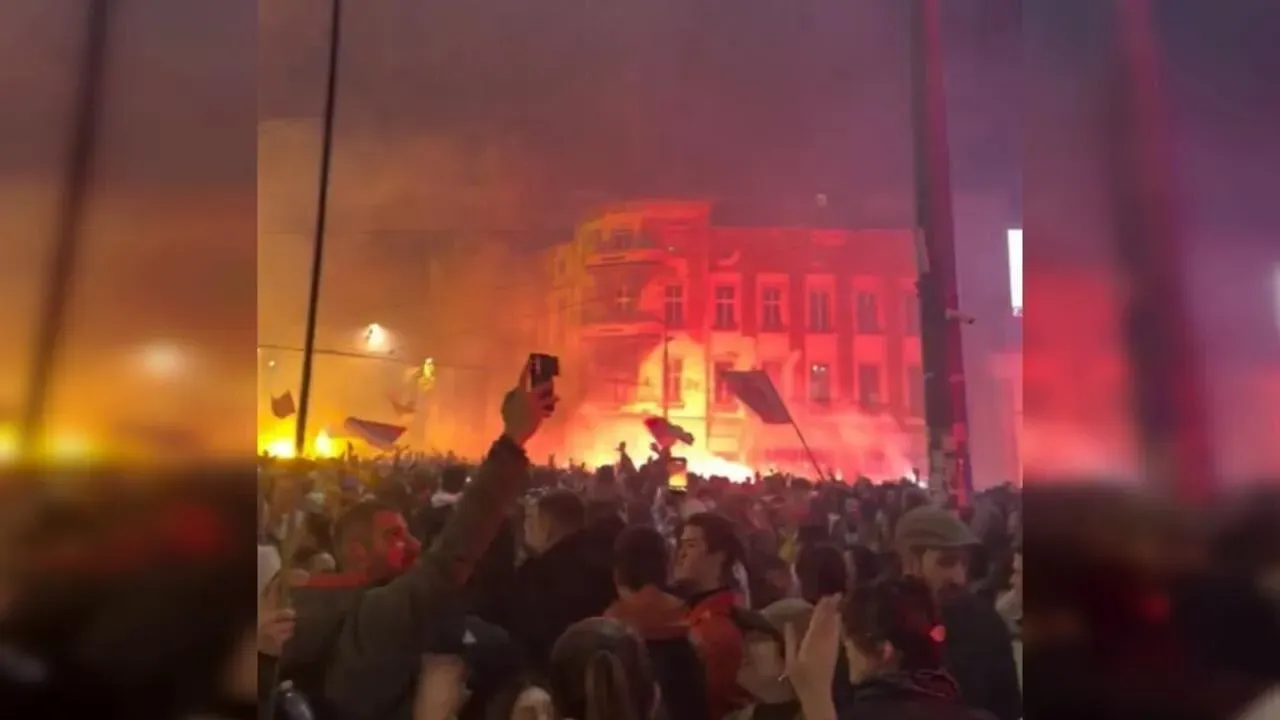
Aleksandar Vucic's Party Loses Control of Serbian Parliament
A coalition of academics, engineers, artists, and activists chosen by student assemblies has defeated the long-ruling president Aleksandar Vucic's right-wing Serbian Progressive Party in Serbia's parliamentary elections.
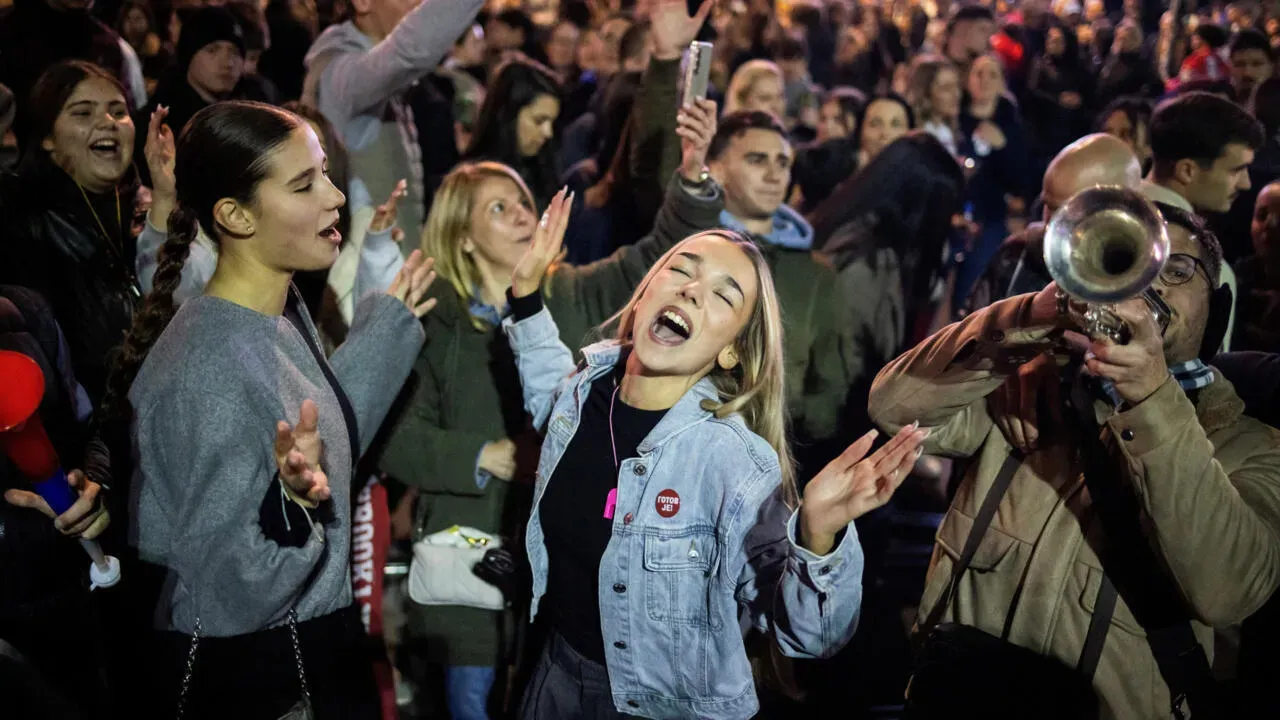
A historic upset has occurred in Serbia's parliamentary elections as a coalition of academics, engineers, artists, and activists chosen by student assemblies has defeated the long-ruling president Aleksandar Vucic's right-wing Serbian Progressive Party.
The victory marks the culmination of nearly two years of anti-corruption protests led by students, who have been demanding change and accountability from their government. The movement gained momentum after a devastating incident in Novi Sad, where a freshly renovated railway station canopy collapsed, killing 16 people and sparking widespread outrage.
The collapse of the canopy has become a rallying cry for the student-led protests, with many viewing it as a symbol of the corruption and neglect that have plagued Serbia's ruling party. The students' determination to bring about change appears to have paid off, as their chosen candidates are poised to take control of the country's parliament.
The Student List, as this coalition is known, comprises a diverse group of individuals from various fields who were selected by majority vote through student assemblies in occupied universities. This grassroots approach has yielded surprising results, with the Student List set to secure a clear majority of parliamentary seats without being affiliated with any traditional opposition party or even being a formal party itself.
The outcome of these elections will likely have far-reaching implications for Serbia's politics and governance, as the country's ruling party is brought down by the very people who have been demanding change. The success of this student-led movement may also serve as a model for other movements seeking to translate street demonstrations into tangible political change.
The student assemblies have played a pivotal role in guiding the protest movement that has brought tens of thousands of people onto the streets to demand change.
Their influence is evident in the fact that these assemblies are now responsible for determining which candidates will serve as Serbia's next prime minister and which will run the country's ministries.
Political scientist Branislav Radeljic credits the student assemblies with channeling the public outrage sparked by the Novi Sad collapse into tangible institutional change.
According to Radeljic, the assemblies achieved this through collective decision-making, decentralisation, and a broad agenda that allowed students to debate demands, agree on tactics, and vote on key decisions.
This approach created a sense of shared ownership and legitimacy among activists, who were required to justify their proposals to their peers rather than rely on a single leader.
The use of direct democracy in student protest movements is not new to the Balkans, with Nebojsa Vladisavljevic pointing out that this model of organisation has been used by students across the region for nearly two decades.
The occupation of university buildings across Serbia had a profound impact on the protest movement, bringing classes to a standstill nationwide.
All faculties and schools were affected, with students from various disciplines coming together to form a unified front against the government.
In occupied university buildings, students would gather for plenary sessions where proposals were put forward and debated by their peers, often over multiple meetings.
These discussions allowed every student to participate in decision-making, with decisions passed through majority vote after thorough discussion and debate.
The emphasis on collective decision-making helped build trust within the movement, as well as among its supporters outside university walls.
By avoiding a top-down leadership structure, the student movement was able to present itself as a leaderless force, shielding it from potential media backlash.
The student movement's ability to evade media manipulation was crucial to its success, according to Eric Gordy, a professor of political and cultural sociology at University College London's School of Slavonic and East European Studies.
Gordy attributes this phenomenon to the regime in Serbia having been based not only on repression but also on deliberate media manipulation over the past decade. This approach involved targeting prominent opposition figures and government critics, which had effectively weakened the opposition in previous years.
As a result, the student movement was more challenging for the authorities to discredit, thanks to its leaderless structure. By avoiding a clear hierarchy, the students presented themselves as a decentralized force, making it harder for media outlets to pinpoint specific individuals for criticism or attack.
To counter the traditional broadcast media's narrative, students organized their own outreach efforts, staging public rallies and marathon cycling trips across the country to engage directly with communities outside major cities.
The student assemblies' focus shifted from protesting to influencing electoral politics as they pushed for early elections and began selecting parliamentary candidates behind closed doors.
A slate of candidates emerged after student assemblies voted on and vetoed a list, with the goal of transferring collective authorization into formal institutions through this process.
By entering electoral politics and involving student assemblies in candidate selection, the movement aimed to bring decentralised practices that sustained mobilisation into the formal institutions of government.
The key test now is whether these decentralised practices can also deliver accountability, coordination, and effective government, according to Radeljic.
The minimalist political programme developed by the student assemblies combines targeted anti-corruption measures with broader social policies.
The student assemblies' inclusive approach has allowed diverse voices to converge on common goals.
This diversity is reflected in the movement's three distinct currents, according to Gordy. One current advocates for radical democratic reforms aimed at eliminating authoritarianism and corruption. In contrast, a procedurally democratic group seeks to establish rule of law without taking on a political role, instead creating conditions for established parties to take over.
A third current is comprised of nationalists who are more aggressive in their stance towards neighboring countries. Although they have temporarily put aside their differences to face the election together, they will likely compete with each other for control of the government afterwards.
Ultimately, this diverse coalition has come together to drive meaningful change and bring down the existing government, pushing Serbia towards a new era of politics.
Facts based on reporting originally published by France 24 English.
You may republish this story, in full or in part, if you credit News Central Site and link to it (licence CC BY 4.0). Photos are not included.