Simulation Study Aims to Improve 3D-Printed Food Consistency
Researchers from two Dutch universities have conducted a simulation study on food inks used in 3D printing, aiming to provide valuable insights for engineers designing better food printers and inks.
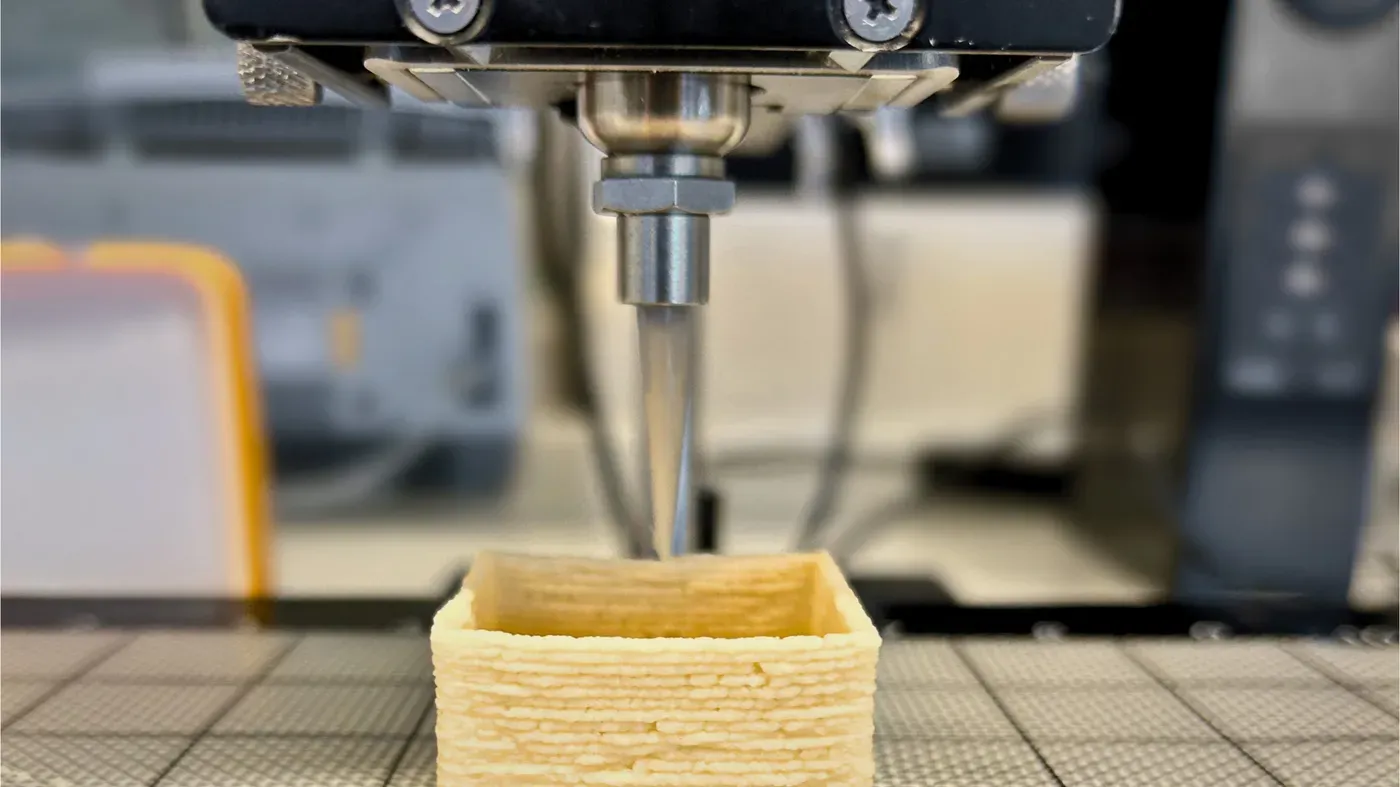
Researchers have been exploring ways to create a futuristic food production system that can print any dish imaginable. This concept is reminiscent of the "replicator technology found in science fiction shows like Star Trek, but scientists are working towards making it a reality.
The potential applications of food printing extend beyond novelty treats for restaurants, with the possibility of creating customized meals for patients with specific dietary needs. Food printing can be tailored to meet exact nutritional requirements and provide specific textures that may aid in recovery or alleviate certain conditions.
However, developing effective 3D-printed foods requires a deep understanding of how the materials used for printing behave under different conditions. The characteristics of food-based inks and pastes are often unpredictable, making it difficult to ensure consistent results when using them with 3D printers.
To address this issue, researchers from two Dutch universities have conducted a simulation study published in Physics of Fluids. By modeling the behavior of food inks as they pass through a printer's nozzle, these scientists aim to provide valuable insights for engineers designing better food printers and inks.
The goal is to make 3D printing a viable option for widespread use in various industries, including healthcare, where customized meals can be created to meet specific needs.
The transition from solid to liquid is a crucial aspect of food inks used in 3D printing, and researchers have been working to develop accurate models that can capture this behavior.
Capturing the extrudability" of food inks - their ability to flow through printer nozzles with ease - is key to simulating their performance. This complex behavior has proven challenging to measure and model accurately, but a research group has made significant progress in developing a computational model that can represent it.
To test its model, the team implemented it into an extrusion process simulation, which predicted the force required to push ink through a syringe. The researchers then compared these predictions against experimental measurements of the extrusion force for two types of food ink: one rich in protein and another composed mainly of fiber.
The results showed that the model accurately predicted the behavior of the protein-rich ink, but overestimated the extrusion force for the fiber-based ink. This discrepancy may be due to the presence of water in the ink, which coats the nozzle walls and causes the ink to slide during the extrusion process.
Further investigation is needed to refine the model and account for the unique properties of different food inks, including the effect of water on their behavior.
The next step for the researchers is to refine their model by taking into account the complexities introduced by wall sliding, as well as the changes in material properties over time.
According to Bugday, this work will enable engineers to design more effective nozzles, establish safe operating limits for equipment, and develop ink formulations tailored to specific machinery requirements and customer specifications. This comprehensive tool is expected to aid groups seeking to create better 3D-printed food by streamlining the development process.
The research aims to provide a valuable resource for those working in the field of 3D printing of food, ultimately contributing to the advancement of this innovative technology.
Facts based on reporting originally published by Phys.org.
You may republish this story, in full or in part, if you credit News Central Site and link to it (licence CC BY 4.0). Photos are not included.