Serbia's Youth Movement Secures Electoral Victory Against Aleksandar Vucic
The Students' List is poised to secure a significant majority in Serbia's Parliament after securing a convincing election victory against long-time ruler Aleksandar Vucic.
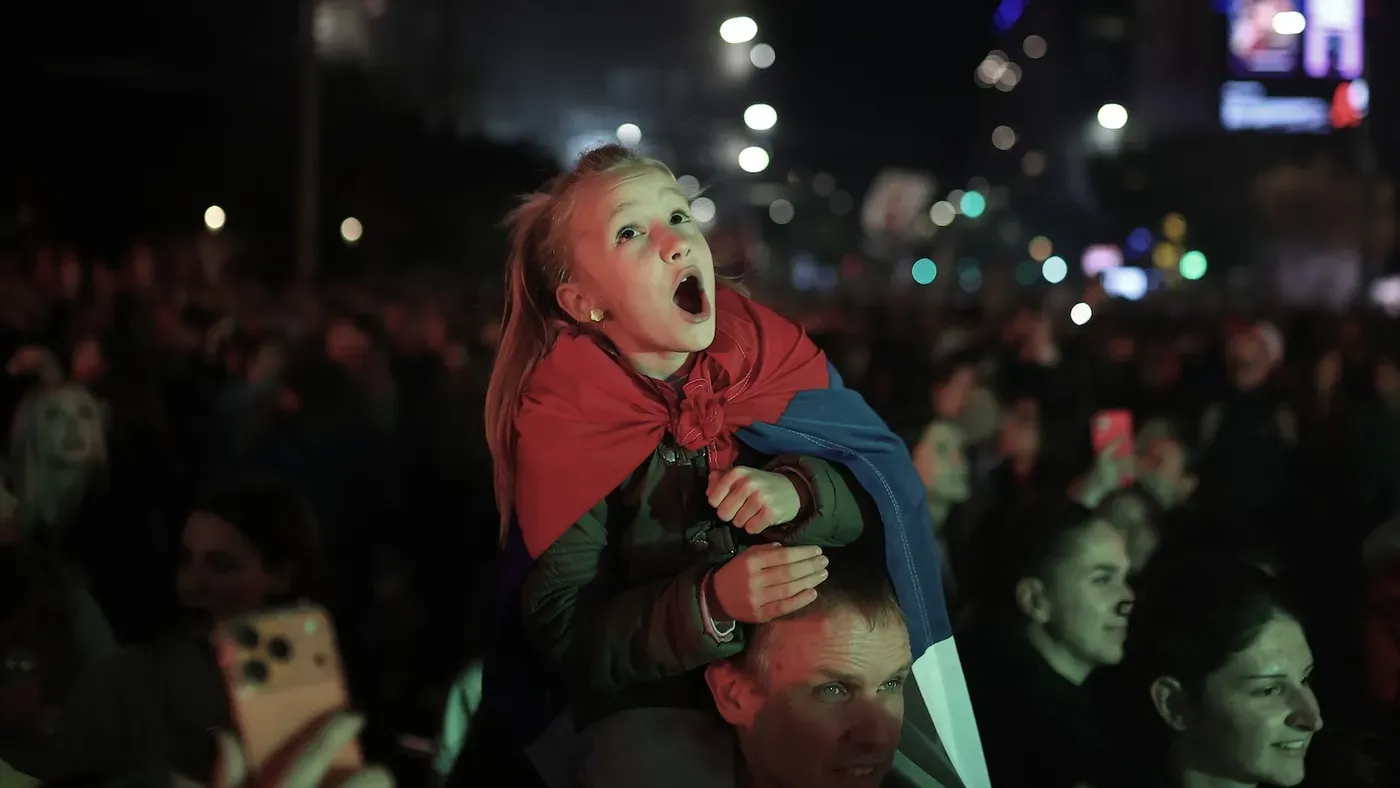
Serbia's youth movement has secured a resounding electoral victory against long-time ruler Aleksandar Vucic, sending shockwaves through the country's political landscape.
The movement, which lacks experienced politicians and a clear leadership structure, has vowed to eradicate corruption, free up the media, and ensure the rule of law, all areas it claims have been severely compromised during Vucic's 14-year tenure in power.
However, translating its promises into tangible reforms will be no easy task. The new government faces significant obstacles, despite its strong mandate for change stemming from a convincing election victory that has left public discontent simmering over years.
Expectations are running high among the populace, with an air of impatience hanging over the country as it waits to see if the movement can deliver on its promises.
The transition process is expected to be protracted, with Vucic having already conceded defeat just hours after polls closed on Sunday.
The Students' List is poised to secure a significant majority in Serbia's Parliament, according to preliminary election results released so far. The party is expected to claim around 140 seats out of 250, while Vucic's SNS party will likely take around 104 seats.
This outcome could be further complicated by the need for a separate presidential election following Vucic's resignation as president last month. As leader of the SNS ticket in the parliamentary race, Vucic sought to return to power as prime minister, triggering the requirement for a new vote to choose his successor as head of state.
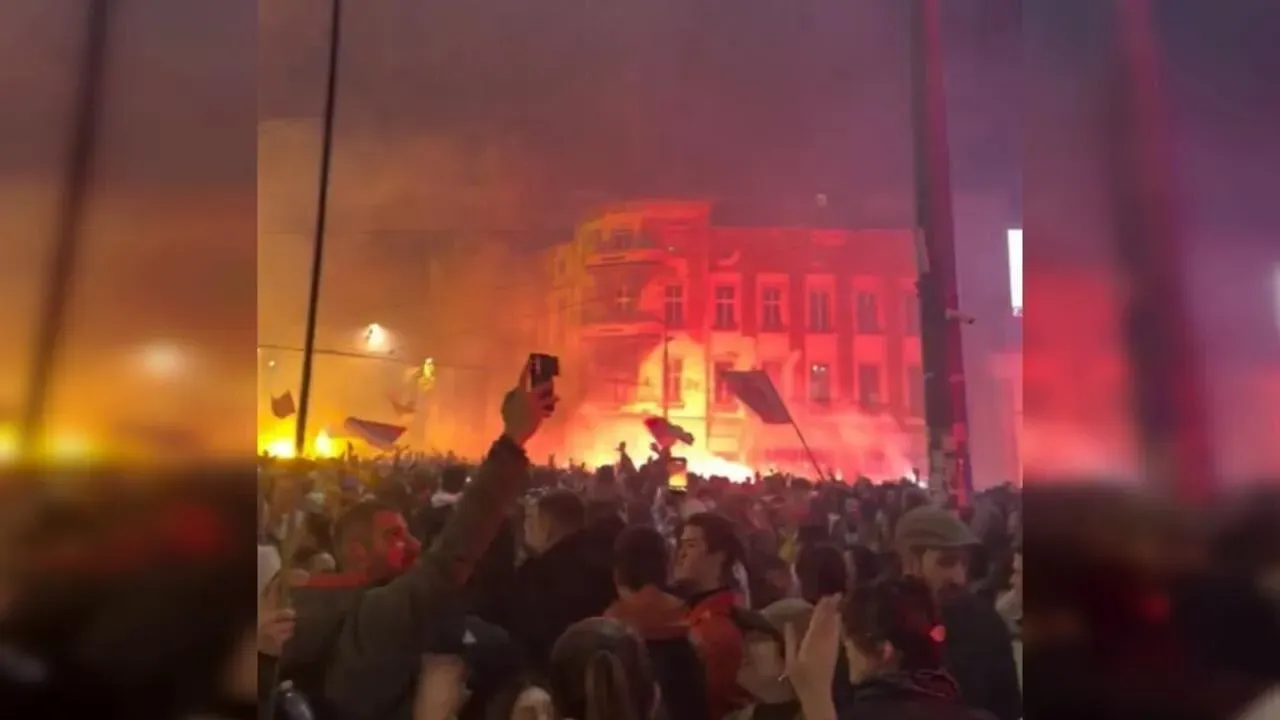
On Sunday night, jubilant crowds took to the streets to celebrate the students' victory, with some protesters targeting police and Vucic loyalists. Demonstrators stoned police who were withdrawing from the area and dismantled a long-standing camp used by pro-Vucic supporters in a central Belgrade park.
Protesters also stormed the private television station Informer on Monday evening, which has been a vocal supporter of Vucic and has labeled student protesters as enemies of the state. The TV channel had previously broadcast a live funeral service for Ratko Mladic, the former Bosnian Serb commander convicted of genocide by a U.N. court.
The student-led movement in Serbia continues to face challenges as it prepares to take power. The situation remains volatile, with incidents of confrontation and violence reported at various locations.
Pro-Vucic broadcaster Pink TV was also guarded by police on Monday, while President Vucic condemned the "violence, warning his supporters that they could self-organize in response. This move has raised concerns about potential escalation in the face of a prolonged power vacuum.
Media expert Snezana Milivojevic observed that the media situation is particularly sensitive because it is before everyone's eyes. While some state-run media have undergone changes, private television channels like Informer continued to broadcast pro-Vucic propaganda despite the changing landscape.
Among those who stormed Informer TV station and confronted editor-in-chief Dragan Vucicevic was Dijana Hrka, a mother of one of the victims of the 2024 train station tragedy that sparked the protests. Hrka accused Vucicevic of lying, charging at him during the confrontation.
The students have urged calm, promising to liberate the media in the assembly" through an institutional struggle for freedom and professional journalism. The European Union mission in Serbia has also appealed to citizens to be patient, while Milivojevic noted that the public's high expectations will likely be difficult to meet.
The student movement's 11-point program has identified corruption as a key area of focus for the new government, seeking to address the entrenched issues that have plagued Serbia for decades.
Corruption is believed to be deeply ingrained in all aspects of Serbian society, with partisan employment and cronyism contributing to layers of bureaucracy and a lack of oversight. This complex web of corruption will require significant effort to dismantle, making it a challenging task for the new government.
To tackle this issue, students have promised deep institutional reforms, including an overhaul of the police force and judiciary to ensure that officers and prosecutors with impeccable careers can progress without obstruction.
The creation of a police unit accountable to independent prosecutors is another key promise, as well as measures to prevent corrupt officials from holding power. Additionally, all major projects initiated by the previous government will be reviewed, a process likely to take time.
Avoiding divisive topics during protests has been a deliberate strategy adopted by the students, with issues like Serbia's EU membership and relations with Russia left out of their agenda.
The newly elected student-led government in Serbia will face significant challenges as they prepare to take power, particularly when it comes to policy decisions that may disappoint some supporters.
One such issue is the country's stance on economic sanctions, which has been a contentious topic for years. While some students have expressed a desire to distance themselves from Russia and align with the EU, others have pushed back against this idea, citing concerns about the impact on the economy and relations with neighboring countries.
The legacy of Serbia's complex history with the West will also pose a significant hurdle for the new government. The country has struggled to forge closer ties with the EU since the NATO bombing in 1999 and the recognition of Kosovo's independence by Western powers in 2008, which has led to a deep-seated mistrust.
As the new government begins its tenure, it will be closely watched by international observers who are eager to see if they can make progress on their European path.
Facts based on reporting originally published by ABC News International.
You may republish this story, in full or in part, if you credit News Central Site and link to it (licence CC BY 4.0). Photos are not included.