US Beef Imports Fall Short of Target Amid Rising Prices
The Trump administration's efforts to reduce beef prices appear to be faltering as only 20% of the targeted imports have been received so far.
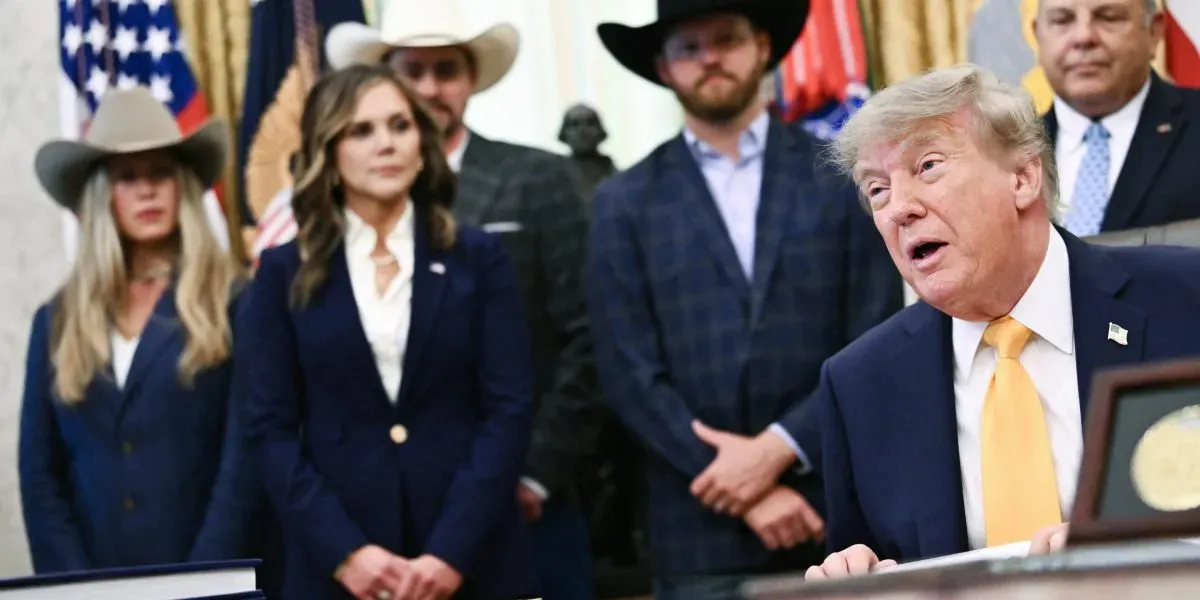
The Trump administration's efforts to reduce beef prices appear to be faltering, despite President Donald Trump's promise to increase imports at lower tariff rates. In August, Trump signed a proclamation allowing for the importation of 300,000 metric tons of lean beef trimmings over a three-month period.
This move was touted as a way to give American farmers more space to expand their herds and reduce prices for consumers. Trump himself announced the policy on his Truth Social platform, writing that it would "reduce prices for Americans while giving space for our Great American Beef Herd to grow again."
However, data from U.S. Customs and Border Protection reveals that only 59,423 metric tons of beef have been imported so far, representing just 20% of the target amount. This shortfall has left many questioning whether the administration's strategy will actually achieve its intended goal.
As prices continue to rise, consumers are feeling the pinch. According to Bureau of Labor Statistics data, ground beef averaged $6.79 per pound in September, a slight decrease from August but still above the level seen a year ago. This 7% year-over-year increase in beef prices is significantly higher than the 2.5-2.9% hike in overall U.S. grocery prices.
Beef prices have become a key issue for Trump as he targets policy towards his loyal Republican base of farmers, who are struggling to maintain their livelihoods due to dwindling herd sizes and persistently high demand. The administration's failure to deliver on its promises is likely to be closely watched by voters in the coming midterm elections.
As the administration's promises on reducing grocery costs remain unfulfilled, concerns are growing among voters about the impact of policies on everyday life.
Farmers and agricultural economists are questioning the effectiveness of a plan to import 300,000 tons of beef at lower tariff rates, arguing that it may not lead to cheaper prices for consumers. They point out that the industry is more complex than just increasing supply to drive down costs.
Derrell Peel, an expert in livestock at Oklahoma State University, has expressed doubts about the initiative's potential to reduce prices. He believes that the simple assumption behind the plan - that increased supply would lower prices - does not account for the complexities of the beef industry.
The White House maintains that Trump has been supportive of American agriculture and is delivering on his promise to consumers by reducing beef prices while allowing the country's beef herd to grow.
The type of beef being imported from overseas does not typically end up on retail shelves in the US. Instead, lean beef trimmings are often combined with fatty trimmings produced domestically to meet demand for this specific blend of meat.
This combination of lean and fatty trimmings is usually used by fast-food restaurants, which are less likely to be where consumers are looking for relief from high grocery prices. The use of imported lean trimmings also means that the beef industry can absorb tariffs without necessarily increasing supply or driving down costs.
The demand for this type of beef is already modulated, according to Peel, and an influx of cheaper imports does not necessarily address the underlying retail cost issue. In fact, the industry is able to meet existing demand by importing lean trimmings, even at a higher tariff rate.
Brazil and Argentina, which supply much of America's imported beef, are also facing their own supply issues with low beef inventory. This means that even if more imports were allowed into the US, there may not be enough available to make a significant dent in prices.
The agricultural economics professor at Kansas State University points out that allowing beef prices to rise freely is actually the best way to lower them in the long run.
If demand for beef remains high despite soaring prices, it's likely that these higher costs will be absorbed by consumers rather than driving down demand entirely. Beef demand has indeed remained steady, increasing by 5.9% in the first six months of 2026 compared to the same period a year earlier.
The decline in cattle herds is often cited as a reason for higher beef prices, but experts argue that this trend is not new and has been ongoing for 60 years. As such, it's considered a predictable factor in the industry rather than a sudden development driving up costs.
In fact, if high prices continue to erode demand, they will eventually lead to lower prices as suppliers adjust their output to meet reduced consumer needs. However, this would have an unexpected consequence: imports of beef into the US would likely decrease, not increase.
The American Farm Bureau Federation president has publicly urged Trump to reconsider his policy on importing 300,000 metric tons of beef at lower tariff rates, arguing that it could lead to a significant drop in cattle prices and cost ranchers $300 to $400 per head.
The cattle industry's fragile recovery has been undermined by Trump's import policy, which aims to bring in 300,000 metric tons of beef at lower tariff rates to reduce grocery costs. However, shipments have fallen short and prices remain unchanged.
Farmers are increasingly frustrated not just with the policy's ineffectiveness but also its infringement on their industry's traditional preference for a free market. As one expert noted, there is no straightforward solution to addressing the complex dynamics driving cattle prices.
Facts based on reporting originally published by Fortune.
You may republish this story, in full or in part, if you credit News Central Site and link to it (licence CC BY 4.0). Photos are not included.