Luiz Inácio Lula da Silva Secures Second Term in Office
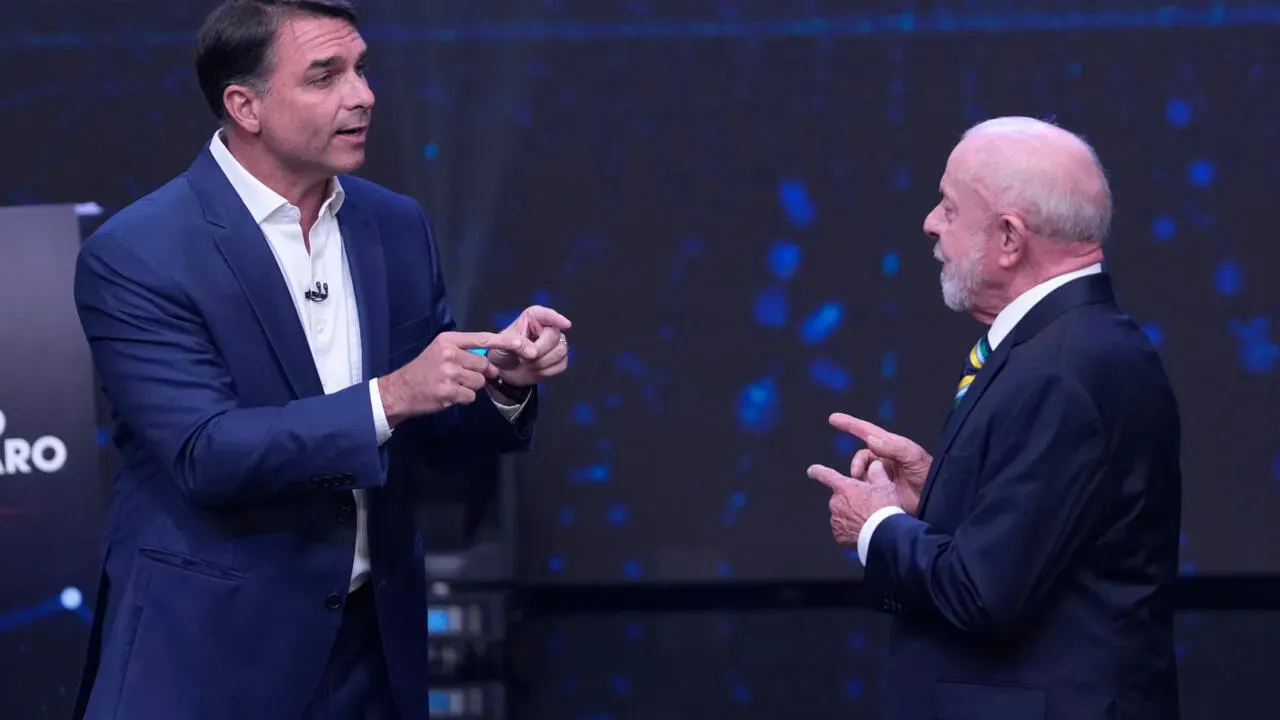
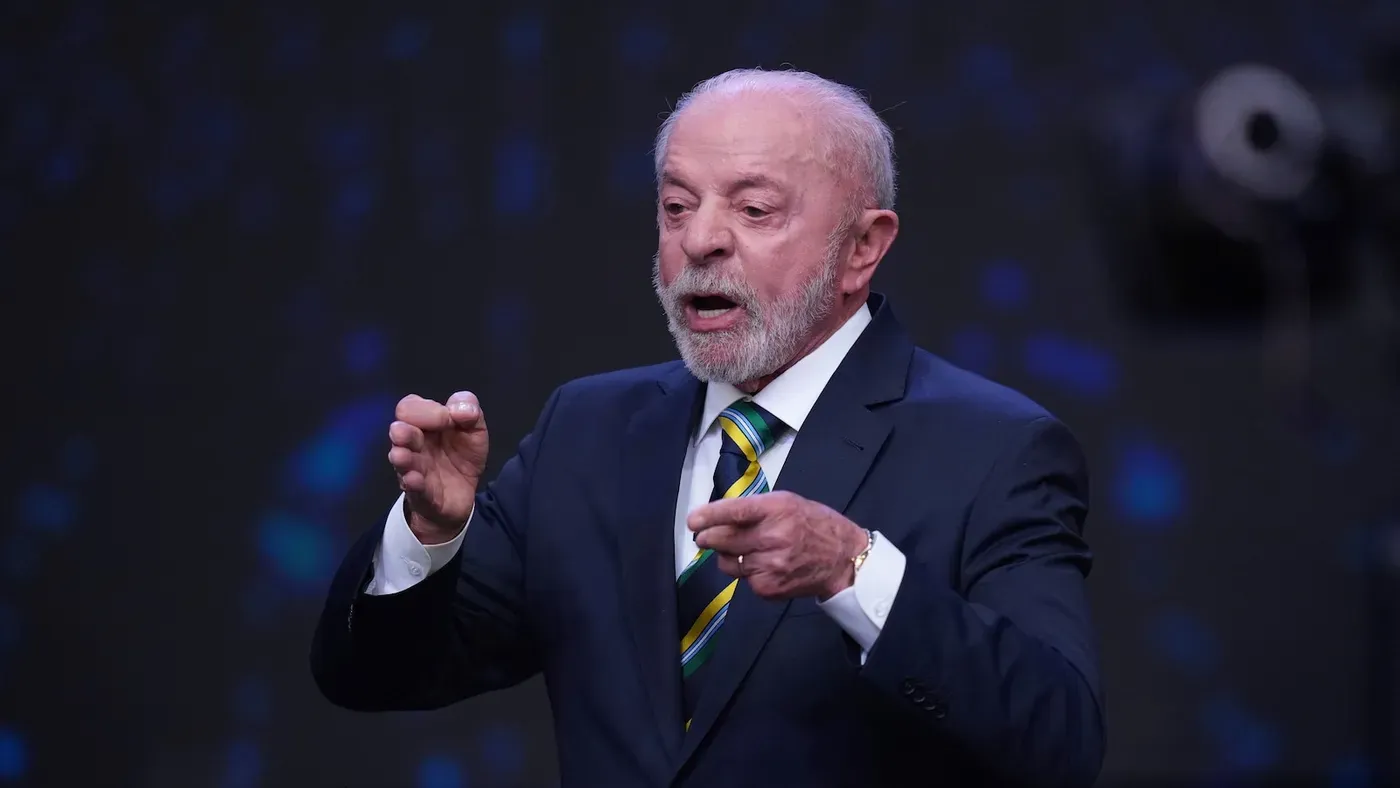
Brazilian President Luiz Inácio Lula da Silva has won a significant victory over his opponent Flávio Bolsonaro, securing 51.8% of the total vote.
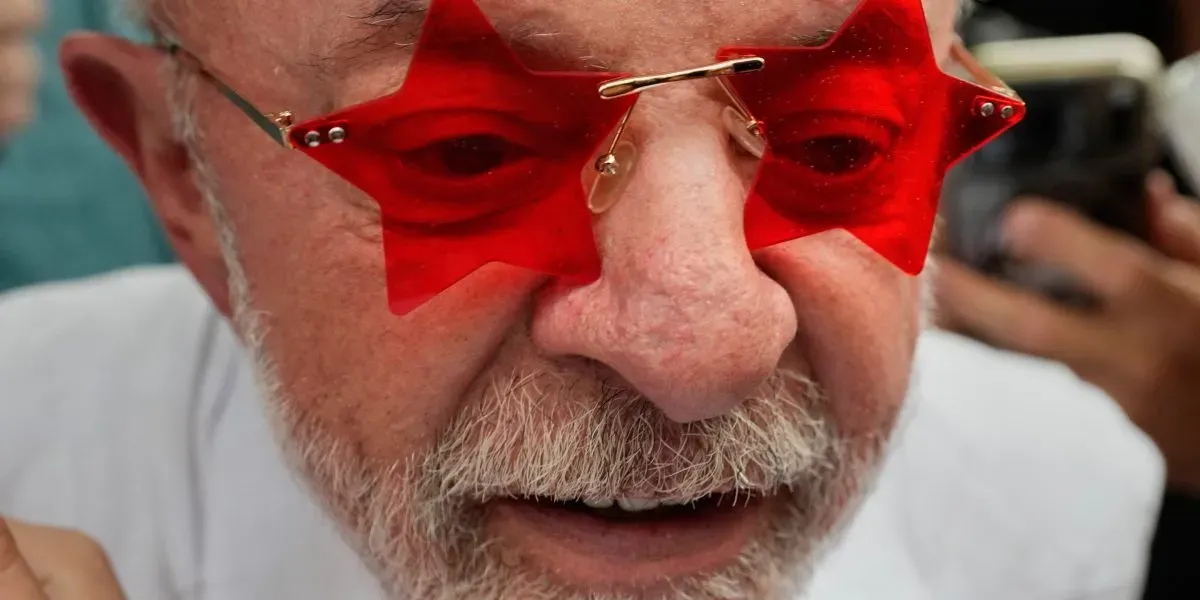
Brazil's President Luiz Inácio Lula da Silva has secured a second term in office, winning a significant victory over his opponent Flávio Bolsonaro. The electoral court announced that Lula had taken 51.8% of the total vote with nearly 4.4 million votes ahead of Bolsonaro.
The outcome is seen as a relief for those who are concerned about growing US influence in Latin America, given Lula's vocal criticism of US President Donald Trump. This trend is being bucked by Lula's triumph, which comes at a time when right-of-center candidates allied with Trump have been securing victories across the region.
Bolsonaro, son of former President Jair Bolsonaro, refused to concede defeat and instead asked for the election results to be annulled after chaotic scenes at some polling stations. This decision was made following a last-minute extension of voting hours by two hours on Sunday evening.
Lula's re-election is likely to mean that Brazil will continue to defy Trump's demands despite facing pressure from increased tariffs. As Latin America's largest economy, with a GDP of $2.6 trillion per year, Brazil's stance is significant in regional politics.
The electoral court confirmed Lula's runoff victory, and he was seen celebrating with his wife Rosângela da Silva and allies in a video published by his campaign.
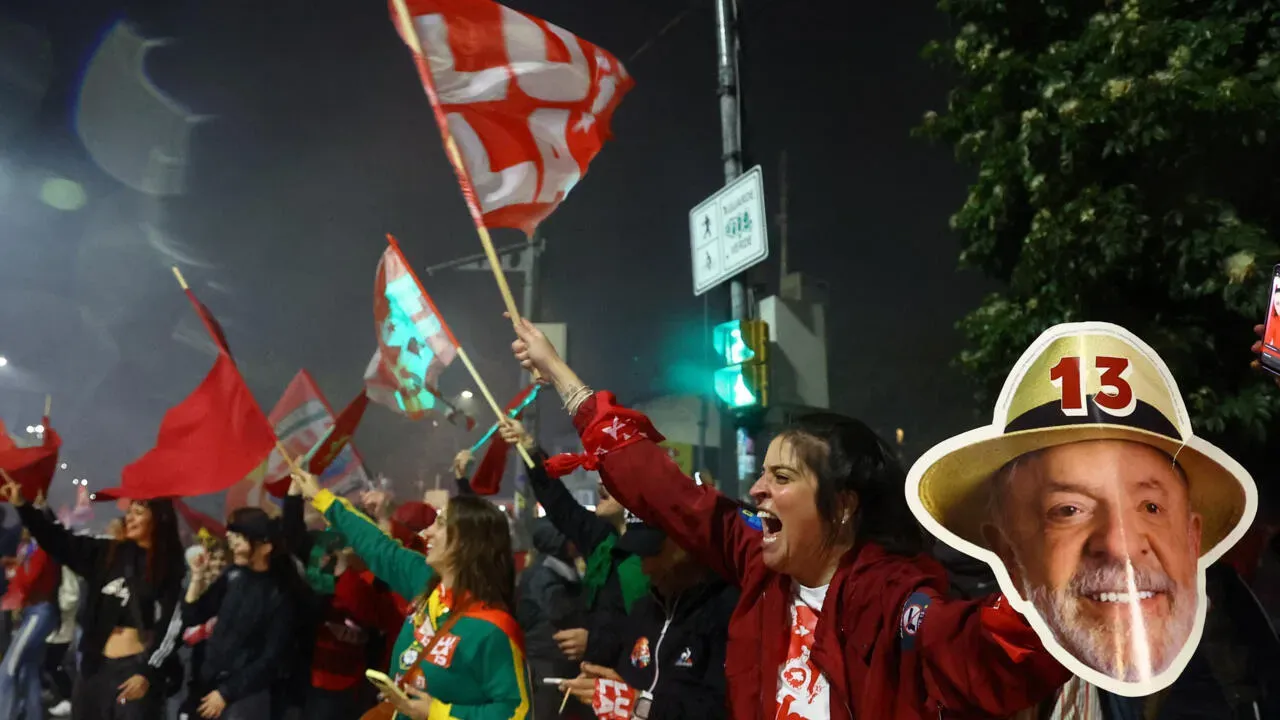
Brazil's electoral court confirmed Lula's runoff victory, marking a significant shift in the country's political landscape. The outcome has been met with jubilation from Lula supporters, who took to the streets to celebrate his win.
Lula has long been a vocal critic of former President Jair Bolsonaro and has repeatedly emphasized Brazil's sovereignty. In a statement, he reiterated his commitment to keeping the country free from foreign influence, declaring that "this country will not accept being anyone's backyard." He also expressed his disdain for Bolsonaro's tactics, saying that every debate he attended left him feeling embarrassed.
The streets of Rio de Janeiro erupted in cheers and chants as news of Lula's victory spread. Supporters wore red, a color synonymous with the party, while opponents were seen sipping beers dressed in yellow and green, Bolsonaro's signature colors. The atmosphere was tense, with some supporters mocking their opponents by shouting "You lost! Cry harder!"
Despite the celebrations, not everyone is pleased with Lula's victory. Businessman Rodrigo Valentim expressed his concerns about the economic implications of another Lula government, pointing to the positive reaction from financial markets after Bolsonaro won the first round. He claimed that the country was on the brink of collapse and couldn't understand why people would vote for Lula.
The electoral court's decision to keep polling stations open for two extra hours added to the evening's drama, following a ruling by Supreme Court Justice Cristiano Zanin. The move came after both candidates submitted requests to extend voting hours due to various issues, including transportation problems in Sao Paulo and Salvador, and heavy rains in Brazil's south.
The extension of voting hours has sparked controversy in Brazil, with some questioning its legitimacy.
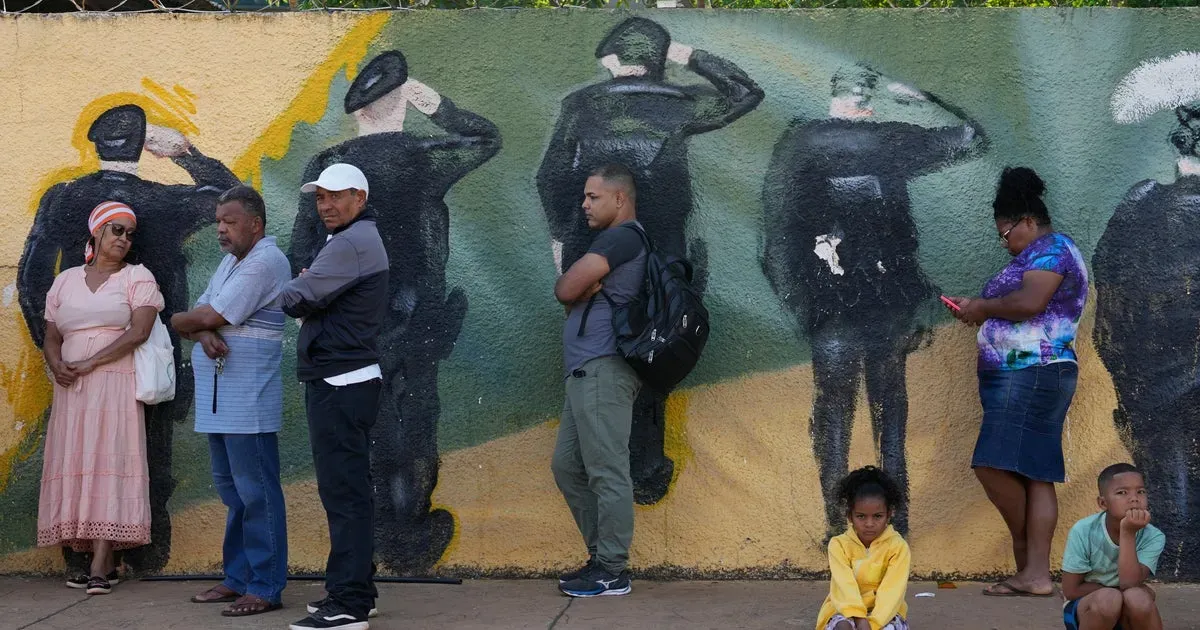
Polling stations in major cities like Brasilia and Rio de Janeiro were observed to have closed shortly after the original 5 p.m. deadline, despite the two-hour delay in vote counting.
Critics argue that this irregularity undermines the integrity of the electoral process, particularly given the unusual circumstances that led to the extension of voting hours.
The Bolsonaro administration has seized on these concerns, with some officials suggesting that the results of the election should be annulled due to alleged irregularities.
However, experts point out that such a move would require significant evidence of voter disenfranchisement or other forms of electoral manipulation.
Lula's victory marks a significant shift in Brazil's politics as he won the presidency despite initially finishing second to Bolsonaro by over 2.2 million votes in the first round of elections earlier this month.
The outcome is notable because it is the first time since Brazil's military dictatorship ended in 1985 that the second-highest vote-getter in the first-round elections has gone on to win the presidency, highlighting a change in voter sentiment and preferences.
Lula faced intense scrutiny during his reelection campaign due to concerns over living costs and security. Bolsonaro capitalized on these issues by focusing on a tough-on-crime approach and promising to reduce food prices, while Lula sought to attract undecided voters with costly incentives.
Both candidates have been embroiled in corruption scandals involving their family members and allies, with Bolsonaro implicated in a major scandal currently rocking Brazil. Lula himself previously spent over a year in prison on corruption convictions that were later overturned.
Lula's victory is expected to be his last as a politician, given the long history of his career which began in the 1970s as a union leader and continued with him co-founding the Workers' Party. He served as president from 2002 to 2010, when he was succeeded by one of his cabinet ministers.
Lula's path to the presidency was not straightforward, having been jailed for over 580 days in 2018 on corruption charges before being released and seeing his sentence annulled due to evidence showing bias on the part of the judge who convicted him.
After a tumultuous first round, Lula regrouped his campaign and targeted young voters, mobilizing millions of Brazilians to take to the streets in defense of democratic principles and his own legacy. This effort helped to raise concerns about the potential consequences of another Bolsonaro presidency.
Lula's path to the presidency has been marked by controversy, but he has now secured a second term as president of Brazil. He joins an exclusive group of world leaders, including Trump and Nicaragua's President Daniel Ortega, who have all reached the age of 80 while in office.
Facts based on reporting originally published by Fortune.
You may republish this story, in full or in part, if you credit News Central Site and link to it (licence CC BY 4.0). Photos are not included.