Stability of Low-Mass Stars Observed to Vary Over Time
Astronomers have discovered that low-mass stars like our sun undergo changes in their luminosity as they age.
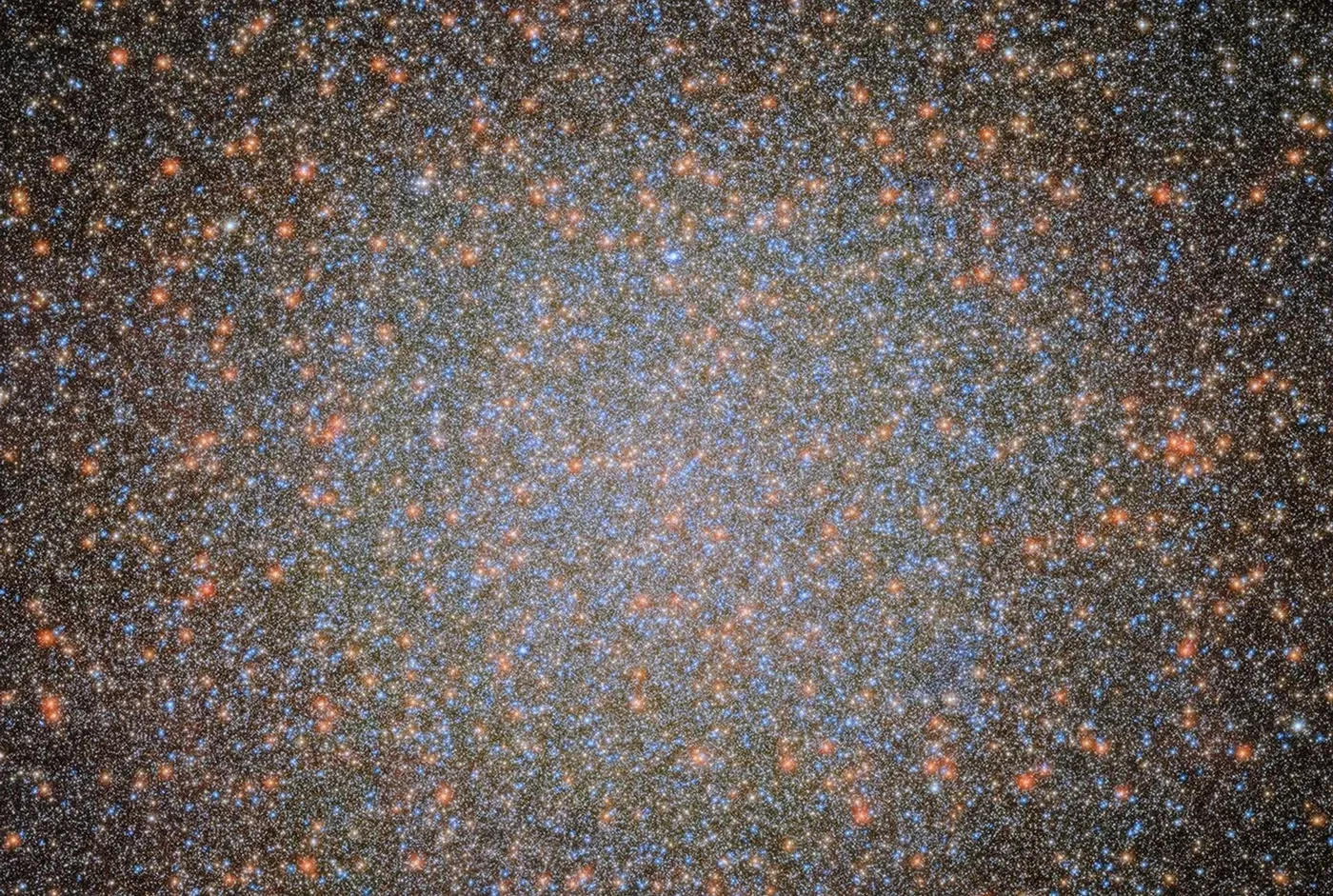
The stability of stars has long been a cornerstone of astronomy, with most appearing steady and predictable from our vantage point on Earth. This is particularly true for low-mass stars like our sun, which shine steadily for billions of years without much fanfare.
Using powerful telescopes, astronomers can bring millions of stars into view, allowing them to observe and study the changes that occur in their luminosity over time. By monitoring these changes, scientists have gained valuable insights into the long-term behavior of stars across various types and ages.
As low-mass stars like our sun exhaust their hydrogen fuel supplies, they undergo a transformation known as the red giant branch (RGB) phase. This is not just a theoretical concept but rather an observational conclusion supported by numerous studies of RGB stars in our galaxy.
One characteristic of RGB stars is that they swell in size and become more luminous as they age and cool. However, astronomers have observed a peculiar phenomenon - a brief and abrupt dip in the brightness of these stars known as the RGB luminosity bump.
The RGB luminosity bump appears as a distinctive feature in the color-magnitude diagrams used to study stellar clusters. This particular pattern has been noted in various studies of RGB stars, sparking interest among scientists seeking to understand its causes.
Astronomers have identified several bright and easily observable RGB stars that can be studied further, including Arcturus, Aldebaran, and Pollux - all familiar naked-eye targets in our night sky. However, these stars still hold secrets about the mysterious RGB luminosity bump, which remains a topic of ongoing research.
The mystery of the luminosity bump in aging stars has long been a topic of interest for astrophysicists. While the end of this phenomenon is well understood, its initiation remains an enigma that researchers are keen to solve.
A recent study published in The Astrophysical Journal Letters sheds new light on the onset of the luminosity bump. Titled "The Role of Specific Entropy in the Onset of the Luminosity Bump," the research was conducted by Saskia Hekker, a professor of theoretical astrophysics and group leader at the Heidelberg Institute for Theoretical Studies.
Stars that have exhausted their hydrogen fuel follow a predictable path in luminosity-temperature space. Low-mass stars, specifically those on the red-giant branch (RGB), exhibit an increase in luminosity and decrease in surface temperature as they evolve. However, this trend is disrupted by a temporary decrease in luminosity known as the luminosity bump.
While theoretical models and observations confirm the existence of the luminosity bump, there's a discrepancy between the two. In simulations, the bump appears at higher luminosities than observed, indicating that it occurs later than expected. This inconsistency suggests that the underlying physics driving the bump needs to be re-examined.
Stars like our sun have distinct layers, but those on the RGB stage are characterized by a different energy production process. Unlike their main-sequence counterparts, RGB stars rely on fusion in a thin shell surrounding an inert helium core. Energy transport within these regions occurs primarily through radiation.
The layered structure of RGB stars is crucial to understanding the onset of the luminosity bump. As hydrogen fuel is depleted from the core, most of the remaining energy is stored in the star's envelope. This unique configuration sets the stage for the temporary decrease in luminosity that marks the start of the bump.
As an RGB star undergoes significant changes during its ascent of the branch, its core contracts while the surface expands outward.
The inert helium core exerts inward pressure due to its lack of outward force, prompting a response in the convective outer envelope. The deepest layers of this envelope are forced inward, reaching regions that have undergone chemical alteration through earlier burning processes within the star's evolution.
This movement triggers dredge-up, as deeper layers are propelled into the convective zone, where they mix with material from the radiative zone and alter its composition accordingly.
The boundary between the convective and radiative zones deep within the star is a critical area of study. Known as the base of the convective zone (BCZ), it's governed by the thermodynamic property of specific entropy, which measures the disorder of gas at this juncture.
As the BCZ shifts deeper into the star, the difference in entropy across its boundary gradually decreases until it drops below a critical value.
As researchers delve into the mystery of aging stars' sudden luminosity dips, they've been re-examining previous theories that attributed these events to mechanical interactions within the star.
Theories based on mechanics suggested that when a thin hydrogen-burning shell reached the boundary with another layer inside the star, something changed, triggering the dip. However, this explanation has been found lacking as it failed to account for the underlying thermodynamics of the star's internal workings.
Astrophysicists face significant challenges in studying stars due to their opaque nature; they can't directly observe what's happening within them. To overcome this limitation, researchers rely on theoretical physics and test these models against observable data from the star's outer layers.
The new explanation for the luminosity dip is a crucial development in astrophysical theory, as it provides a quantitative description of how the bump occurs when an entropy threshold is crossed inside the star.
This breakthrough will contribute to the refinement of stellar evolution models by providing a more accurate understanding of the mechanisms driving these dips in luminosity.
A sudden drop in luminosity is a common phenomenon observed in aging stars, and researchers have now identified specific entropy as a key factor contributing to this occurrence.
This breakthrough will refine stellar evolution models by providing a more accurate understanding of the mechanisms driving these dips in luminosity. The findings suggest that changes in specific entropy play a crucial role in triggering these events. Specific entropy refers to the amount of thermal energy contained within a star's core, and its fluctuations can significantly impact the star's overall brightness.
Facts based on reporting originally published by Phys.org.
You may republish this story, in full or in part, if you credit News Central Site and link to it (licence CC BY 4.0). Photos are not included.