Farm Automation Technologies Require Human Input
A new study on agricultural automation found that while AI-enabled machines can automate certain tasks, human knowledge is still essential for success. The research involved a three-year study of 16 fruit tree operations in California and Washington.
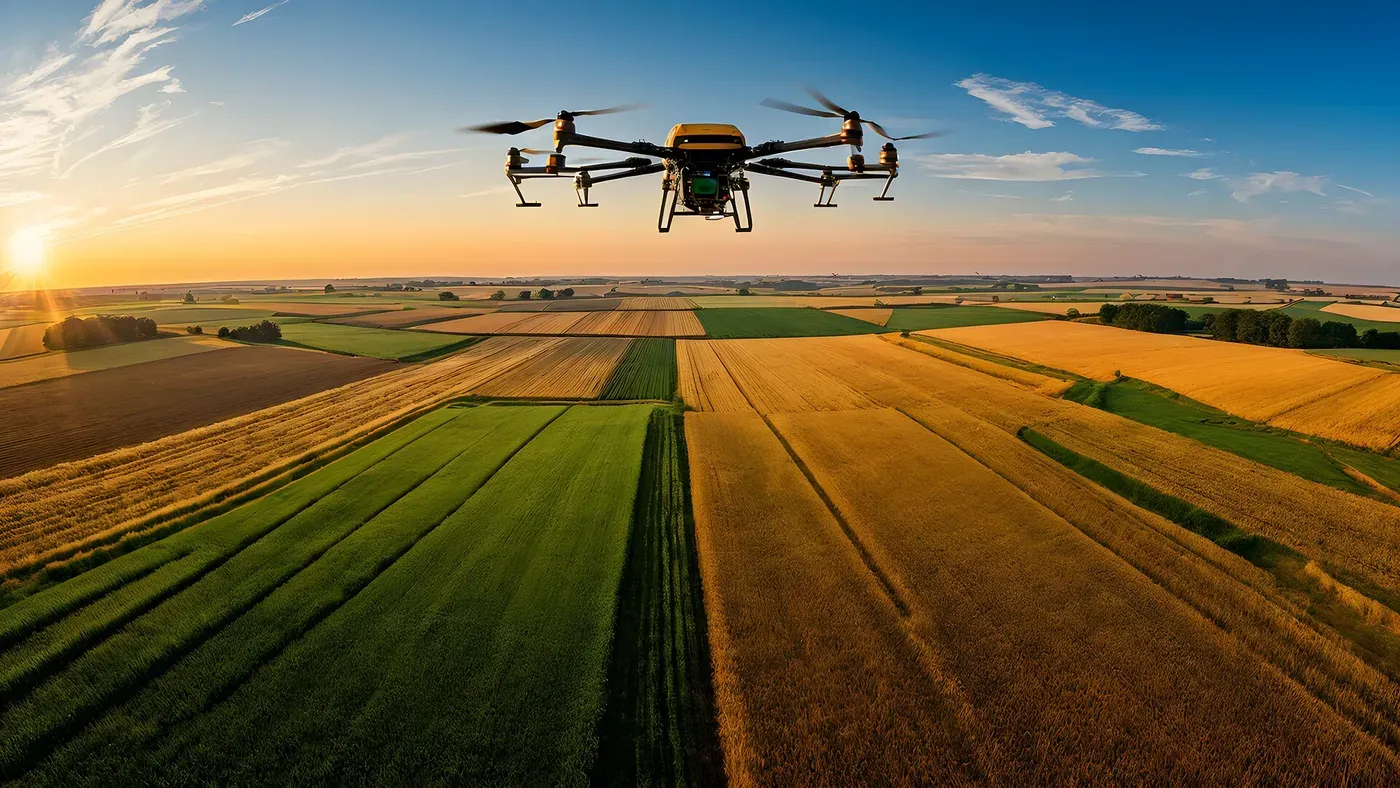
Farm automation has long been touted as a job-killer, but new research suggests this assumption might be misplaced. A three-year study of 16 fruit tree operations in California and Washington found that while AI-enabled machines can automate certain tasks, human knowledge is still essential for success.
The study's authors examined the "last mile" of agricultural automation, what happens when technology meets real-world conditions on a farm. They conducted in-depth interviews with over 165 workers and growers to gain insight into how automation affects labor forces.
According to lead author M. Anne Visser, professor of community and regional development at UC Davis, automation is not something that simply arrives on a farm or affects a labor force by default. Rather, it requires active effort from people to implement and adapt technology to specific conditions.
The researchers discovered that every orchard has its unique characteristics, making it essential for technology to be tailored to each location. This often involves human knowledge about the land, crops, or even local weather patterns, insights that machines may struggle to replicate.
As a result, Visser noted that no matter how advanced AI-enabled machines become, they will likely never match the embedded place-based knowledge of humans working on a farm.
Farm automation technologies, such as tractors equipped with digital cameras, are being touted as game-changers in agriculture. These machines can travel down orchard rows, scanning trees to count buds and fruit, and provide yield estimates. However, researchers have found that these tools often overestimate yields and require human interpretation.
One farm manager, with extensive experience on the farm, took the camera's counts and adjusted them downward by 14%. This adjustment was based on historical knowledge of block performance and recent weather events, which proved to be more accurate than the camera's estimates. This highlights the need for people to interpret data from automated tools and adapt it to specific field conditions.
Despite the advancements in automation technology, farm workers are still essential to troubleshoot problems and bridge the gap between how a tool was designed to work and how farming actually works. Autonomous harvesters, another example of automation, struggle to match human knowledge when it comes to picking fruit.
The integration of new technologies into farm production systems requires human expertise. Growers and workers often need to adjust and adapt these tools to suit their specific needs. This means that while automation may change the tasks performed on farms, it does not necessarily replace jobs entirely.
The shift towards automation in agriculture is complex, with many factors at play. It's clear that technology alone cannot solve all the challenges faced by farmers, and human involvement remains crucial in optimizing yields and ensuring success.
The complexities of automating farm operations have been a subject of debate, particularly when it comes to fresh-market specialty crops like fruits and vegetables. These crops require not only high yields but also quality produce, making them more challenging to automate than row crops such as corn or soybeans.
Orchards, which are typically multiyear investments, cannot be easily switched out in a single season, adding another layer of complexity to the automation process. However, technology can still play a role in improving efficiency and occupational health for farmers, even if they are not fully automating their operations.
The focus on displacing workers has been criticized as narrow-minded, obscuring opportunities for policy development, workforce training, and job creation in rural areas. By shifting the conversation to these broader issues, researchers hope to advance a more nuanced understanding of agricultural automation's impact on labor forces.
Ultimately, this research aims to foster a more constructive dialogue about the role of technology in agriculture, one that prioritizes collaboration over division and recognizes the value of human expertise in optimizing farm operations.
Facts based on reporting originally published by Phys.org.
You may republish this story, in full or in part, if you credit News Central Site and link to it (licence CC BY 4.0). Photos are not included.