Sheriffs Who Supported Trump's Immigration Enforcement Efforts Voted Out
A significant number of sheriffs who supported President Donald Trump's immigration enforcement efforts have been voted out of office by their constituents.
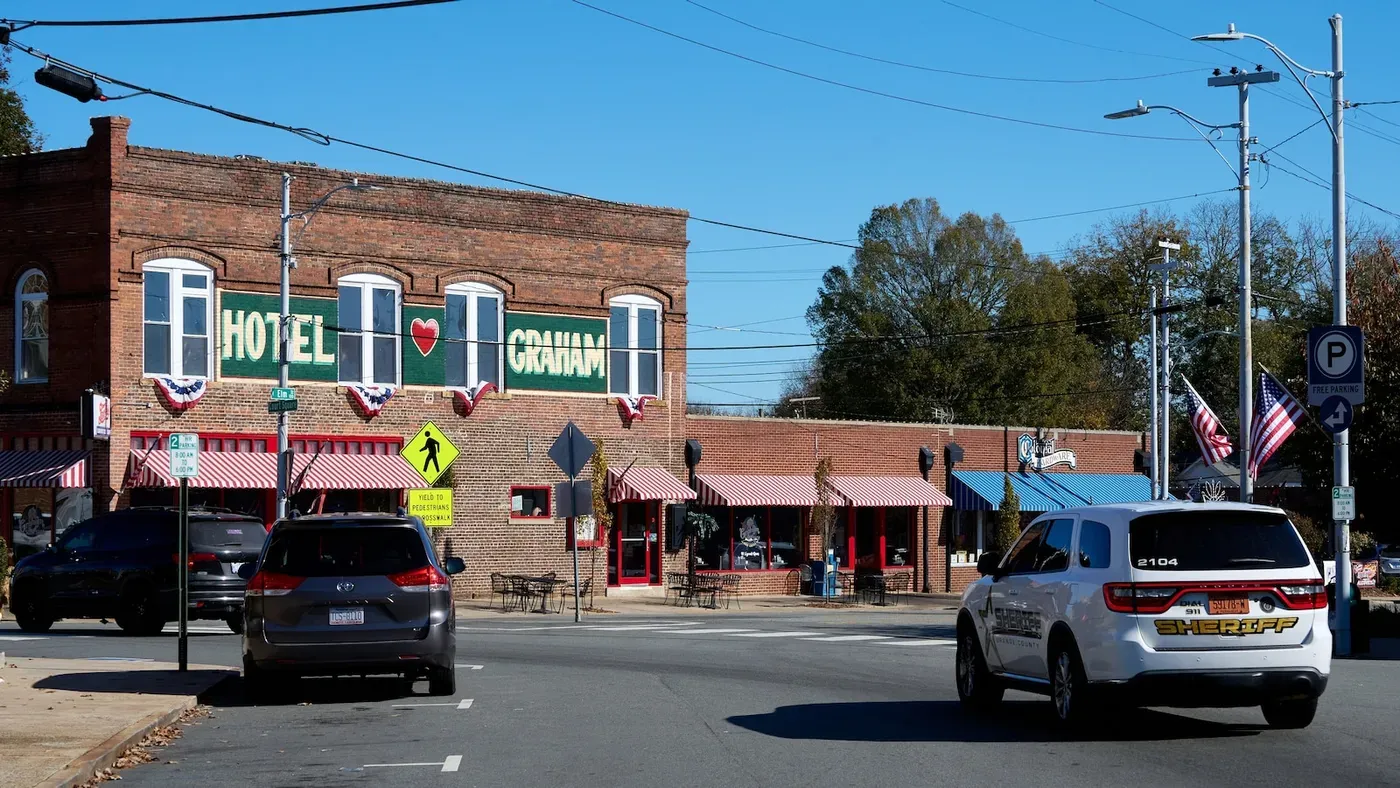
In a significant shift, some sheriffs who supported President Donald Trump's immigration enforcement efforts have been voted out of office by their constituents.
A striking example is Alamance County in North Carolina, where Shannon Long ran against incumbent Republican Sheriff Terry Johnson. Long, a pastor and former sheriff's deputy, faced challenges winning over voters due to the strained relationship between law enforcement and the county's growing Latino community.
Long's campaign encountered difficulties when potential supporters would not speak with him, allegedly because they felt intimidated by the presence of his campaign van displaying the title "sheriff. This sentiment reflects a deeper issue - many Latino residents in Alamance County feel marginalized, oppressed and depressed due to their experiences with immigration enforcement.
According to Long, who defeated Johnson after the election, these voters often express feelings of not belonging in their community. He attributed this atmosphere of fear to the policies implemented by Johnson's office in cooperation with the Trump administration.
The ousting of Johnson and a few other sheriffs is seen as a potential warning sign for those who have collaborated with President Donald Trump's mass deportation efforts. While it may be too early to determine the full impact, these results could hinder agreements that are crucial to the administration's immigration enforcement strategy.
Local law enforcement cooperation with federal immigration authorities has been a contentious issue on the campaign trail in several states this year. In Indiana, voters ousted a sheriff who had signed a 287(g) agreement allowing his deputies to enforce federal immigration laws.
The agreements have become a significant factor in some elections, particularly in regions where they are most prevalent. The South is home to the majority of these cooperative pacts, which deputize local law officers and contribute significantly to ICE's arrest numbers.
Government data shows that over 29,000 local law enforcement officials have been deputized under these agreements, resulting in thousands of arrests each month. In July alone, more than 6,600 arrests were made by these deputies, accounting for about 15% of all ICE arrests.
Many sheriffs whose offices had signed 287(g) agreements faced opposition from candidates who campaigned on a promise to curtail cooperation with federal immigration authorities. The issue is likely to resurface in two years when several states with large numbers of these agreements hold elections.
Alamance County, a traditionally Republican stronghold in North Carolina, has undergone significant demographic changes over the years. The county's population has grown increasingly diverse, with a notable shift from a small Hispanic community of 750 residents in 1990 to nearly 25,000 in 2020.
Sheriff Terry Johnson, who was first elected in 2002 and has been a polarizing figure, insisted that his office welcomes lawful immigrants. However, allegations of racial profiling against minority residents have persisted, including a Justice Department lawsuit over a decade ago that ended with a settlement.
The county's reputation as a place where minority groups feel marginalized and excluded from the political process is reflected in its nickname No Chance Alamance." According to school board member Seneca Rogers, this perception stems from a sense of unjust policing and lack of representation among Black and Latino residents.
Sheriff Johnson initially attributed his loss to immigration policy, but later clarified that it was unlikely a major factor. Instead, he pointed to the long-term effects of his tenure in office and the national political environment, which proved particularly challenging for Republicans in North Carolina during the last election cycle.
The ousting of sheriffs who participated in Trump's immigration enforcement efforts has had far-reaching implications for local communities.
Many residents were hesitant to interact with law enforcement due to concerns about racial profiling and biased policing practices. Community organizer Leslie Arevalo noted that non-white residents often felt targeted, especially during traffic stops.
Voters like Renee Russell welcomed the change in leadership, citing a need for fresh perspectives on community engagement and public safety. The election of the county's first Black sheriff was seen as a positive step towards greater representation and accountability.
State Senator Amy Galey defended the outgoing sheriff's record, highlighting improvements to training programs and mental health services. However, she acknowledged that concerns about immigration enforcement tactics may have contributed to broader worries about law enforcement.
The shift away from immigration enforcement pacts is also being felt in other parts of the country, including Frederick County, Maryland, where Republican Sheriff Chuck Jenkins previously participated in the 287(g) program.
Public sentiment against certain sheriffs who signed pacts to aid Trump's immigration enforcement efforts has been mounting across the country. In Maryland's Frederick County, for instance, Republican Sheriff Chuck Jenkins faced opposition after participating in the 287(g) program. He acknowledged that the program likely cost him his reelection bid but still maintained it made the community safer.
However, not everyone shared Jenkins' views on the matter. Retired social worker Carol Antoniewicz, a vocal supporter of Democrat Karl Bickel, who defeated Jenkins in the election, said that people are fed up with negative attitudes towards immigrants. She distributed campaign literature and emails to promote Bickel's candidacy, which focused on his pledge not to cooperate with ICE.
The immigration debate also played out in Wisconsin's Winnebago County, where a schoolteacher's arrest by ICE sparked widespread outrage just before the election. This backlash had far-reaching implications for local politics, making any perceived alignment with immigration officers a liability for candidates. Local advocate and immigration lawyer Molly Smiltneek noted that this perception has become a major concern in recent elections.
The sheriff's department in Winnebago County was not directly involved in the teacher's arrest but its 287(g) agreement became a central issue in the election campaign. Democrat Jason Rippl, who won the election, promised to end the program, which resonated with voters seeking change on immigration issues. Rippl's victory marked another instance of public sentiment shifting against sheriffs who had signed pacts to aid Trump's immigration enforcement efforts.
As newly elected officials take office, they are being asked to reconsider their stances on immigration-related programs like 287(g). In some cases, this means re-evaluating agreements made with ICE. The shift away from these partnerships is a significant development in the ongoing debate over immigration policy and law enforcement priorities.
The shift away from partnerships between law enforcement agencies and the Trump administration's immigration enforcement efforts has significant implications for the communities affected by these policies. In response to this shift, some local sheriffs are seeking to rebuild trust with immigrant communities.
To achieve this goal, a sheriff has been holding meetings with community leaders in an effort to establish new relationships and foster cooperation between law enforcement and Latino residents. The aim is to create a sense of security and inclusivity, where people feel empowered to engage with the authorities without fear of repercussions. By doing so, he hopes to demonstrate that the sheriff's office is committed to serving all members of the community.
Facts based on reporting originally published by ABC News Politics.
You may republish this story, in full or in part, if you credit News Central Site and link to it (licence CC BY 4.0). Photos are not included.