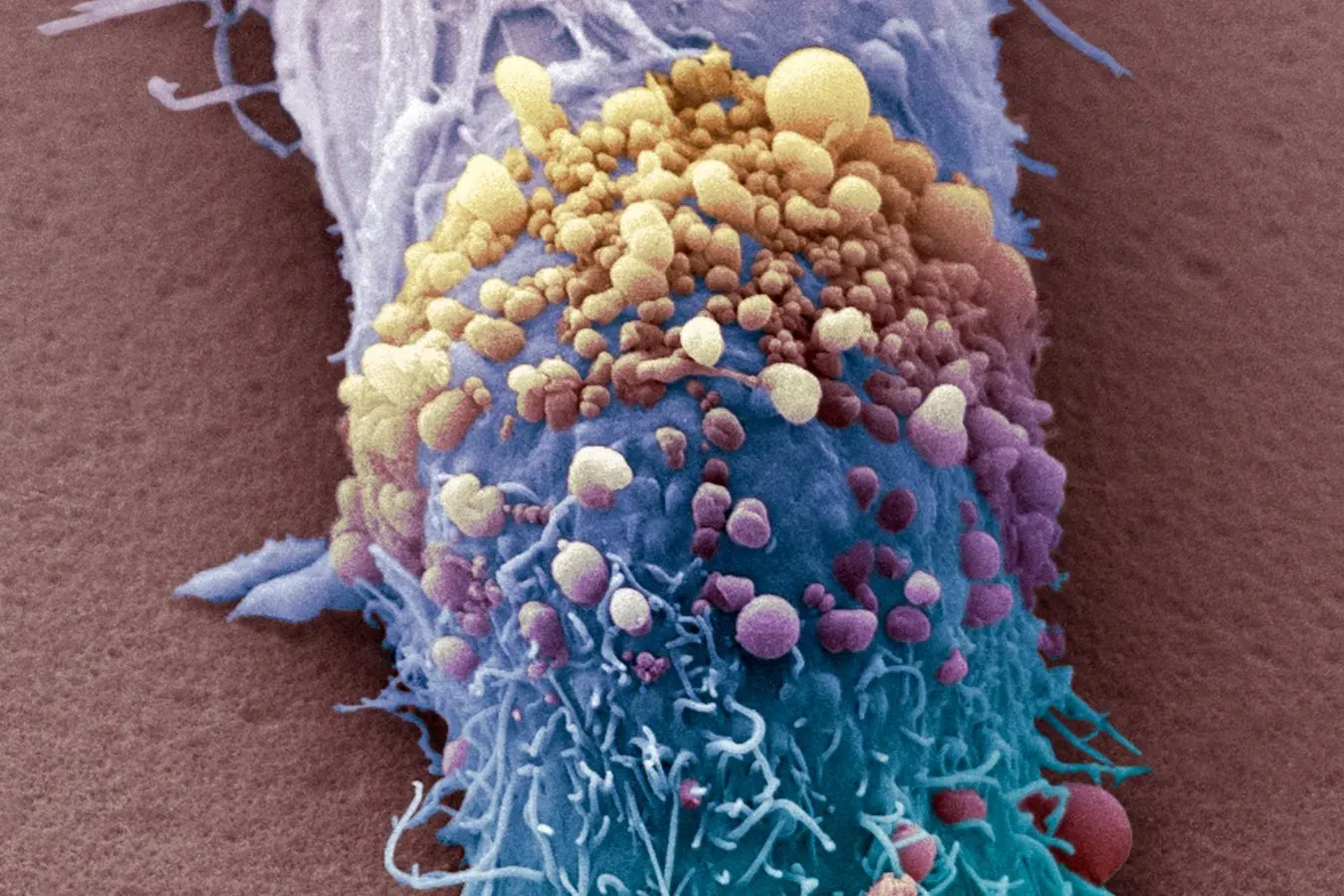
Scientists study genetic battles between species and viruses
Researchers at the Fred Hutchinson Cancer Center are investigating how mosquito-borne viruses like Sindbis and chikungunya outmaneuver their hosts' defenses to cause illness in both insects and humans, led by Harmit Malik.
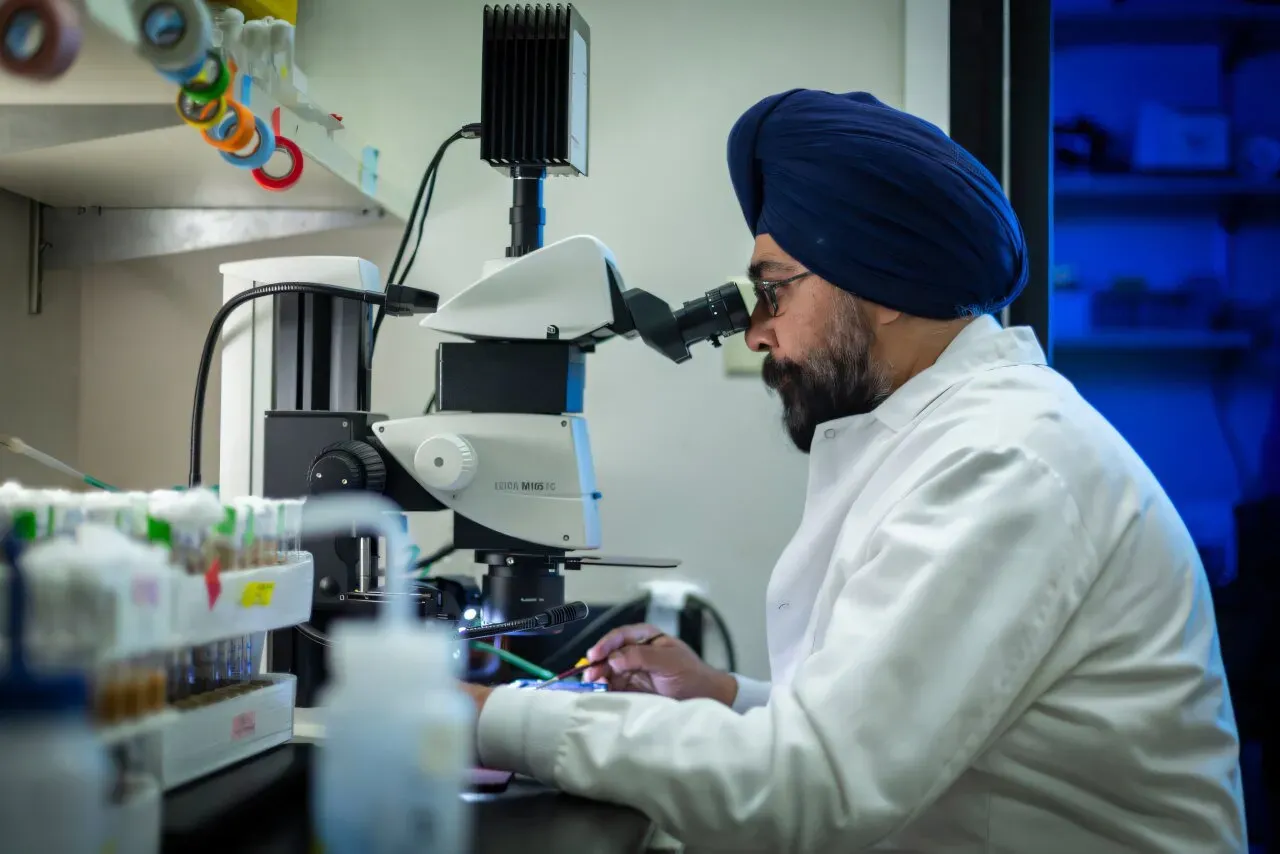
Scientists at the Fred Hutchinson Cancer Center have made it their mission to study the intense genetic battles that play out between species in a matter of generations, rather than millennia.
The lab's focus on rapid evolution has led them to investigate the underlying rules that govern these conflicts, with the ultimate goal of developing more effective treatments for diseases.
Led by HHMI investigator Harmit Malik, the team is driven by competition, but not the kind that pits researcher against researcher. Instead, they study the genetic clashes between different entities vying for dominance within a species.
Malik's lab has set its sights on understanding how mosquito-borne viruses like Sindbis and chikungunya outmaneuver their hosts' defenses to cause illness in both insects and humans.
These viruses have adapted to thrive in environments with vastly different body temperatures and immune systems, making them formidable opponents in the evolutionary arena.
The genetic makeup of alphaviruses has been found to contain a unique feature that allows them to thrive in diverse environments. This special stop codon, known as the opal codon, plays a crucial role in regulating protein production within the virus's genome.
In human hosts, where body temperatures are higher and replication occurs rapidly, the opal codon enables the virus to produce just the right amount of a critical polyprotein necessary for survival. This balancing act prevents excessive protein production that could slow down other vital processes and compromise the virus's fitness.
However, in mosquito hosts, where temperatures are lower and replication is slower, this delicate balance is not required. As a result, alphaviruses infecting mosquitoes do not rely on the opal codon to regulate protein production.
Despite its apparent lack of necessity in mosquito-infected viruses, the opal codon remains a conserved feature across all alphavirus species. This led researchers to investigate why this stop codon persists even when it's no longer required for survival in certain hosts.
The team discovered that the opal codon serves another vital function: enabling the virus to replicate within a hidden compartment, shielded from detection by the host's immune system.
The researchers are now focusing on uncovering additional strategies employed by these viruses to thrive in various hosts. They aim to understand how some viruses can rapidly increase their fitness levels within one host at the expense of another.
By learning the rules that govern this adaptive process, scientists hope to gain valuable insights into the vast potential for genetic evolution exhibited by these viral genomes. This knowledge is crucial as it will inform the development of new antiviral treatments that take into account the complex dynamics of viral adaptation.
Interestingly, essential genes required for an organism's survival and reproduction are often among the fastest-evolving elements in a genome. The Malik Lab has been investigating these changes and their underlying causes to shed light on this phenomenon.
A recent study led by graduate student Jeremy Hollis examined HJURP, a chaperon protein that plays a vital role in marking the centromere during cell division. This site is responsible for separating chromosomes as cells divide.
The researchers used advanced techniques such as remote homology detection and AlphaFold-based structural modeling to demonstrate that most animals possess HJURP, despite its elusive nature.
New research has shed light on the genetic mechanisms driving rapid evolution in animals by investigating a key protein involved in male fertility.
The study found that Mst77F, a protamine that packages DNA in fruit fly sperm, is rapidly evolving to suppress a form of genetic cheating known as meiotic drive. This process involves X-bearing sperm being killed off, resulting in skewed broods towards sons. By suppressing this mechanism, the rapid evolution of Mst77F helps to maintain balance and ensure the survival of both sexes.
The findings have significant implications for our understanding of the complex interactions between genetics and evolution, highlighting the importance of studying these processes in detail to uncover the underlying rules governing rapid evolution.
Facts based on reporting originally published by Phys.org.
You may republish this story, in full or in part, if you credit News Central Site and link to it (licence CC BY 4.0). Photos are not included.