Breakthrough in Cancer Treatment Expected Next Year
A personalised mRNA vaccine for melanoma is nearing approval in the US, Europe, and the UK after successful late-stage trials.
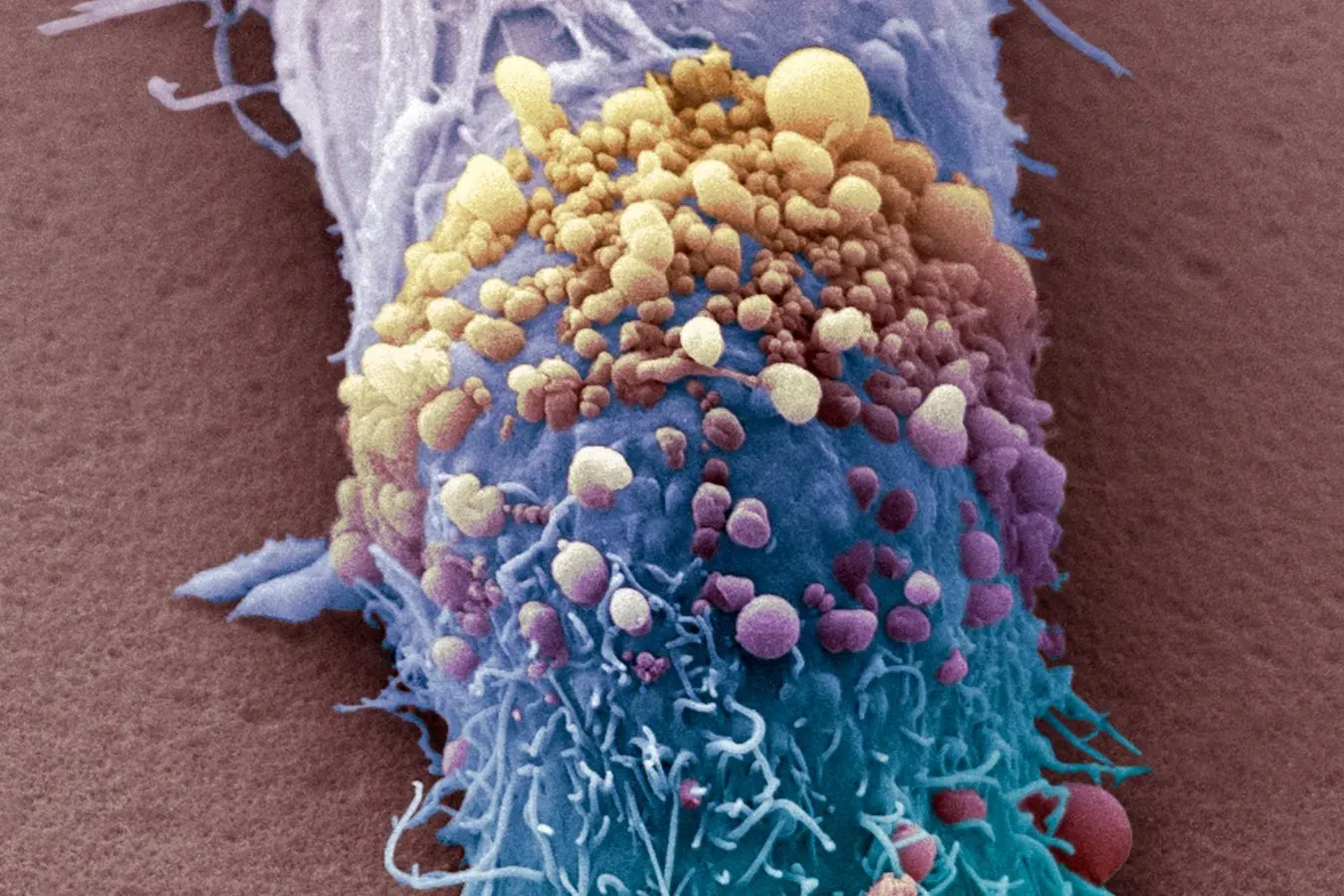
A breakthrough in cancer treatment is expected to become available next year as a personalised mRNA vaccine for melanoma, the most aggressive form of skin cancer, nears approval in the US, Europe, and the UK.
The innovative vaccine works by stimulating the immune system to target genetic mutations specific to an individual's cancer, allowing it to attack the disease more effectively. When combined with standard treatment in a late-stage trial, the vaccine significantly reduced the risk of cancer recurrence or death within two years. This promising result has generated excitement among medical professionals.
Experts are optimistic about the vaccine's prospects for approval, with one researcher predicting that it could be approved as early as next year. "I think approval could be quick, and next year sounds reasonable," said Alan Melcher at the Institute of Cancer Research in London. He was not involved in the trial but is following its progress.
The potential benefits of this vaccine are substantial, with thousands of people in the UK alone possibly benefiting from it based on the trial's patient population. However, concerns have been raised about the high cost of producing the vaccine and whether it would be deemed cost-effective for use within the National Health Services (NHS).
The trial results have revealed further details about the efficacy of the personalized cancer vaccine in preventing recurrence and spread of melanoma.
Over 1100 adults who had undergone surgery to remove high-risk melanomas were recruited for the study, with approximately one-quarter of annual UK melanoma cases falling into this category.
Participants were randomly assigned to receive either a bespoke vaccine combined with standard immunotherapy called pembrolizumab or a placebo alongside pembrolizumab.
The vaccine is administered every three weeks for up to a year, with both groups receiving the same treatment schedule.
Pembrolizumab helps the immune system target and destroy cancer cells.
In the UK, around 19,400 people are diagnosed with melanoma each year, making it a significant health concern.
Of these cases, about one-quarter are classified as high-risk due to their potential for recurrence or spread.
The personalized vaccine is created by analyzing a small sample of the patient's cancer and comparing its genetic sequence to that of healthy blood cells.
This process identifies specific mutations associated with the cancer.
Using technology similar to that employed in COVID-19 vaccines, the cancer vaccine contains mRNA molecules encoding proteins with up to 34 of these identified mutations.
Researchers have described this as a "fingerprint" of proteins unique to each patient's cancer.
The latest trial results for the personalized cancer vaccine have shown promising signs of reducing recurrence rates in patients.
Side effects were found to be similar between the vaccinated and control groups, which is a crucial factor in determining the safety and efficacy of the treatment.
Researchers are cautious not to interpret the combined measure of cancer recurrence and death rates as directly indicating improved survival rates, but rather see it as an indicator that the vaccine reduces recurrence.
The trial participants have not been tracked for long enough to conclusively determine whether the vaccine improves survival rates.
While the results are encouraging, further research is needed to better understand who will benefit most from the vaccine and how its high cost can be mitigated.
A recent report estimated the treatment could cost around $200,000 per patient, which raises concerns about accessibility for those on the NHS.
The developers of the vaccine have yet to comment on its expected cost, but experts warn that it could be a significant barrier to approval for widespread use.
To address these issues, more research is needed to identify potential cost-saving measures and target the vaccine towards those who will benefit most.
Some people may have mutations in their vaccine that don't trigger anti-cancer immunity as expected, or pembrolizumab might be so effective that it prevents the vaccine from making a further impact.
Research is needed to identify potential cost-saving measures and determine who would benefit most from the vaccine. Scientists believe they could use immune markers in blood or tumour samples to predict patient responses and tailor treatment accordingly. Personalised vaccines may also prove effective for other types of cancer, such as lung, bladder, and kidney cancers, which are often treated with immunotherapy. Further research is necessary to verify these findings and explore the vaccine's potential as a standalone treatment.
Facts based on reporting originally published by New Scientist.
You may republish this story, in full or in part, if you credit News Central Site and link to it (licence CC BY 4.0). Photos are not included.